





If the names AOL, Evernote, Vimeo, and Eventbrite trigger a wave of early-internet nostalgia, you are not alone. These former darlings of the tech world, once central to our digital lives, had largely stalled and drifted into the background. Enter Bending Spoons, a quietly ambitious Italian startup founded in 2013 that has quietly bought up more than 50 of these legacy apps and websites, transforming them into a single behemoth that raked in $1.3 billion in 2025. Today, the Milan-based firm stepped into the global spotlight by going public on the Nasdaq, raising $1.7 billion at an $18.4 billion valuation—the largest European tech listing since 2023. This blockbuster debut has catapulted CEO Luca Ferrari and his co-founders into the billionaire ranks, with their combined $8.9 billion stake now eclipsing legendary Italian institutions like Pirelli and Banca Generali, and delivering massive paydays to big-name backers like Baillie Gifford and Renaissance Partners as shares surged 31% on day one.
At the heart of this financial triumph is a highly aggressive and controversial business playbook. Ferrari, who describes Bending Spoons as “the best of both worlds of Berkshire Hathaway and a technology company,” hunts for established apps that possess loyal user bases but suffer from bloated operations and stagnant growth. Once an acquisition is finalized, his team aggressively reboots the underlying technology by centralizing server infrastructure and cleaning up decades of messy code. However, this digital modernization comes at a steep human cost; the company spent over $78.6 million on reorganization expenses in 2025 alone. After taking over AOL, Eventbrite, and Vimeo, Bending Spoons absorbed 1,830 employees, yet SEC filings reveal a ruthless efficiency goal: they expect only a “few hundred” of those workers to remain by the end of 2026.
For the everyday people who actually use these platforms, a Bending Spoons takeover is usually felt directly in their wallets. After purchasing the beloved note-taking app Evernote for $200 million in 2023, the company sparked widespread user outrage by jacking up the annual subscription price from $100 to $249, while imposing even steeper hikes on business clients. Similar pricing surges hit users of the video platform Vimeo and the file-sharing service WeTransfer. Yet, Ferrari’s gamble that users would pay rather than leave seems to be paying off. Bending Spoons’ prospectus revealed that 48% of its subscription revenue comes from deeply loyal customers who have stuck around for at least five years, allowing Evernote’s revenue to jump 34% in 2024 and another 30% in 2025—gains driven entirely by charging remaining users more to offset those who quit the service.
Ferrari strongly bristles at being compared to a ruthless private equity buyout fund or being accused of asset stripping, proudly vowing that his company will never sell off an app it acquires. He points to Evernote as a prime example of genuine technological revival, explaining that his engineering team completely rebuilt the app’s outdated 2008 software architecture from scratch to integrate modern, AI-driven search and summarization tools that allow it to compete with trendy new rivals like Notion and Granola. This aggressive acquisition campaign, which kicked into high gear with a $5 billion buying spree in 2023, has successfully doubled Bending Spoons’ revenue since 2024. However, this growth has been fueled by heavy borrowing; the company now carries $6 billion in debt on its balance sheet, with annual interest payments swallowing $143 million—nearly half of its operating income—resulting in a minor net loss of $200,000 last year.
Because most of these high-profile acquisitions occurred very recently—with the massive $1.45 billion purchase of AOL in 2025 now accounting for half of its total revenue—determining the long-term success of this roll-up strategy remains tricky. Organic growth sat at a modest 13% last year, hinting that the company’s financial engine is still heavily reliant on buying new revenue rather than building it. Even so, the sheer efficiency of Bending Spoons’ lean operational model is hard to ignore, with revenue per employee doubling over two years to an astounding $2.57 million in 2025—outperforming tech giants like Apple, Meta, and Alphabet. Ferrari insists his company is no sweatshop, leveraging the salary gap between Silicon Valley and Italy’s Po Valley to recruit top-tier European graduates with starting salaries over $250,000, though he firmly rejects Silicon Valley-style perks like stock options or bonuses, dismissing them as “extrinsic rewards” that distract from long-term dedication.
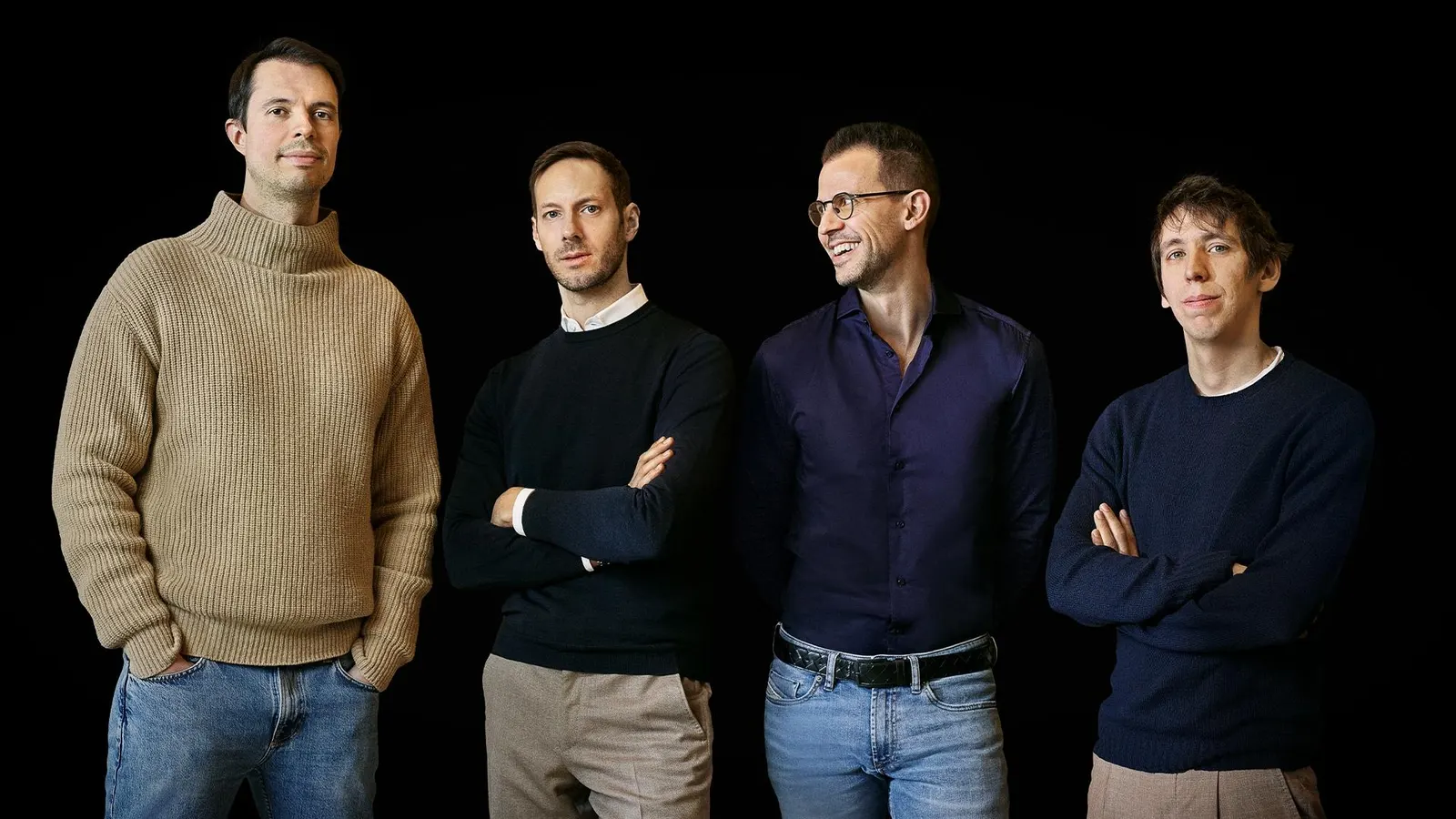
The journey to this multi-billion-dollar public debut began humbly in 2013 when Ferrari and his university friends Francesco Patarnello, Matteo Danieli, and Luca Querella watched their dream of building a journaling app collapse. Refusing to yield, they realized they could find success by buying existing, neglected software and breathing new life into it, naming their new venture Bending Spoons as a nod to the reality-bending magic of The Matrix. Today, keeping public investors happy in a volatile market will require a magic trick of its own, as tech stocks and buyout firms alike face severe market downturns, including Bending Spoons’ closest Canadian counterpart, Constellation Software, which saw its shares plunge 44% in a recent software sell-off. Yet, Ferrari remains unfazed by short-term market anxiety, expressing absolute confidence in his AI-driven future, where 90% of his company’s code is already written by artificial intelligence, freeing him to focus on absorbing three to five new legacy targets every single year.