





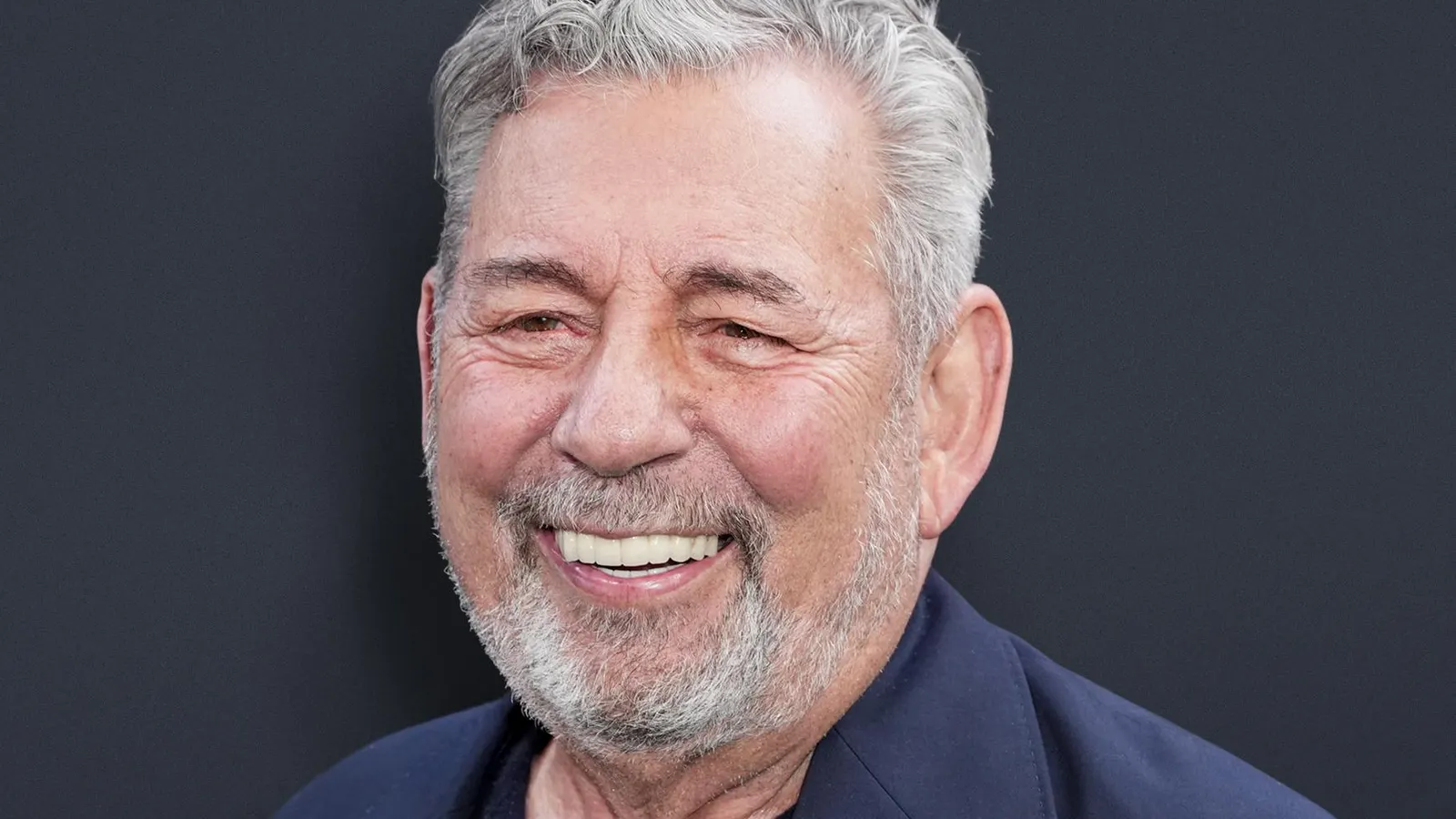
For more than two decades, Madison Square Garden felt less like the “Mecca of Basketball” and more like a coliseum of quiet desperation, a place where generations of New York Knicks fans gathered to watch their dreams consistently unravel under the ownership of James Dolan. Ever since he took the reins as chairman of the world’s most famous arena in 1999, Dolan acted as the lightning rod for the city’s collective sports misery, a billionaire scapegoat whose erratic decisions and defensive public posture made him an easy target for back-page headlines and talk-radio wrath. Yet, in one brilliant, cathartic, and utterly magical spring, that agonizing mountain of history was swept away by a wave of pure postseason euphoria. When the final buzzer echoed through the rafters after a grueling, physical 94-90 victory over the San Antonio Spurs in Game 5, clinching the Knicks’ first NBA championship in fifty-three long years, the collective scream of relief from Manhattan could be heard across all five boroughs. There, standing on the championship podium amidst a storm of falling confetti, was the 71-year-old Cablevision heir himself, holding the Larry O’Brien Trophy and offering an unexpected, raw, and deeply human moment of contrition to a fanbase that had spent years chanting for him to sell the team. “Hey, New York, I’m sorry it took so long, but here we are, and hopefully it won’t take that long again!” Dolan shouted into the microphone, his voice cracking with emotion. In that single, surreal instant, decades of bad blood, litigation, and mutual hostility evaporated, replaced by the realization that after half a century of wandering in the wilderness, the Knicks were finally back on top of the basketball world, and the owner long thought to be their curse had somehow become the man to see them through to the promised land.
Beyond the emotional heights of the championship court, this historic sporting run has solidified the Dolan family’s astronomical rise as one of the most formidable financial dynasties in modern American media and sports history. According to recent calculations, the New York Knicks have ascended to a staggering valuation of $9.75 billion, securing the third-highest spot in the entire NBA, while Dolan’s beloved NHL franchise, the New York Rangers, sits comfortably at $4 billion as the second most valuable team in hockey. Together, these crown jewels represent a combined value of $13.75 billion, a sum that easily dwarfs the public market capitalization of Madison Square Garden Sports itself, even as the parent company’s stock price has ridden a massive wave of optimism, surging by 103% over the course of the past year. Simultaneously, Dolan’s other corporate brainchild, Sphere Entertainment—the parent entity that operates the mesmerizing, futuristic Sphere structure just off the Las Vegas Strip alongside the profitable MSG regional sports television and radio networks—has seen its share price skyrocket by a jaw-dropping 291%. This absolute gold rush of commercial success has elevated the collective fortune of the Dolan family to an estimated $7 billion, divided elegantly among James and his five siblings’ families, proving that their grip on the entertainment landscape is more lucrative than ever. This tremendous accumulation of wealth is a direct continuation of the empire started by James’s late father, Charles Dolan, a visionary communications pioneer who famously founded HBO before launching Cablevision in 1973, a company that eventually sold to the European telecommunications firm Altice in 2016 for a staggering $17.7 billion. For James, managing this colossal inheritance has always been an exercise in balancing the immense pressure of his father’s titanic legacy with his own desire to carve out an independent, functional path in the highly volatile arenas of professional sports and entertainment.
To understand the complicated public persona of James Dolan is to look beneath the surface of his inherited wealth and examine a life defined by intense personal struggles, creative passions, and a quiet, decades-long battle with self-doubt. Growing up in the quiet Long Island suburb of Massapequa, Dolan was a young man living in the looming shadow of his highly successful father, earning a communications degree from SUNY New Paltz in 1979 before immediately entering the family business at Cablevision. He initially promised himself he would give the corporate world just five years to see if his heart was truly in it, but those five years stretched into ten, and eventually, the family enterprise became his life’s work. Yet, beneath the corporate suits and boardrooms lay a turbulent youth; during his mid-30s, Dolan struggled privately but acutely with drug and alcohol dependency, a destructive spiral that led him to a rehabilitation clinic in 1993. Since emerging from that dark period, Dolan has spoken with remarkable openness and pride about his hard-won sobriety, utilizing his personal battles to anchor himself when his public reputation was being continuously shredded by the media. When his father handed him the reins as CEO of Cablevision in 1995, many in the high-stakes world of New York business scoffed at his nepotistic promotion, viewing him as a pampered heir who had not earned his seat at the table—a perception that Dolan actively leaned into, once stating that being underestimated gave him a unique flexibility of movement. This desire to define himself outside the shadow of corporate spreadsheets also drove his lifelong devotion to music, culminating in his role as the lead singer and guitarist for his blues-rock band, JD & The Straight Shot. While sportswriters and internet trolls frequently mocked his musical endeavors, his band represented a deeply necessary therapeutic outlet, a passion project that eventually evolved into his single-minded obsession with constructing the Las Vegas Sphere, a venue built specifically to revolutionize the acoustic and visual experience of live performance.
However, before this glorious championship spring could ever materialize, the Knicks had to endure two decades of historic dysfunction, marked by an endless carousel of executive failures and public relations nightmares that alienated the city’s most loyal fans. Between the years 2001 and 2020, the franchise cycled through thirteen different head coaches, winning only a single playoff series during a span characterized by short-sighted trades for overpaid stars like Eddy Curry, Andrea Bargnani, and Carmelo Anthony—decisions that repeatedly mortgaged the team’s long-term future in exchange for brief, fleeting moments of relevance. The low point of this chaotic era was marked by high-profile feuds, most notably the shocking, physical ejection of beloved franchise legend Charles Oakley from Madison Square Garden in 2017, a public relations disaster that resulted in legal battles and deeply fractured the team’s relationship with its glorious past. Security guards were ordered to intercept and ban fans who dared to display signs or chant “sell the team,” and Dolan controversially authorized the use of advanced facial recognition technology to bar corporate lawyers from entering the arena if their parent firms were involved in active lawsuits against his companies. Yet, behind the scenes of this public warfare, a quiet psychological transformation was taking place within the owner, who realized that his highly defensive, hands-on style of management was only compounding the franchise’s institutional failures. The turning point arrived in 2020 when Dolan decided to step back from the basketball operations entirely, hiring former CAA super-agent Leon Rose as president and, crucially, granting him the time and autonomy to carefully reconstruct the roster from the ground up without owner interference. Abandoning the old habit of chasing superficial, high-profile free agents, Rose systematically built a culture of toughness and selflessness, signing the underappreciated Jalen Brunson in 2022 and trading for a core of relentless, blue-collar workers including Josh Hart, O.G. Anunoby, and Mikal Bridges, alongside the versatile Karl-Anthony Towns.
As the Knicks began their steady climb back to respectability under this new, disciplined philosophy, Dolan’s strategic focus was increasingly consumed by his artistic and corporate masterpieces out west, representing a brilliant separation of his personal passions from the daily operations of his sports teams. The grand opening of the Las Vegas Sphere in 2023 quickly captured the imagination of the global entertainment industry, becoming a viral sensation and hosting highly acclaimed, multi-million dollar residencies for iconic musical acts like the Eagles and the Backstreet Boys. For Dolan, the Sphere was not merely another line item on a corporate ledger; it was the ultimate realization of his lifelong dream of acoustic perfection, a high-tech playground where his obsessive attention to detail could be channeled productively without micro-managing the draft picks of the Knicks or the personnel moves of the Rangers. This structural division of his empire was further solidified by his clever corporate maneuvering, which saw the sports franchises and the entertainment venues divided into separate publicly traded entities, culminating in a recent proposal in May to split the Rangers from the Knicks entirely. While Dolan has steadfastly maintained that he has absolutely no interest in selling either team outright, this tactical corporate divorce makes it infinitely easier to liquidate minority stakes in individual franchises, unlocking massive shareholder value and ensuring the financial stability of his media empire for generations to come. By transferring his frantic, hands-on executive energy to the state-of-the-art developments in Las Vegas, Dolan unwittingly provided the New York sports market with the greatest gift he could possibly offer: the silent, supportive space required for a professional basketball team to establish its own identity, build genuine chemistry, and quietly foster a championship culture free from the suffocating pressure of an owner’s daily spotlight.
Despite his hard-earned redemption and the newfound adulation of a championship-starved city, James Dolan remains an unapologetically brash, combat-ready figure who refuses to conform to the sanitized, corporate expectations of modern sports owners. Even during the peak intensity of the NBA Finals, Dolan could not resist initiating a public, high-profile spat with New York City Mayor Zohran Mamdani and Police Commissioner Jessica Tisch, calling them “party poopers” on public broadcasts over bureaucratic permitting issues that led to the sudden cancellation of fan watch parties outside Madison Square Garden. Furthermore, his choice to host controversial political figures, including former President Donald Trump, in his private executive suite during the pivotal Game 3 of the Finals served as a stark reminder to his critics that he will always operate strictly on his own terms, completely indifferent to the storms of public opinion. He is a man of contradictions: a billionaire heir who fought through the depths of addiction, a widely mocked musician who built the most advanced concert venue on Earth, and a historically reviled sports owner who ultimately delivered the most coveted trophy in basketball back to the city of New York. In the end, the long, turbulent saga of James Dolan and his beloved Knicks teaches us a timeless lesson about the raw, visceral nature of sports fandom, where the deep-seated anger of decades of losing can be instantly forgiven by the sweet, intoxicating medicine of a single championship parade. As the confetti settled over the asphalt of Manhattan and millions of fans danced in the streets, the old chants of “sell the team” were replaced by a quiet, collective respect for an owner who, through pain, self-reflection, and a willingness to step aside, finally gave New Yorkers the one thing they wanted more than anything else: the absolute right to call themselves champions of the world.