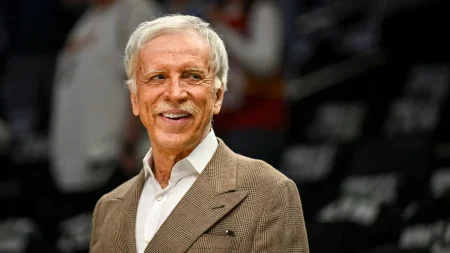







When Larry Ellison co-founded Oracle in 1977, the personal computer was a nascent novelty, far from the ubiquitous tool it is today. In those early days of green screens and punch cards, Ellison occupied a unique vantage point, recognizing before almost anyone else that the true value of the digital age would lie not in the hardware itself, but in the organization of the vast oceans of information it would generate. He pioneered Oracle’s relational databases, a revolutionary soft infrastructure that organized unstructured, chaotic data into clean, searchable, interconnected tables. This brilliant piece of foresight became the bedrock of corporate America, establishing Oracle as an indispensable industry standard. By the height of the dot-com euphoria in 1999, Oracle’s market capitalization surged past $150 billion, and Ellison was celebrated as a tech visionary. However, the tech landscape is notoriously unforgiving of yesterday’s champions. The 2010s ushered in the age of cloud computing, a paradigm shift that caught Oracle off guard. Suddenly, the company’s core business model—which relied on installing expensive, specialized database systems inside physical corporate server rooms—looked like an outdated relic of a bygone era. Competitors like Amazon Web Services (AWS) and Microsoft Azure capitalized on this shift, eating away at Oracle’s market share with scalable, on-demand cloud services, while upstarts like Salesforce surged ahead in value. Oracle’s stock, which had already fallen 75% after the dot-com bubble burst, languished for years as critics dismissed Ellison as a dinosaur. But those critics underestimated Ellison’s relentless drive. Rather than admitting defeat, he initiated a massive, high-stakes overhaul of the company, pouring immense resources into Oracle Cloud Infrastructure (OCI). He recognized that even in a cloud-based world, the fundamental need for robust database engines remained unchanged; it simply required a new delivery mechanism. By focusing on building high-performance data centers designed to handle the heaviest processing demands, Ellison kept his company alive, silently laying the groundwork for a spectacular modern resurgence.
Today, well into his early eighties—an age when most pioneers have long since retired to enjoy their fortunes—Ellison is commanding yet another historic tech revolution. He has successfully integrated Oracle’s high-performance data centers with the insatiable, processing-heavy demands of generative artificial intelligence, driving the company’s market value briefly toward the $1 trillion mark in late 2025. This technological triumph has catapulted Ellison’s personal net worth to an extraordinary $295 billion, solidifying his position among the top five wealthiest individuals on Earth. Yet his modern ambition extends far beyond cloud servers and database tables; it has expanded into the very cultural fabric of global media. In August of last year, Ellison’s influence took a artistic and dynastic turn when his son, David Ellison, secured control of the historic Paramount studio through a high-profile merger with Skydance Media. This acquisition is set to expand even further with an impending $111 billion merger with Warner Bros Discovery, projected to close by September. This transaction positions the Ellison family to oversee a massive, unparalleled entertainment empire that spans prestigious and influential networks like CNN, CBS, HGTV, and HBO. It is a striking convergence of hard technological power and soft cultural influence, demonstrating how a man who began his career writing software code now commands both the digital pipelines powering artificial intelligence and the narrative engines shaping global pop culture.
Among the crown jewels now under the Ellisons’ media umbrella is the globally adored Harry Potter franchise, a magical world created by another icon of resilience, J.K. Rowling. Long before she was a household name, Rowling’s life was defined by intense personal struggle. As a survivor of domestic abuse and a single mother living on state welfare in Edinburgh, she wrote the early chapters of Harry Potter in drafty cafes, fighting daily against poverty and despair. Her perseverance paid off when the series blossomed into a global phenomenon, selling over 600 million books, spawning eleven blockbuster films, and transforming her into the world’s first billionaire author by 2004. Yet, Rowling’s relationship with money was never conventional. Her extensive, quiet philanthropic efforts—including founding the children’s charity Lumos and donating hundreds of millions to combat poverty and social inequality—actually took her off the billionaire list in 2012, a rare testament of a creator prioritizing human welfare over financial status. Her journey took an even more turbulent turn in 2019, when her public commentary on gender identity thrust her into the center of a polarizing cultural battleground. She faced an overwhelming wave of public condemnation, online hostility, and estrangement from the very actors she had helped propel to fame. In personal reflections shared online, she described receiving death threats and experiencing profound social isolation, revealing the heavy human toll of standing at the center of a cultural storm. Yet, Rowling refused to retreat. By 2026, her creative empire has undergone an undeniable resurrection. A highly anticipated HBO Max television series is currently in production, designed to expand each of her seven books into dedicated, high-budget seasons, with the first season alone costing upwards of $100 million. Combined with a massive expansion of the Wizarding World at Universal’s Epic Universe theme park in Orlando, Rowling’s franchise remains an unstoppable force, generating an estimated $80 million annually in royalties. Her return to the billionaire list with a net worth of $1.2 billion is not just a commercial milestone; it is a profound demonstration of creative permanence surviving intense public adversity.
Sharing this rare space of spectacular recovery is Michael Saylor, whose professional life has been a turbulent, high-stakes journey of extreme highs and devastating lows. Saylor first entered the public eye in 1998 as a 33-year-old MIT graduate who had co-founded MicroStrategy, a promising business intelligence and data mining software firm. During the initial internet boom, MicroStrategy’s valuation skyrocketed, briefly pushing Saylor’s personal net worth to an astonishing $14 billion. But when the dot-com bubble inevitably burst, the drop was swift and painful. MicroStrategy’s stock plummeted, the company faced painful regulatory scrutiny from the Securities and Exchange Commission, and the data mining software they had pioneered became a common, low-margin commodity. For two decades, MicroStrategy operated in relative obscurity, its stock price flatlining as Saylor faded from the spotlight. Many assumed his chapter in tech history had permanently closed. However, the year 2020 triggered a profound intellectual awakening for Saylor. Interestingly, during the early 2010s, Saylor had been a public critic of digital currencies, dismissing them as passing trends. Yet, showing a rare quality of intellectual humility, he was willing to deeply challenge his own long-held assumptions. Recognizing that cash was rapidly losing its purchasing power in an era of unprecedented global monetary expansion, Saylor pivoted MicroStrategy’s entire corporate treasury into Bitcoin. Today, his unconventional strategy has transformed MicroStrategy into the world’s premier corporate Bitcoin holder, controlling roughly 840,000 bitcoins—over 4% of the entire global supply. Now worth an estimated $4.7 billion, Saylor has secured his place on the list of global icons. His achievement is not merely a story of personal wealth recovery, but of pioneering financial innovation, as his aggressive corporate treasury playbook continues to inspire imitators across global financial boards.
This pattern of radical, visionary risk-taking is also the defining trait of SoftBank founder Masayoshi Son, a man whose investment philosophy has always leaned toward the audacious. Son earned legendary status in the tech community in 2000 with an early, highly successful investment in a young Chinese e-commerce company named Alibaba. Seeking to replicate that lighting-in-a-bottle success, Son launched the $100 billion Vision Fund in 2017, aiming to fund the technologies of tomorrow. However, his aggressive, growth-at-all-costs philosophy faced a harsh reality check with the dramatic, highly publicized collapse of WeWork and subsequent billion-dollar losses across SoftBank’s expansive portfolio in 2022. For a period, Son was widely criticized by the financial press as a symbol of venture capital hubris and irresponsible startup spending. He faced intense personal and professional scrutiny, with many questioning whether his legendary investment sense had abandoned him. Yet, Son possessed an unwavering, almost spiritual belief in the eventual dominance of artificial intelligence. When OpenAI’s ChatGPT burst onto the scene, initiating a global AI boom, Son’s long-term thesis was suddenly vindicated. SoftBank emerged as one of OpenAI’s most prominent financial backers, committing billions to the AI pioneer. By the first quarter of 2026, SoftBank recorded an astounding $25 billion gain on its OpenAI position alone, restoring Son’s reputation as an ahead-of-his-time visionary. His journey reflects the unique psychology of the world’s most ambitious investors: a willingness to endure public failure and immense losses, confident that the future will eventually align with their vision.
Yet, among all these remarkable stories of financial and cultural survival, none matches the sheer historical scale and sheer defiance of the 47th President of the United States, Donald Trump. When Trump concluded his first presidential term in 2021, his financial status had taken a significant hit. Forbes estimated his net worth had dropped to $2.4 billion from a pre-political high of $4.5 billion, resulting in his exclusion from the prestigious Forbes 400 list of wealthiest Americans for the first time in twenty-five years. Facing a barrage of complex civil and criminal battles, massive legal fines, and deep political polarization, his financial future appeared as precarious as his political path. Yet, Trump’s historic return to the presidency has completely rewritten the traditional rules of post-presidency life, blending political influence with unprecedented financial growth. Today, his estimated net worth has risen to $6.5 billion, bolstered by his savvy embrace of modern digital assets, including over $1 billion in cryptocurrency holdings. His financial comeback highlights a broader, fascinating truth shared by Ellison, Rowling, Saylor, and Son: that true power in the modern era is rarely a straight line of unbroken successes. Instead, it belongs to those rare, highly resilient individuals who possess the radical self-belief, adaptability, and determination required to rebuild their empires when the rest of the world has already written them off.