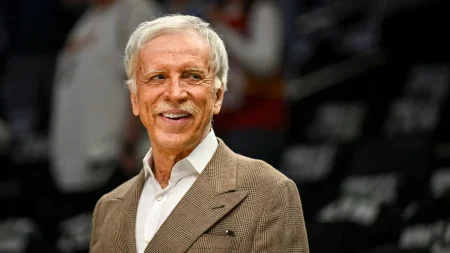







Larry Ellison is a legendary figure who co-founded Oracle in 1977. At an age when most of his tech pioneer contemporaries have long since retired to quiet philanthropy, private island isolation, or academic contemplation, Ellison has engineered one of the most astonishingly vibrant second acts in modern business history. The latest chapter of this extraordinary corporate saga culminated on a historic Monday, as Oracle’s stock skyrocketed by over ten percent to reach an all-time intraday high of $250 per share. This massive surge propelled the aging co founder’s personal net worth past the mind boggling milestone of $300 billion, cementing his status among the wealthiest individuals in history. No longer regarded merely as a legacy dinosaur of the late twentieth century database wars, Oracle has suddenly been reborn as a marquee, indispensable player in the rapidly unfolding artificial intelligence revolution. It is a stunning turnaround that reflects not just a triumph of corporate strategy, but a deeply personal victory for Ellison, who still holds a massive forty percent stake in the technology empire he built from the ground up. For years, skeptics whispered that Oracle’s best days were behind it, characterizing the firm as a slow moving giant burdened by legacy systems and unable to compete with the nimble cloud services of rival giants like Amazon and Microsoft. Yet, this recent market performance, arriving on the heels of the software sector’s strongest month of growth since the dot com boom of 2001, proves that the old guard still possesses the capacity to shock the world. By aligning his company’s vast resources with the bleeding edge of computational science, Ellison has transformed Oracle from a mature database provider into the primary physical spine of the AI transition, orchestrating a monumental wealth expansion—including a legendary historical peak in September 2025 where his fortune jumped by a record breaking $100 billion in a single day, which continues to defy conventional market gravity. His sheer tenacity has redefined the parameters of billionaire longevity, illustrating that age is no barrier to systemic disruption in the technology sector.
To truly appreciate Oracle’s current supremacy, one must understand the sheer scale and audacity of its technological pivot. For several decades, Oracle’s primary bread and butter was the relational database—a highly reliable, structured, but ultimately unglamorous tool used by global corporations and government agencies to store and organize their foundational back-end data. When the broader tech landscape shifted toward the cloud, Oracle initially struggled to adapt, facing fierce criticism that its legacy database architecture could not survive in a decentralized, on-demand world. However, under Ellison’s unrelenting and visionary guidance, the company quietly embarked on a massive infrastructure push, constructing specialized physical data centers designed specifically to handle the intense, highly complex workloads required by generative artificial intelligence models. Today, Oracle no longer just manages rows of databases; it rents out raw, high-performance computational power to the most advanced AI developers on the planet, including OpenAI. By securing close, high-stakes partnerships with industry titans like Microsoft, Nvidia, and Meta, Oracle has positioned itself as the underlying foundry where the future of digital intelligence is being forged. These tech hyperscalers and developers require an incomprehensible amount of storage, speed, and electricity to train and execute their multi-billion-parameter large language models, and Oracle’s specialized cloud infrastructure has proven to be uniquely suited to meet these extreme physical demands. This transformation is not merely an incremental technological upgrade; it is a profound, total reimaginement of the company’s identity. It represents an evolution from a software vendor that businesses used to store transaction records, to a vital, non-negotiable infrastructure utility provider that the global tech ecosystem absolutely requires to function, proving that legacy giants can successfully reinvent themselves for the twenty-first century if they possess the courage to construct the physical foundations of tomorrow. This pivot demonstrates that physical constraints—the real estate, the massive fiber-optic cables, and the heavy cooling systems—have suddenly become the ultimate currency in an increasingly virtual world, turning physical servers into priceless digital real estate assets that no competitor can easily replicate.
The road to this historic market valuation was anything but smooth, marked by intense investor skepticism, dramatic market fluctuations, and a high-stakes gamble that initially left the financial world deeply unsettled. Just a few months prior, Oracle’s stock had tumbled nearly thirty-five percent from its late-October highs, dragged down by an aggressive fifty-billion-dollar capital expenditure plan aimed at rapidly expanding its AI data center footprint. Wall Street, notorious for its short-term quarterly focus, reacted with widespread panic to a series of revenue misses and persistent rumors of stalled financing. Reports leaked of slipping timelines regarding the construction of a critical data center intended to power OpenAI’s ambitious next-generation models, leading various critics to argue that Oracle had drastically overextended itself in a desperate, expensive bid to remain relevant. The massive financial outlay was seen by many prominent analysts as a reckless cash drain that directly threatened the company’s long-term balance sheet stability. However, the narrative has shifted dramatically in recent days, yielding to a wave of newfound optimism. Wall Street has aggressively reversed its skepticism, with prominent investment firms like Wedbush, Arete, and Oppenheimer leading a chorus of bullish upgrades and significantly raising their price targets for Oracle shares. Analysts are now pointing to Oracle’s vast backlog of locked-in, long-term corporate customer contracts as concrete evidence of a highly resilient, predictability-laden revenue stream. The market’s realization that Oracle holds critical, non-negotiable relationships with the vanguard of the AI revolution—acting as the indispensable infrastructure partner to both Microsoft and Nvidia—has turned former detractors into enthusiastic advocates, illustrating how quickly the financial world can pivot from existential panic to unbridled euphoria when long-term bets begin to pay off. This dramatic turnaround confirms that behind the sterile numbers lies a deeply human drama of high-stakes execution, where reputations are made or destroyed on the physical delivery of promised steel, concrete, and silicon. For Ellison, it represents the ultimate vindication of a career defined by aggressive, counter-intuitive decisions that repeatedly left contemporary observers trailing far behind him.
Oracle’s dramatic individual market ascent does not exist in a vacuum; rather, it serves as the crown jewel of a broader, industry-wide renaissance that has swept through the entire international software sector. Throughout the early, chaotic stages of the generative AI boom, a profound, existential anxiety gripped the software-as-a-service (SaaS) industry. Investors and software engineers alike worried that legacy software platforms would be rapidly rendered obsolete by highly intelligent, self-writing AI agents, effectively gutting traditional subscription-based corporate business models and database software licenses. This deep-seated fear drove a sustained, depressing sell-off across many established, decades-old tech names. However, May marked a stunning and historic turning point, as the iShares Software ETF surged by roughly twenty-one percent, recording its most explosive single-month gain in twenty-five years. This massive relief rally was fueled by the growing realization that established software companies are not destined for digital extinction; instead, they are uniquely positioned to integrate, scale, and successfully monetize these new AI tools faster than agile but resource-poor startups. Oracle has become the ultimate poster child for this narrative of strategic adaptation and survival. Its success has provided a tangible blueprint for how a legacy tech giant can leverage its existing enterprise relationships, deep financial pockets, and massive operational scale to co-opt the very technology that was supposed to destroy it. By proving that legacy databases and cloud architectures can serve as the essential bedrock for next-generation machine intelligence, Oracle helped restore systemic-level confidence to an entire sector, convincing the global investment market that the software industry will be a primary beneficiary, rather than a tragic casualty, of the artificial intelligence revolution. This structural resilience has reshaped the venture capital landscape, proving that scale and infrastructure are the real arbiters of power in the modern era of computing, much to the relief of legacy shareholders everywhere.
Beyond the fluctuating numbers on the stock exchange, the vast fortune of the Ellison family has evolved into a complex, multifaceted web that intersects with media, entertainment, and global geopolitics. Larry Ellison’s influence is no longer confined to the Silicon Valley tech bubble; it has expanded into a sweeping, multi-generational dynasty. His son, David Ellison, helms Skydance Media, which has launched a highly ambitious, hundred-and-ten-billion-dollar bid to merge with Paramount and potentially align with Warner Bros. Discovery. Backed by the immense financial resources of the Ellison family and RedBird Capital, this massive deal threatens to reshape the global entertainment landscape, consolidating iconic franchises ranging from Harry Potter and the DC Cinematic Universe to major news and broadcasting networks like CBS, CNN, and HBO under a single, family-backed umbrella. Simultaneously, the elder Ellison maintains a direct, highly controversial connection to modern digital culture through Oracle’s approximately fifteen percent stake in the U.S. operations of TikTok, putting him at the center of fierce political debates regarding foreign influence, data privacy, and national security. This remarkable combination of cutting-edge technology, dominant short-form video media, and legacy Hollywood entertainment has thrust the Ellison family into the center of a national conversation about the sheer concentrated power and political reach of contemporary billionaire dealmakers. When coupled with Larry’s eccentric personal acquisitions—such as his ownership of the prestigious Indian Wells tennis tournament and roughly ninety-eight percent of the Hawaiian island of Lanai—it becomes clear that the Ellison legacy is no longer just about database software, but about shaping the physical, digital, and cultural spaces where humanity lives, works, and plays. Their family office operates almost like an independent nation-state, wielding influence over what we watch, how we communicate online, and even the physical islands we visit, redefining the modern definition of a tech dynasty.
Yet, beneath the glittering veneer of record-breaking net worths and historic stock rallies, a sober look at Oracle’s financial foundation reveals significant, high-stakes vulnerabilities that could threaten this newly minted empire. Skeptics and cautious financial observers warn that this entire rally is built upon a mountain of aggressive spending and immense, unprecedented leverage. To construct the sprawling database structures and hyper-scale data centers required to house Nvidia’s cutting-edge microchips and power OpenAI’s models, Oracle is burning through massive amounts of cash, currently carrying a heavy burden of more than one hundred and twenty-four billion dollars in long-term debt. The company’s future liquidity is fundamentally tied to the hopeful assumption that its clients will remain solvent and continue to grow at an exponential rate to justify these astronomical capital investments. If the consumer demand for generative artificial intelligence begins to plateau, or if the monetization of these advanced tools fails to meet their sky-high expectations, Oracle’s massive infrastructure gamble could transform into a catastrophic financial anchor. The company represents a high-wire act where any delay in supply chains, any local energy constraint, or any financial hiccup from primary clients like OpenAI could trigger a rapid repricing of its stock. Ultimately, Larry Ellison’s latest and grandest gamble is a testament to the high-risk, high-reward nature of modern tech capitalism, proving that while the rewards of holding the keys to the future of AI are unimaginably vast, the precipice upon which this wealth is built remains dangerously steep. In this high-stakes game of software poker, Ellison has bet his entire legacy on the belief that the AI boom is not a temporary bubble, but a permanent shift in human civilization, leaving no room for error as Oracle races ahead.