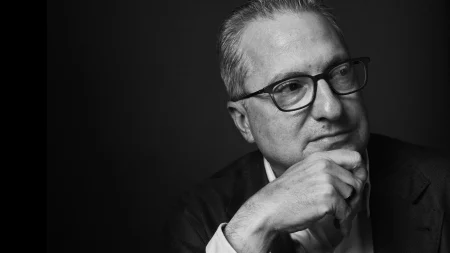



For nearly half a century, the name Ronald Lauder has been whispered in the corridors of power with a potent mixture of reverence, strategic calculation, and intense curiosity. As the youngest son of the iconic makeup pioneer Estée Lauder, the eighty-two-year-old billionaire has spent his entire adult life navigating the sparkling, high-society worlds of corporate luxury and high-stakes political theater. Yet, in a sudden move that has sent shockwaves through the Republican establishment, Lauder has abruptly closed his legendary checkbook, systematically dismantling his vast political machinery and letting go of his longtime consultants and advisers. For a man who has poured at least seventy-two million dollars into federal, state, and local political campaigns, this quiet and final exit marks the end of an era. It signals the retreat of one of the conservative movement’s most reliable and lavish bankrollers—a figure who transitionally bridged the old-school diplomacy of the Reagan administration, where he served as an ambassador, with the modern, high-intensity populist climate of the Trump-aligned GOP. Lauder’s decision to completely halt his political giving this year represents a stark, unexpected departure from a lifetime of active participation in the democratic process. It is a quiet folding of hands by a man whose financial fingerprints are found on some of the most consequential political battles of the last forty years, leaving both allies and adversaries to wonder what this sudden power vacuum will mean for the future of conservative organizing. Without his steady stream of funding, many regional and national campaigns are left scrambling, highlighting just how deeply American politics has relied on the personal whims of a select few ultra-wealthy individuals who act as quiet gatekeepers of power.
The mystery surrounding Lauder’s sudden retreat has sparked intense speculation within elite financial and political circles, revealing a deeply human struggle between family pressure, declining fortunes, and the natural desire of an aging octogenarian to secure his lasting legacy. On one hand, reports suggest that his children have urged him to rein in his extravagant political spending, pointing to a severe seventy-three and a half percent drop in Estée Lauder’s stock value over the past five years—a decline that has noticeably diminished the family’s twenty-one-billion-dollar empire and shrunk his personal net worth to just under five billion dollars. On the other hand, close associates paint a portrait of a man consciously winding down his public obligations to focus on his true passions before his time runs out, rather than responding to financial panic. Lauder has recently retired from the Estée Lauder board, stepped down as the long-serving president of the World Jewish Congress, and made the monumental announcement that his beloved Neue Galerie, a sanctuary for Austrian and German art, will merge with the Metropolitan Museum of Art by 2028. This paints a picture of a billionaire transitioning away from the noisy, often toxic arena of partisan warfare to dedicate his remaining years to culture, heritage, and the preservation of art, choosing a legacy of beauty and philanthropy over the fleeting and polarizing victories of political campaigns. It is a poignant reminder that even the most powerful political kingmakers eventually face the realities of mortality, prompting a reassessment of what truly matters when the dust of political warfare finally settles.
Perhaps nowhere is Lauder’s political footprint more fascinating or complex than in his lifelong, labyrinthine relationship with Donald Trump, a bond forged during their college years that survived decades of social and political evolution. Lauder consistently stepped up to fund Trump’s political ambitions in 2016 and 2020, but their alliance was not without its moral red lines; in 2022, Lauder publicly broke with Trump, refusing to fund his third presidential run after the former president hosted a notorious Holocaust denier at Mar-a-Lago—a deeply painful affront to a man who had dedicated years to leading the World Jewish Congress. Yet, the gravitational pull of power and shared history proved irresistible, and in early 2025, Lauder re-entered the fold with a jaw-dropping five-million-dollar contribution to the MAGA Inc. super PAC, celebrating Trump’s return to the White House with public enthusiasm. This dynamic relationship was not merely transactional; Lauder possessed a rare level of influence over Trump, famously convincing him of the geopolitical value of purchasing Greenland to secure its vital rare-earth elements, which are essential for artificial intelligence and advanced modern weaponry. Lauder even went so far as to offer to help negotiate the deal with Denmark and wrote public op-eds backing the plan, while simultaneously securing lucrative mineral deals in Ukraine. This bizarre chapter of geopolitical maneuvering demonstrates how personal loyalty, heritage, and high-level corporate ambition can intertwine to shape global history behind closed doors, proving that Lauder’s influence extended far beyond simple campaign donations.
To fully comprehend the scale of Lauder’s departure, one must look at how his political spending evolved alongside the changing, increasingly deregulated landscape of American campaign finance law. Since 1979, when federal records first began tracking his donations, Lauder’s giving was relatively modest and disciplined, governed by strict post-Watergate contribution limits that kept his checks under ten thousand dollars. However, the landmark 2010 Supreme Court ruling in Citizens United v. FEC completely transformed his approach, unlocking the era of super PACs and allowing him to write massive, multi-million-dollar checks that carried unprecedented weight. Lauder utilized this new era of unlimited spending to become a federal powerhouse, channeling millions into organizations like the National Horizon super PAC, which actively worked to defeat progressive candidates and shape the ideological composition of Congress. Despite his staunch Republican alignment, Lauder occasionally demonstrated a pragmatic willingness to cross party lines, such as his surprising financial support for Democratic Senator Robert Menendez during his legal crises, as well as funding former Democratic Governor Andrew Cuomo’s allies. This pattern of giving highlights how the deregulation of political money empowered a small, ultra-wealthy elite to act as private gatekeepers of American democracy, exercising a level of influence that average citizens could never hope to match, and turning political parties into vehicles for individual billionaire philosophies.
While his federal contributions were massive, it was in his beloved home state of New York that Lauder truly operated as a gale-force disrupter, reshaping the political landscape through sheer financial force and persistent advocacy. His obsession with New York politics began with a self-funded, record-shattering thirteen-million-dollar mayoral bid in 1989, which, despite ending in a primary loss to Rudy Giuliani, established Lauder as a formidable political force. Undeterred by the loss, he pivoted from candidate to puppet master, spending millions to bankroll the historic 1993 referendum that established term limits for New York City officials—a rule he fought fiercely to preserve in subsequent years and which forced future mayors like Michael Bloomberg to seek his personal blessing before running for a third term. He waged quiet, expensive wars against Democratic redistricting efforts, poured millions into keeping elite public school testing standards intact, and spent eleven million dollars to prop up Republican Lee Zeldin’s formidable run for governor in 2022. Through these relentless state-level crusades, Lauder proved that one does not need to hold public office to dictate the rules of engagement, utilizing his immense cosmetics wealth to single-handedly construct barriers against progressive policies in one of the country’s most liberal bastions.
Ultimately, Ronald Lauder’s legacy is as polarizing as it is profound, leaving behind a trail of monumental influence, deep family rifts, and fierce democratic backlash. To his critics, including progressive lawmakers who labeled him a poster child for the corrupting influence of unchecked wealth, Lauder was a walking testament to how the ultra-rich can buy, bend, and distort the democratic process to fit their personal whims and protect their corporate interests. Even within his own family empire, his political crusades caused deep fractures, sparking historic revolts among Estée Lauder employees who felt his support for polarizing figures like Trump directly contradicted the inclusive and modern values of the cosmetics brand. Yet, as the curtain falls on his long, tumultuous career in political giving, Lauder remains entirely unapologetic, insisting that his efforts were driven by a sincere, patriotic desire to strengthen his city and defend democratic principles. Whether viewed as a patriotic savior of conservative values or a plutocratic disruptor of local democracy, his departure leaves a massive, quiet void in American politics, reminding us of an era when a single man’s pocketbook could alter the course of history and shape the very laws of the land.