

A Community in Shock: The Unfolding Story of Cranbury’s $26 Million Crisis
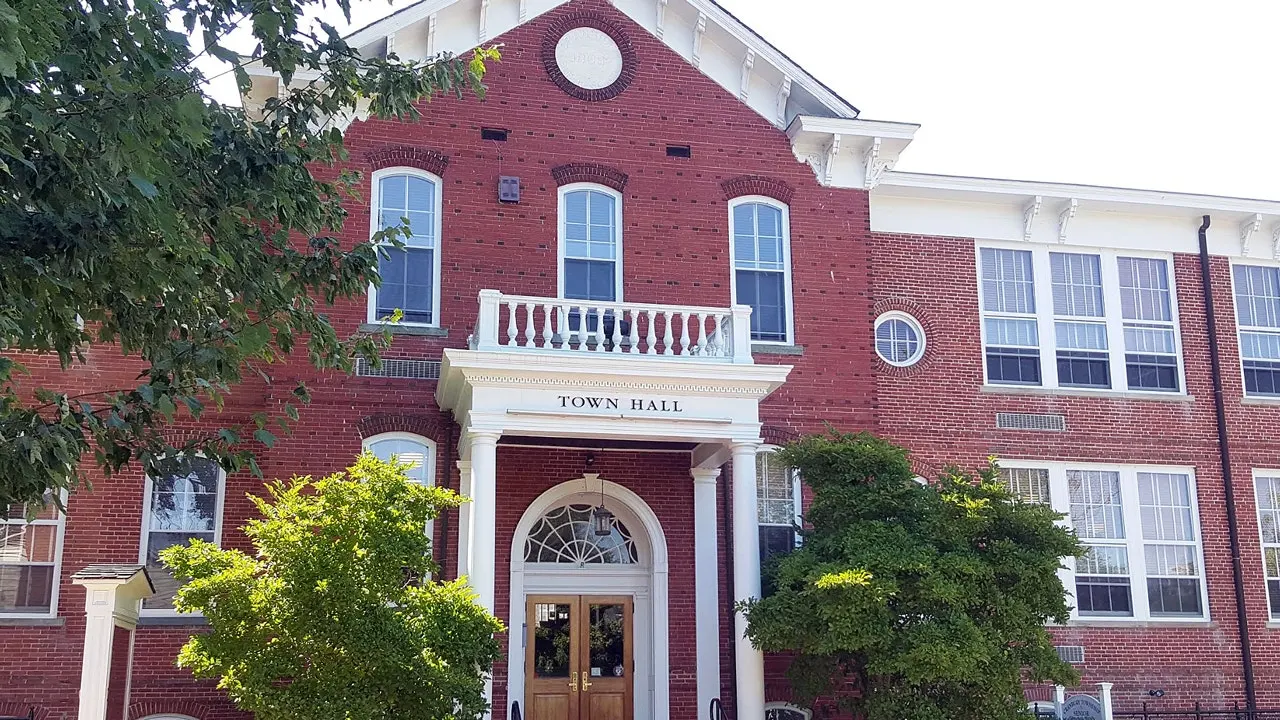
In the quiet, tree-lined township of Cranbury, New Jersey, a bombshell shattered the typical serenity of local governance. On a crisp Friday afternoon, Mayor Lisa Knierim stepped forward to deliver news that would send ripples of disbelief, anger, and confusion through the small community of roughly 3,500 residents. The township, she revealed, had been victimized by a staggeringly sophisticated financial heist—a fraudulent wire transfer that siphoned a breathtaking $26 million from municipal coffers. This was not a loss of a few thousand dollars from a petty crime, but a colossal sum that represented a significant portion of the town’s financial resources, a blow of such magnitude that it threatened the very fiscal stability of the municipality. The funds, meticulously set aside for a noble purpose—the acquisition of property to meet the township’s state-mandated affordable housing obligations—had vanished into the digital ether, leaving officials scrambling to trace the digital breadcrumbs and residents reeling from the sheer audacity and scale of the deception.
The timeline provided by the mayor painted a concerning picture. The fraudulent transfer had occurred on September 28, a date now marked in the town’s collective memory as the moment the money began to move. Yet, the public announcement did not come until November 6, a full five weeks and one day later. That particular date was far from arbitrary; it landed just three days after the fiercely contested midterm elections. This timing, whether coincidental or calculated, immediately ignited a firestorm of speculation and distrust among the citizenry. The announcement felt less like a transparent disclosure and more like a carefully held press release, strategically parked until after the votes were counted. For many, the silence in the interim was deafening, and the timing of the revelation transformed a story of financial crime into a political powder keg, as residents began to question not just how the theft happened, but why they were kept in the dark for so long during a critical electoral period.
The investigation, as detailed by the mayor and corroborated by local law enforcement, has been a frantic, multi-jurisdictional effort to recover the stolen millions. The Cranbury Township Police Department, in conjunction with the Middlesex County Prosecutor’s Office, swiftly assembled a task force that pulled in resources from county, state, and federal agencies, including the FBI. In the high-stakes world of cyber fraud, speed is the only ally, as stolen funds can be laundered, moved, and hidden across global financial networks within hours. The initial efforts yielded a glimmer of hope: authorities managed to freeze a substantial portion of the loot, totaling roughly $17.3 million in various accounts. However, a stark and sobering reality remains—approximately $8.7 million of the township’s money is still unaccounted for, floating somewhere in the financial underworld, outside the reach of the current freeze orders. The township has remained tight-lipped on the specifics of the investigation, citing the active and ongoing nature of the case, but the partial recovery serves as a bittersweet reminder of what was lost versus what might be saved.
The political dimension of this crisis cannot be overstated, and it was this aspect that dominated the initial public outrage. The timing of the announcement was particularly explosive given the recent election results. The local race for the Township Committee had seen Democrat Thomas Szczur Jr. decisively defeat Republican challenger Carol Haring, securing a commanding 63.69% of the vote. Szczur’s victory solidified the Democrats’ hold on all five committee seats, effectively maintaining the status quo in local governance. For many residents, the confluence of these events—the theft, the silence, the election, and the subsequent disclosure—was too coincidental to be mere happenstance. Social media, particularly the township’s official Facebook page, became a digital town square where frustration boiled over. Comments demanded answers, with one resident cutting to the core of the suspicion: “I’m interested in knowing why this information was kept under wraps until after Election Day.” Another echoed the sentiment, asking with incredulity, “If this occurred on September 28th why is it just now being shared?” The questions were not just about logistics; they were about fundamental trust in the elected officials who were supposed to be the stewards of the community’s well-being.
In the face of the mounting scrutiny, Mayor Knierim attempted to steer the narrative back to recovery and reform, acknowledging the “legitimate” concerns of the residents but emphasizing the forward path. Her statement was a careful balancing act, expressing empathy for the community’s shock while projecting an image of proactive governance. She outlined immediate steps being taken to fortify the township’s financial defenses, signaling that the days of simple oversight were over. The Township Committee announced plans to introduce ordinances that would create two new, crucial positions: an assistant township administrator and an assistant chief financial officer. The intent was clear—to bring in more senior-level expertise to oversee financial operations and prevent a recurrence of such a catastrophic oversight failure. Additionally, the committee moved to consider hiring an external municipal accounting firm to provide independent financial consulting and a fresh set of eyes on the township’s books. These moves, while practical, also served a rhetorical purpose: to demonstrate to the public that the administration was not paralyzed by the scandal, but was instead acting decisively to shore up its defenses. Even with these measures, the official stance remained that the investigation was paramount, and further details would be withheld to protect its integrity.
As the dust begins to settle, Cranbury finds itself at a crossroads, grappling with the dual crises of a massive financial loss and a severe breach of public confidence. The $26 million theft represents more than just a line-item loss; it is a blow to the town’s future plans, potentially derailing the affordable housing projects that were the very purpose of the funds. The fact that over $8 million remains unaccounted for looms like a dark cloud over the township’s fiscal health. Yet, the deeper wound may be the erosion of trust between the governed and the governing. The town’s decision to withhold the information for thirty-nine days—through an election cycle—has fostered a cynical narrative that suggests the truth was subordinated to political expediency. The mayor’s office has remained largely silent on the reasoning for the delayed disclosure, with Fox News Digital’s inquiries going unanswered, leaving a void that speculation is all too willing to fill. For the residents of Cranbury, the recovery of the missing millions is only half the battle; the recovery of faith in their local government may prove to be the more difficult—and more important—task in the long run.