


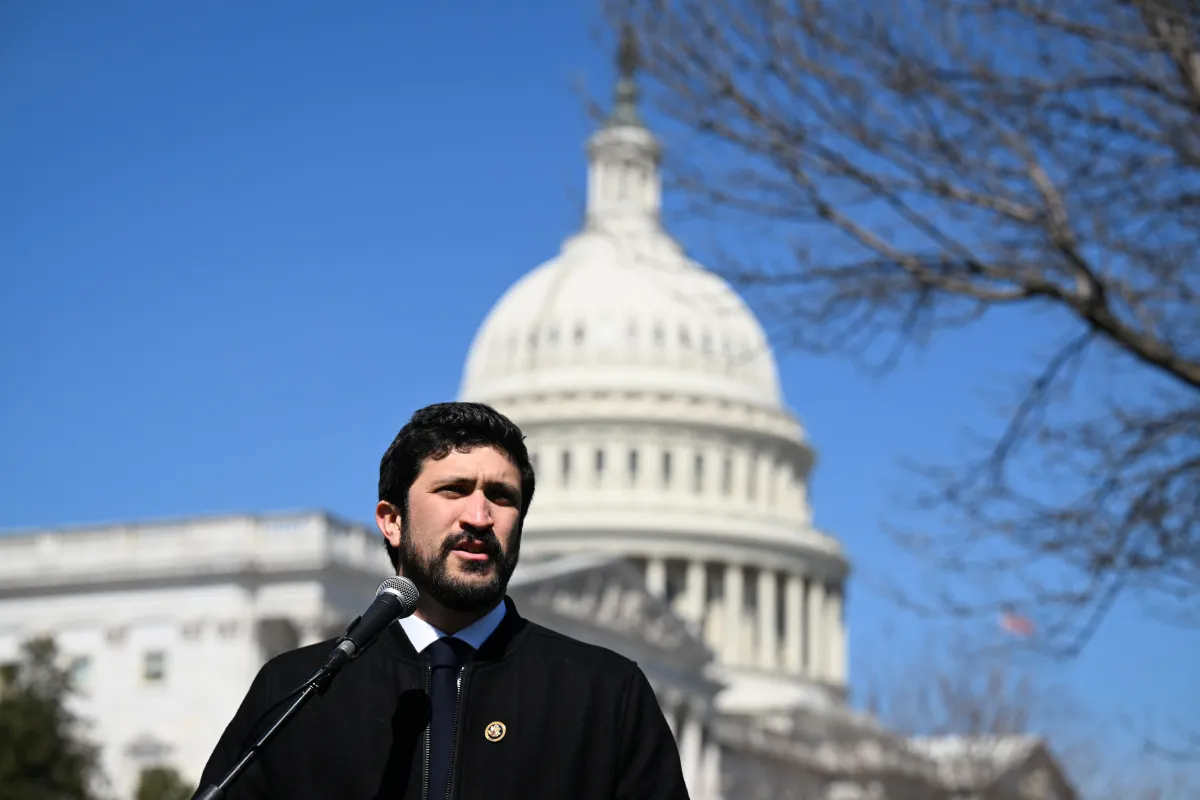
After the midterm elections delivered Democrats a House majority far larger than most observers anticipated, Representative Greg Casar of Texas, who chairs the Congressional Progressive Caucus, moved quickly to make sure the left wing of the party would not be treated as an afterthought. In a three-page memo distributed to caucus members and obtained by Politico, Casar laid out a plan that turns conventional political logic on its head. The party is likely to control roughly 255 seats, a number that would normally suggest leadership does not need progressives as much as it did in a narrow majority. But Casar argues that a big majority is exactly what makes ambitious legislation possible. The Progressive Caucus will have more than 105 members in the next Congress, including a record number of lawmakers representing districts that flipped from Republican to Democratic. Many of those members will now chair committees and hold positions of real power. Rather than treating that as a dilution of influence, Casar insists it is the opposite. The memo outlines a three-part strategy: pass progressive legislation, use congressional oversight to go after corporations as well as the Trump administration, and hold Donald Trump to his word on populist economic policies. The underlying idea is simple. Democrats should not spend the next two years merely blocking the president. They should put bills on his desk that test whether he actually means what he says about lowering costs and helping working people. If Trump signs them, Democrats can claim real victories. If he vetoes them, Democrats can turn his refusal into a powerful election weapon. The White House has already tried to frame the coming showdown on its own terms, with spokesman Matthew Middleton touting the administration’s tax cuts, drug pricing efforts, job growth, and trade deals, and saying the president would work with anyone willing to strengthen the economy. But Casar’s memo suggests Democrats intend to do more than wait for invitations to cooperate. They want to seize the initiative and force the president to respond to them.
At the heart of Casar’s message is a pointed rejection of the pundit class’s favorite parlor game: speculating about which Democratic faction will gain or lose influence now that the party has such a comfortable cushion. In a narrow majority, every voting bloc can hold the leadership hostage because no votes can be spared. With a majority of more than fifty seats, the math changes, and moderates might reasonably assume that progressives have lost their leverage. Casar says that assumption is exactly backwards. “Big majorities are good for getting big things done,” he wrote. The goal, he insisted, is not “to win a battle against other Democratic caucuses” but to pass the kind of longstanding progressive priorities that bring down costs, root out corruption, and boost wages. He also pointed out that small majorities give corporate special interests an outsized ability to block popular policies by recruiting a handful of opponents. A large majority takes away that veto point. That argument is meant to preempt the intra-party conflict that many observers expect in the coming session. Progressives can look at victories by left-wing candidates, including several backed by the Democratic Socialists of America, and argue that voters rewarded a bold economic message. Moderates can point to Democratic wins in states like Texas and Kansas and argue that the party needs broad appeal beyond the activist base. Casar does not try to settle that debate in his memo. Instead, he tries to rise above it by insisting that both wings are working toward the same basic goals. He has often described the House Freedom Caucus as a faction that breaks things, while progressives, by contrast, want to pass things. The memo is an attempt to keep progressives in that constructive role, using the new majority not as a platform for ideological warfare but as a mandate to deliver tangible results for ordinary families.
Perhaps the most creative element of Casar’s strategy is the decision to use President Trump’s own economic rhetoric against him. The memo notes that Trump has recently said he does not want to spend his entire term sitting in the White House vetoing everything. Casar argues that Democrats should call that bluff. He specifically wants to send Trump legislation that would cap credit card interest rates, lower credit card fees for small businesses, and reduce prescription drug costs. These are issues Trump has spoken about in populist terms, and they are difficult for any politician to oppose in the abstract. The memo also highlights a housing measure championed by Senator Elizabeth Warren of Massachusetts and Representative Maxine Waters of California, which would crack down on private equity firms buying up homes and pricing out ordinary buyers. That bill, Casar notes, was one of the few bright spots for bipartisanship in the previous Congress. By sending such measures to the president, Democrats create a win-win scenario. If Trump signs them, Americans receive real economic relief and Democrats can claim shared credit. If Trump vetoes them, he hands Democrats a devastating political story leading into the next election cycle. Casar put it plainly: “While we oppose him strongly on the vast majority of fronts, we should send bills to his desk that would lower prices and raise paychecks.” If Trump signs them, good. If he vetoes them, Casar argues, that will help Democrats keep their majority and eventually win the White House and both chambers of Congress. This is not naive optimism. It is a deliberate effort to turn the presidential veto into a liability. Trump has already threatened to become “Mr. Veto” if Democrats took control of Congress, but that threat sounds much less appealing when applied to popular measures like capping credit card interest rates or lowering drug costs. Former North Dakota senator Heidi Heitkamp made a similar point this week, telling Newsweek that Democrats should put the question “flatly and directly into the lap of the White House.” The memo suggests progressives are listening.
The second pillar of Casar’s plan is oversight, and he wants it to be aggressive, broad, and strategically smart. The memo calls on House Democrats to conduct oversight “more aggressively than any Congress in modern history,” including investigations not only of the Trump administration but also of the corporate actors that have benefited from its deregulatory agenda. Casar specifically names companies that use personal data to engage in “surveillance pricing,” healthcare firms that take advantage of seniors through Medicare Advantage, and artificial intelligence companies that put jobs and lives at risk. He argues that the Trump administration has dismantled the agencies that are supposed to protect consumers, which means Congress now has to step in as the cop on the beat. This approach has a clear political benefit. By investigating corporate misconduct alongside administrative mismanagement, Democrats can avoid looking narrowly obsessed with Trump. They can present themselves as a party fighting for working people against exploitative billionaires and faceless corporations. Casar makes that point explicitly when he says the goal is to show Americans that Democrats are “not just anti-Trump but also pro-worker and pro-consumer.” That distinction is important because the midterm results were ambiguous. Voters may have been rejecting Trump and his allies more than embracing the full Democratic agenda. Oversight that focuses on price gouging, algorithmic exploitation, health insurance abuses, and other lived realities of voters could help translate that anti-Trump energy into a durable economic message. It also gives Democrats a way to stay in the news cycle without making the White House the center of every story. Every hearing becomes a chance to build a narrative about a system rigged against ordinary people, and to show that Democrats are using their power to expose it. For progressives, that is not just oversight. It is an organizing tool and a way to define the party’s brand for the next election.
The memo arrives at a fragile moment for Democratic leadership. Representative Hakeem Jeffries, the House Democratic leader who is expected to become speaker, has described the midterm result as a “change election” and said Democrats need to deliver dramatic change. He has also acknowledged that “trust has been broken between the Congress and the American people.” That trust gap is the central challenge facing the new majority. Voters handed Democrats control of the House because they wanted action on issues like housing, healthcare, grocery prices, and wages, not another round of performative gridlock. Casar’s memo tries to give Jeffries and other leaders a roadmap for meeting those demands while keeping progressives and moderates on the same side. The legislative wish list includes raising the minimum wage, expanding Social Security and Medicare, reversing cuts to healthcare and food assistance, opposing Trump’s blanket tariffs, strengthening unions, and taking action against immigration enforcement abuses. Some of those items will make moderate Democrats nervous, especially in districts that are more conservative than the country as a whole. But Casar frames them in terms of affordability and fairness, not ideology. He also suggests that progressives are willing to think long-term rather than demanding that every priority pass in the first hundred days. The media, he notes, will focus heavily on the first 100 hours and the first 100 days, but House Democrats need a plan for all 100-plus weeks of their majority. That pragmatic framing could help leaders manage internal pressure. It acknowledges the need to show early results while also building a sustainable agenda. It also reflects a recognition that the Democratic coalition is broad and diverse, and that no single faction should be allowed to define the entire party. The trick will be balancing the desire for bold action with the political reality of governing a divided country.
In the end, Casar’s strategy is a bet that progressives can be both principled and politically clever. They are positioning themselves as the driving force behind a House majority that intends to fight for working families, expose corporate abuse, and test the president’s populist promises in public. The risks are considerable. Trump may sign some bills and steal the credit. He may veto others and blame Democrats for trying to spend too much. The White House may try to outbid Democrats with its own economic messaging, especially if the economy slows down. But the progressives have decided that the alternative, hiding behind a large majority and playing it safe, is worse. By putting popular legislation in front of Trump, they force him to pick a side in full view of the American people. By investigating both government and corporate corruption, they tell a story that resonates beyond partisan politics. By insisting that big majorities are opportunities rather than threats, they reject the cynical assumption that Democrats will inevitably fall into factional paralysis. None of this guarantees that the next two years will produce sweeping progressive legislation. But it does guarantee that the Congressional Progressive Caucus will not be merely an observer in the new Congress. They plan to set the tone, force the votes, and hold the president responsible for his promises. Whether that leads to a new era of affordability legislation or a series of dramatic veto fights, Casar and his allies are making one thing clear: they have a majority, a plan, and no intention of wasting them.