

There’s an old business adage that says you should raise prices when demand is high, but Universal Studios Hollywood seems to be tearing up that textbook and writing its own rules. In a move that feels either brazenly confident or quietly desperate, the studio theme park just unveiled its most expensive annual pass ever—the Diamond Pass—priced at a staggering $999.95 for a one-time payment, or a deceptively manageable $50 per month. This shiny, top-tier membership arrives at a bizarrely awkward moment for the park. The crowds have been thinning dramatically, with attendance sliding by a hefty eight percent last year, and the park’s leadership is now tangled in a public relations nightmare with irate neighbors who claim the newest attraction sounds like a continuous horror film bleeding into their backyards. Yet there it is: a golden ticket promising the “ultimate” Universal experience. It paints a picture of pure escapism—gliding past lines, sipping churros in the shade, and feeling the roar of a tram engine while touring movie sets. But for the average family, the question isn’t just “Is it worth it?” It’s more existential. You mentally tally up the cost as intangible, wondering if you’re paying for a memories or for a pat on the back from a corporate executive. You can almost hear the marketing team’s pitch—sleek graphics, dramatic strings, promises of VIP treatment—but you can also feel the hesitation from the very people they’re wooing. These are the superfans who have shown up through expansion, renovations, and heat waves, waiting in the unforgiving sun with cheaper passes. Now, they’re left asking a bitter question: are they being taken for a ride, both figuratively and on the backlot?
On paper, the Diamond Pass reads like a lunatic’s dream, a suite of benefits designed to eliminate every friction point of a theme park visit. Beyond the unrestricted admission on any day of the year, it throws in free general parking—although, in a classic fine-print maneuver, it conveniently excludes those dreaded weekend evenings in April, May, September, and October, when the park is at its most hyped. The real crowning jewel, however, is the year-round Universal Express access, which essentially grants you a permanent fast-pass. That alone is a massive hook, as a single standalone Universal Express ticket costs $189.95 per person—which means if you cry at the cost of the pass, you’ll have to spend half that just to skip a line once. On top of that, they toss in a full VIP Experience ticket, valued at $359.95 by itself, which offers a guided tour behind the scenes, access to the backlot where movies are actually made, and—ostensibly—front-of-the-line privileges that make you feel like a celebrity rather than a tourist. If you’re dedicated to the park’s seasonal events, the pass is tantalizing, providing one admission to Halloween Horror Nights (the notoriously expensive, terrifying celebration) and one to Fan Fest Nights, the more geeky celebration of pop culture. Add a twenty percent discount on overpriced turkey legs, frothy butterbeer alternatives, and cheesy t-shirts, and it seems like a steal. But that’s the seduction of numbers. Between the monthly payment plan and the patchwork of benefits, it’s designed to make you rationalize the thousand-dollar price tag. Yet, as you unpack the math, you realize the true value depends on an unsustainable level of loyalty—you’d need to show up dozens of times, skip lines every single trip, and never leave before dusk to squeeze the last drop of value out of it. For a casual family or even a weekend warrior, the mental accounting starts to crack.
The most damning part isn’t the price itself, but the emotional reaction from the park’s hardest-core devotees. Scrolling through social media, the announcement is being met not with applause but with a collective wince. One long-time Platinum Pass holder, a pillar of the community who likely has a laminated map of the park in their car, summed up the general sentiment: “As a platinum owner for years, this does not seem worth it. Eight-hundred-fifty sounds more right. Universal isn’t Disneyland, I don’t need a full day with express.” There’s a profound sense of betrayal in that comment—a feeling that the park has started measuring loyalty in dollars rather than visits. Others pointed out that the pass is strangely stingy when it comes to sharing the fun. “Would be nice if they added a bigger discount if you buy tickets for friends and family,” another person wrote, wishing for a communal experience rather than a solitary luxury. But perhaps the most perceptive critique came from a third user, who suspected this prestigious pass is actually a shrewd deflection tactic: “I don’t think making an even more expensive pass is a good thing – guaranteed that lower passes will get benefits stripped – this is a red herring.” That chilling thought lingers. If Universal can charge $1,000 for premium skip-the-line treatment, why would they keep the cheaper passes generous? They might carve out the best benefits from the Platinum pass, nudging fans up the price ladder. The social commentary highlights a deep distrust born from a decade of pricing inflation across the industry. People feel less like valued guests and more like marks in a psychological game, where the goalposts of “good value” are moved every fiscal quarter, leaving the most passionate fans feeling like their loyalty is being monetized rather than honored.
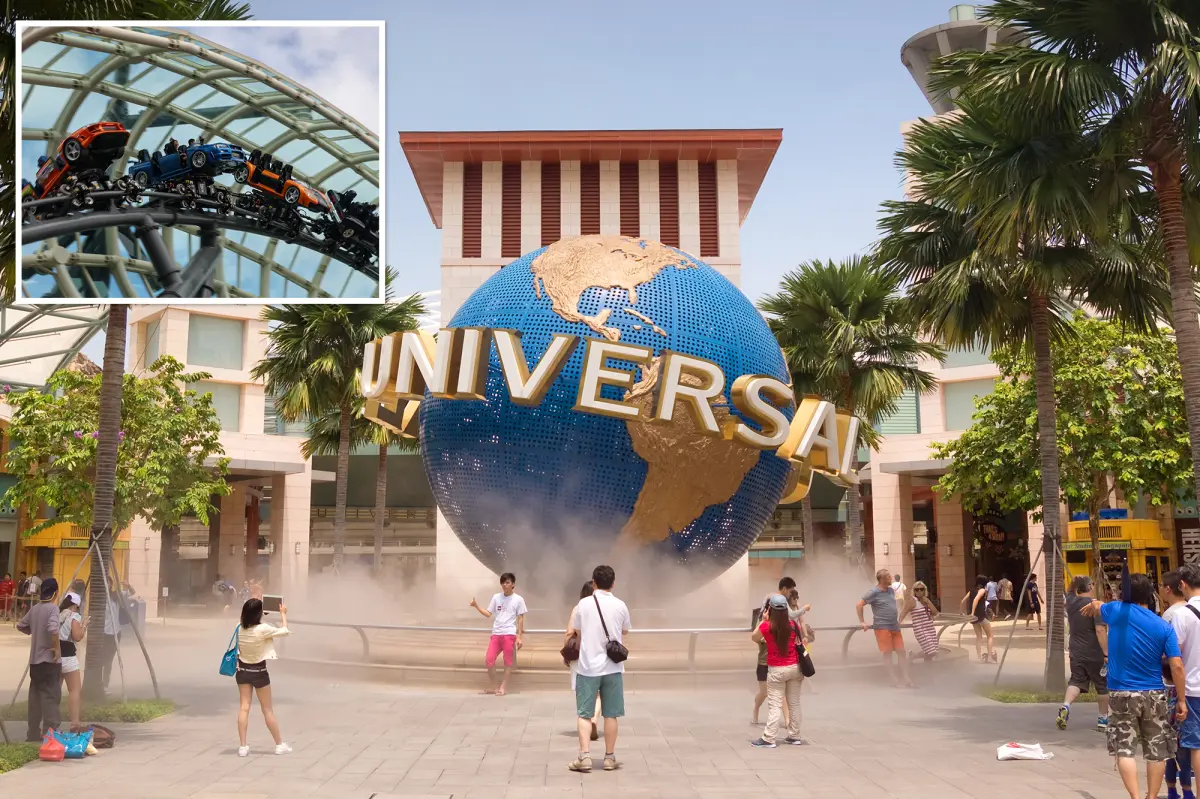
This audacious pricing strategy wasn’t cooked up in a vacuum; the park is currently grappling with a dry spell of foot traffic. The latest annual attendance report from the Themed Entertainment Association paints a stark picture. Universal Studios Hollywood welcomed just 8 million visitors last year, which sounds monumental until you realize it’s a staggering 700,000 fewer than the year before, a plunge of eight percent. In a bizarre twist of irony, this made Universal the biggest loser in attendance among North America’s top theme parks—worse than any six-flag budget park or any struggling regional amusement zone. Meanwhile, right down the highway, Disneyland in Anaheim clinched the title of the #2 most visited theme park worldwide, flaunting crowds so massive that they often have to stop entry. So why is Universal hurting? Perhaps it’s the unique pressure of a streaming era, where fewer people are willing to shell out for a day of physical thrills when they can watch the movie at home. Or maybe it’s the price fatigue—a realization that a day at a movie-themed park, especially when accounting for food and parking, often rivals a weekend getaway to the coast. The park attempted to counter this slipping relevance with a major new attraction, “Fast & Furious: Hollywood Drift,” which opened in September after a summer trial run amid loud, screeching promotions. The idea was to lure speed junkies and franchise devotees back through the gates. It was a bold attempt to ignite fresh excitement, but its debut has done little to reverse the broader downward trend. The attendance drop feels especially painful for the park’s management, who likely see their newly launched Diamond pass as a last-ditch effort to extract higher per-visitor revenue even as the volume of guests shrinks—a classic corporate strategy to sustain profit margins by monetizing a dedicated superfan elite instead of courting the masses.
While themepark attendance drops are a quiet, statistical woe, the neighboring community is making their complaints loud and clear—and they’re directly targeting the shiny new ride. For months, residents whose property backs up against the park’s perimeter have been bombarded with what they describe as the screams of murder victims coming from “Fast & Furious: Hollywood Drift.” The attraction, designed to simulate high-octane chases with screeching metal and terrified actors, leaks a soundscape that is genuinely terrifying when you’re not in the queue for a thrill ride. It’s the ultimate irony of the theme park bubble: inside the gates, the sounds spell excitement and adrenaline; outside, they are the auditory equivalent of a slasher film looping all day. Homeowners describe sleepless nights, startled children, dogs barking in a frenzy—the serene suburban promise of a quiet home shattered by a fictional shootout. They’ve stormed city council meetings, petitioned the park management, and filed formal noise complaints that litter local government dockets. To them, the park’s aggressive push to bring in visitors isn’t just a business decision; it’s a declaration of war against their right to peace. This tension highlights a deeper conflict every successful theme park faces in a residential area: the park wants to create a fantasy of danger for entertainment, but that fantasy constantly spills over into the reality of its neighbors. While executives see the attraction as a shiny new toy to counter the drop in attendance, the community sees it as a nightly terror that devalues their properties. The conflict is a vicious cycle. The park needs new attractions to stop the bleeding of visitors, but every new attraction risks alienating the local population further—people who, incidentally, are the ones most likely to buy the heavily discounted California Neighbor Pass. Their unhappiness could push them out of the ecosystem entirely, ironically exacerbating the attendance downturn.
In the grand scheme, the introduction of the Diamond Pass feels less like a celebration of success and more like the final piece of a high-stakes chess game. It is a clear attempt to bank on desperation—not of the guests, but of the park itself. By charging nearly double the price of its Platinum pass, Universal is signaling a shift in strategy: they are betting that in a sea of attrition, the whales will keep spending. It’s the classic “loss leader” inverted. Instead of lowering prices to lure back the masses, they are raising the ceiling to ensure that a dedicated few pad the bottom line. Yet, this approach alienates the middle class of park visitors—the ones who used to buy the mid-tier passes, bring their kids, and buy lunch. If they retreat, the Diamond pass becomes a lonely prize for a shrinking club of wealthy superfans. The backlash online, the declining attendance numbers, and the constant battles with the neighboring residents all point to a park at a crossroads. The shiny new $999.95 pass is a beautiful red herring in that sense—it distracts us from the uncomfortable truth that the joy of spontaneous, affordable fun is dying. The experience is being stratified into tiers: those who can skip ahead, and those who wait. As the ticketing price presents a psychological barrier, even the most enthusiastic families are forced to sit down and recalculate their budget. They wonder if a few hours of “borrowed magic” is worth the cost of a down payment on a used car. Universal needs to flip the narrative—to turn that terrible scream from the new ride into a sound of thriving, not annoyance—and that requires bringing back the casual fan. But for now, as the diamonds glitter, the cacophony of disgruntled locals, worried fans, and empty guest parking spaces serves as a louder warning that the house might be resting on a very expensive, very lavish throne that is starting to teeter.