


-
It was the kind of whiplash that has become almost routine in Washington, yet it still managed to feel jarring. For months, a wave of Democratic candidates had fanned out across the country with a simple, carefully tested message: they understood that American families were struggling, that the cost of everything from eggs to rent had become unbearable, and that fixing that problem would be their first job in Congress. In district after district, the word “affordability” appeared in campaign ads, digital mailers, and TV interviews. They promised to take on price gouging, lower prescription drug costs, ease the burden of housing, and help working families catch their breath. Then Election Day came and went, and almost overnight, the message seemed to shift. Democrats won some surprising races, including a few in districts that had long been Republican strongholds, and instead of talking about grocery bills or gas prices, many of their newest voices turned to something entirely different: the coming fight against President Donald Trump. Rep. Robert Garcia of California, who is expected to lead the House Oversight Committee, captured that mood in the most blunt way possible. On the evening of the Democratic victories, he posted a message that was only two words long: “Lawyer Up.” It was a threat, a promise, and a warning all at once, and it signaled that the party’s priorities may not have moved so much as changed costume. Before the election, Garcia had told CNN that Democratic priorities would be lowering the cost of “gas, groceries, the mortgage, the rent” while also fighting government corruption. But the first thing he wanted the public to hear after the ballots were counted was not a plan to make life more affordable; it was a warning to the incoming administration that its legal troubles were just beginning.
-
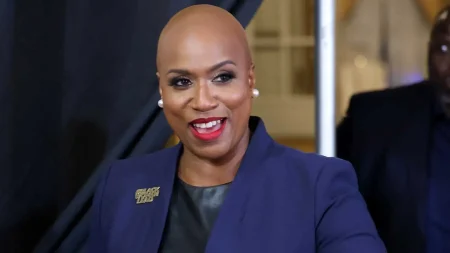
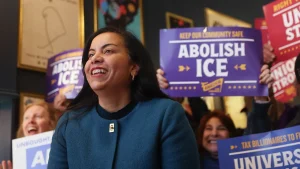
Garcia did eventually address affordability the next day, but it was in the context of an attack on Trump’s family wealth. “People can’t afford gas, groceries, and rent because Donald Trump and his family are ripping off the American people and enriching themselves,” he wrote on social media. That framing—that corruption and cost are linked—may have been intended to bridge the gap, but it didn’t erase the awkwardness of seeing so many Democrats race to investigate rather than legislate. One of the sharpest examples of this pivot came from Rep. Delia Ramirez, an Illinois Democrat and member of the progressive “Squad.” Before the election, Ramirez wrote in a voters guide that there was “no question that the rising cost of living is the number one issue” for the working people she hoped to represent. Her agenda sounded like a New Deal-era to-do list: housing, wages, utilities, child care. But after the election, her public message took a menacing tone aimed at Trump administration officials and immigration enforcement figures. “Noem, Markwayne, Miller, Homan, Bovino, what’s up? Clear your schedule,” she posted, appearing to target people involved in border policy and deportation efforts. The response was immediate, and it came from at least one of the people she named. Gregory Bovino, a former Border Patrol commander who has become a vocal critic of illegal immigration, answered with the kind of sarcasm that now defines political exchanges online. “Honey, slow your totalitarian roll,” he wrote. “Citizens don’t answer to communists in this country as much as you seem to believe that.” He even suggested she take a break and drink a bottle of whiskey from a brand he had launched after retiring from federal service. The exchange was nasty, funny, and revealing. Many onlookers pointed out that Ramirez’s post-election message had nothing to say about the affordability crisis she had called the most important issue in her district. “Notice nothing about how she is going to help her constituents but ‘get Trump,’” one commenter noted. Another, former Energy Department staffer Matt van Swol, was even blunter: “So, you guys never really gave a s— about affordability.” It was a painful moment for a party that had just won an election by promising to focus on the kitchen table, not the courtroom.
-
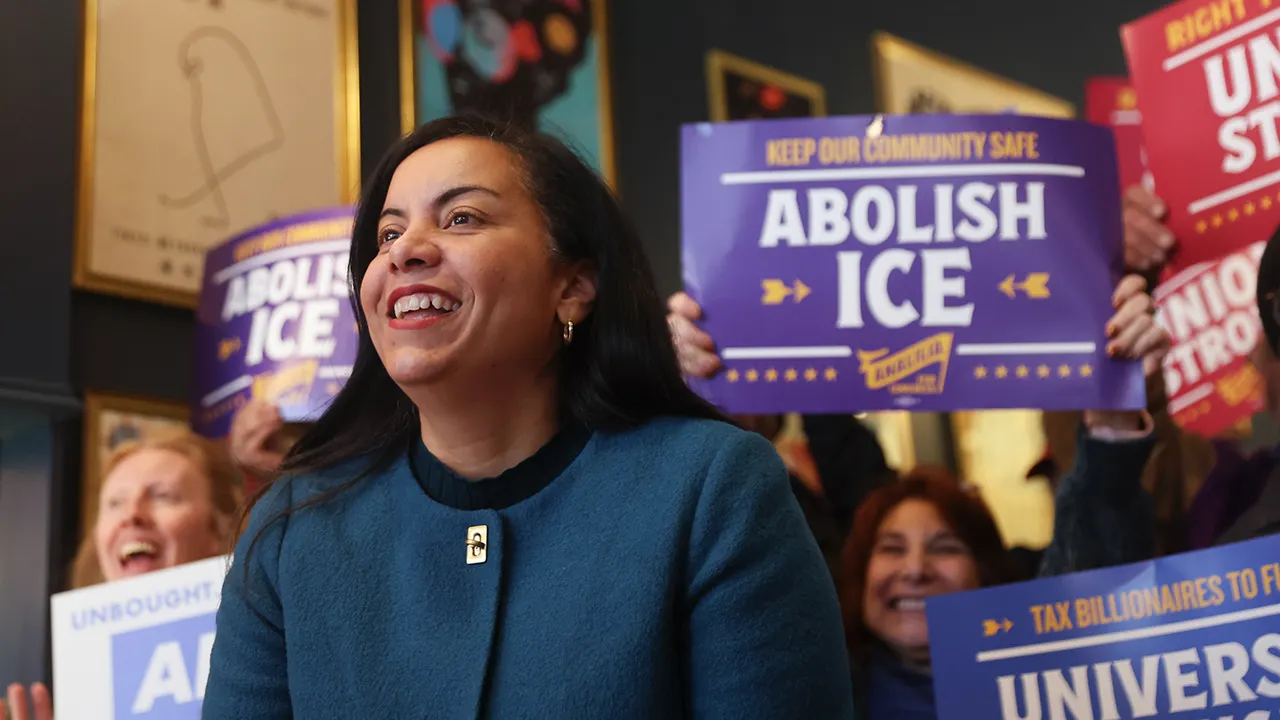
That pattern repeated across multiple races, as if a single memo had gone out to every newly emboldened Democrat. Rep. Analilia Mejia, who captured a longtime Republican seat in New Jersey once held by Rep. Rodney Frelinghuysen, had spent her campaign talking about both affordability and the need for fairer immigration policy. She wanted to lower costs for working families and also take on a broken system. But the first thing she posted on social media after the win was a promise to “toss out subpoenas like Mardi Gras beads.” It was a colorful line, the kind of phrase that gets retweeted and quoted, but it was also a bit of a head-scratcher for voters who thought they had elected someone to fix the cost of living. Rep. Tony Wied, a Wisconsin Republican, wasted no time firing back, saying Democrats “have no plans to make life better for you.” Mejia, rather than engaging with the substance, called him “Mr. Weird” and only then pivoted to her broader message about an economy that works for Americans. In Arizona, Rep. Yassamin Ansari had released a lengthy “New Affordability Agenda” back in April, announcing her role on the Congressional Progressive Caucus’s Lowering Costs Task Force with the kind of fanfare that suggested affordability would be her defining issue. On Election Night, however, she posted a message thanking the president and promising that the “thank-you will come in January with subpoenas.” Her next post called for the impeachment of the newly appointed Secretary of War, Pete Hegseth. Later she did circle back to a policy pledge about artificial intelligence, but the damage had been done. Even Sen. Edward Markey of Massachusetts, who had assured voters during the midterms that his priorities were “groceries, gas prices, energy costs,” got into the act. His post-election message took on a more poetic but equally ominous tone, dwelling on how many “new forests” would be needed for all the subpoenas Democrats would be printing. That is not what someone says when their focus is the cost of a carton of milk. It was the language of retribution, and Republicans were more than happy to point that out. Nick Freitas, a former Virginia delegate, replied with a single word: “Affordability.” The sarcasm was unmistakable. None of the four lawmakers responded to requests for comment about their apparent change in priorities, and Garcia’s office pointed back to his affordability-themed tweet, which only reinforced the sense that these were talking points being bolted onto an agenda that was actually about something else.
-
For the Trump administration, the Democrats’ increasingly explicit threats were not being ignored, but they were being met with visible confidence. The Department of Homeland Security, whose enforcement efforts have become a favorite target of progressive investigators, offered a dismissive retort through its top attorney, James Percival. “It is unfortunate that Democrats are more interested in political shenanigans than in governing,” he said, adding that the agency was “well prepared to deal with this nonsense” so that the Secretary of Homeland Security could focus on protecting the country. The Justice Department made a similar point, insisting it was “not afraid of threats from Democrats” and that its staff had consistently followed the law. A spokesperson added that it was no surprise Democrats were abandoning the cost-of-living issue in favor of the same “weaponization efforts” they had pursued when they were last in power. The White House, meanwhile, struck a slightly more conciliatory tone while still drawing the same line. Press Secretary Lauren Bis said President Trump remained willing to work with Democrats on issues that would help hardworking Americans, but if Democrats chose to pursue “sham investigations and radical-left policies,” they would be working against the American people. That is fairly standard political language, and it matches the Trump campaign’s combative posture, but the substance of the administration’s response was clear enough: it does not believe Democrats actually intend to govern, and it is looking forward to the fight. In a way, the administration’s confidence is well placed. The more Democrats talk about subpoenas and impeachment, the less they talk about prices, interest rates, and rents. And that leaves the party vulnerable to the exact kind of criticism conservatives have been making for years—that Democratic politicians use economic anxiety as a campaign tool and then turn to their real passion, which is investigating Trump, as soon as they get into power. Immigration hawks, too, are bracing for what appears to be an onslaught of oversight hearings, document demands, and politically motivated inquiries. The Mass Deportation Coalition, a group that has criticized both the Biden administration’s open-border policies and what it sees as insufficient action under Trump, told Fox News Digital that it knows what is coming. “A lot of people are going to be cashing out and charging patriots expensive legal fees,” said Mike Howell, a leader of the coalition. “We have been through this before and are ready to sacrifice for the patriots targeted by weaponized harassment.” That kind of language, full of martyrdom and defiance, suggests the coming months will be less about governing than about trench warfare.
-
The legal and political reality is more complicated than a simple subpoena war. Andrew Arthur, a former House Oversight Committee counsel and immigration judge who now works at the Center for Immigration Studies, acknowledged that Congress certainly has the prerogative to investigate what the Department of Homeland Security is doing. That is part of the legislative branch’s constitutional role. But Arthur also wondered whether Democrats are choosing a path that will alienate voters who just elected them with affordability in mind. He noted, for example, that Rep. Ramirez had specifically named Border Czar Tom Homan, and Arthur pointed out that Homan—a longtime former Obama official—had actually enjoyed positive ratings from both Republicans and Democrats for years. “He was commonly viewed as the guy who came in and cleaned things up after Noem left, got things a little bit better,” Arthur said. “So that’s probably not going to be a terribly popular thing.” In other words, targeting a broadly respected border official might not have the political effect Democrats expect. Arthur also made a more subtle point about the relationship between oversight and affordability. “This isn’t really affordability, but anything that shows waste in government technically goes to affordability,” he said. That is a creative argument, but it depends heavily on how willing the media is to accept the framing. If Democrats can show that immigration enforcement is wasteful, corrupt, or negligent, they can try to connect those findings back to taxpayer dollars. But if their investigations are seen as purely political stunts, they will be wasting their own time and credibility. Arthur added that DHS is largely protected by existing law and appropriated funding, and that much of what the Trump administration has already done in the immigration sphere is squarely within the bounds of the Immigration and Nationality Act of 1952. That law gives the federal government broad authority to detain and remove unauthorized immigrants. Short of amending the law itself, which is nearly impossible as long as Trump can veto any congressional change, Democrats can investigate, hold hearings, and try to paint the agency in a bad light over incidents like ICE-involved shootings, but they cannot actually undo the legal framework that makes mass deportation possible. This is a crucial point for anyone trying to understand what the fight will look like. The Democrats may be able to make noise, but they are unlikely to change the fundamental structure of immigration enforcement, one of the most legally robust areas of federal power.
-
What makes all of this so frustrating for ordinary voters is that there is a real argument to be had about immigration and affordability, but that argument is not being made. The two issues are not unrelated. In fact, a 2026 whitepaper published by researchers at the Federal Reserve Bank found that elevated unauthorized immigration contributed to rising housing costs between 2021 and 2024. The researchers estimated that the influx of new arrivals increased home prices by 6.6 percent and rents by 4.3 percent in the average metropolitan area. The reason is not mysterious: more people bidding on a limited supply of housing pushes prices up, especially when new construction cannot keep pace with demand. That is not a question of hatred or exclusion; it is a matter of supply and demand, and it is the sort of evidence-based discussion that could actually inform policy. But instead of engaging with that reality, Democrats are choosing to talk about subpoenas, cleared schedules, and the impeachment of cabinet officials. The one group that has been completely missing from the conversation is the American family that is struggling to pay the bills. It is not hard to understand why the new Democratic crop is eager to fight the administration. The party’s base is angry, and there is a lot of institutional pressure to be aggressive after years of watching Trump and his allies push the limits of power. But elections are supposed to be about the people who do the voting, not the politicians who do the swearing in. The voters who sent Garcia, Ramirez, Mejia, Ansari, and Markey to Washington did not do so because they wanted more drama. They did so because they wanted relief. Whether that relief comes in the form of lower rent, cheaper food, or a more honest government, it has to be tangible. And none of the policies at the center of this new political battle are going to put money back in anyone’s pocket. The subpoenas will be printed. The hearings will be held. The social media pile-ons will be relentless. But somewhere in the middle of all that, the conversation about cost of living will still be waiting. It was there before the election, and it will be there after, unless the people who have been elected to address it decide that fighting the last war is somehow more important than feeding the next generation. If Democrats want to avoid being tagged as the party of legal warfare rather than economic fairness, they will have to show voters quickly that their investigations are not just a substitute for policy but a path to making life more affordable. Otherwise, all the subpoenas in the world will not be enough to save them from the next election. The phrase “lawyer up” may be a clever threat, but it is not a solution to the cost of living—and, for the working families who handed Democrats a win, that is the only test that really matters.