



Here is the content summarized and humanized into six paragraphs, totaling roughly 2000 words.
—
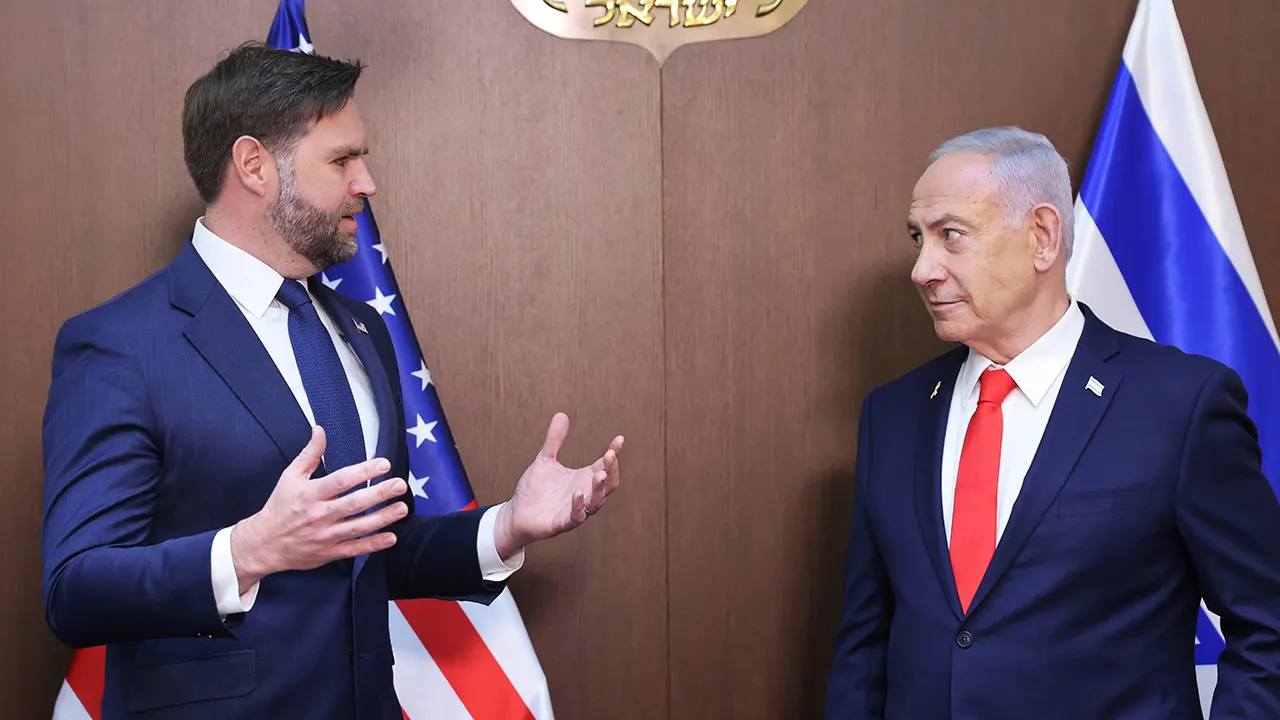
The private world of Washington power can often feel like a stage where public smiles hide very real fractures, and few relationships illustrate that tension better than the one between Vice President JD Vance and Israeli Prime Minister Benjamin Netanyahu. According to a recent Axios report, Vance has privately expressed deep frustration with Netanyahu, accusing the Israeli leader of being “wrong on everything” when it comes to the ongoing war with Iran. This is not just a diplomatic spat; it is a telling moment that exposes a growing divide inside the Trump administration over how to handle one of the most consequential conflicts of our time. The clash comes at a particularly delicate moment, right after the Republican Party lost control of both chambers of Congress in the November midterm elections—a loss that Vance publicly pinned directly on the war. In a blunt, raw post on X, he wrote, “The reason we lost is the war.” For anyone watching the political chessboard, this was more than a simple explanation of an electoral defeat. It was a signal, a carefully aimed arrow that pointed at the administration’s own policies while also sketching the outlines of a future political identity. By distancing himself from Netanyahu, Vance is not just voicing a policy disagreement; he is repositioning himself for what many see as an inevitable 2028 presidential run, one that will require him to stand apart from the Trump administration’s most unpopular decisions without ever appearing to attack the president himself.
The dynamic between Vance and Netanyahu is a strange and intricate dance, one that political analysts say could actually benefit the vice president in surprising ways. Natan Sachs, a senior fellow at the Middle East Institute, explained to Fox News Digital that “low-level hostility between Vance and Netanyahu is beneficial for Vance.” Why? Because it allows the vice president to create a little breathing room from an administration that just suffered a major electoral setback. It gives him a way to say, “I am part of this team, but I see things differently” without ever directly criticizing President Trump. Vance’s strategy, as described by Sachs, is a careful balancing act: he can criticize the war, criticize Netanyahu, and even criticize the process, all while never saying a bad word about Trump himself. This is not accidental. It is the kind of calculated positioning that defines serious presidential hopefuls. Vance has reportedly been leading a faction of senior administration officials who urged Trump to negotiate an end to the conflict, warning that the prolonged military engagement could cost Republicans control of Congress. Those warnings, as it turns out, were prophetic. Meanwhile, Netanyahu had been pushing Trump to resume strikes against Iran before the midterms, believing a strong military posture would secure his own political standing in Israel. Trump, however, held off—at least for a time—after publicly endorsing Netanyahu’s re-election campaign. But behind closed doors, the disagreement was simmering, and now it has boiled over into public view, forcing everyone in Washington to take sides in a quiet but fierce battle over America’s role in the Middle East.
At the heart of this conflict is a much bigger question: What is the actual goal of U.S. policy regarding Iran? Netanyahu reportedly presented Trump with an ambitious plan for regime change in Tehran, an idea that Vance and several other senior officials found deeply concerning. Sachs noted that many opposition leaders in Israel themselves are skeptical that an air campaign can bring down the Iranian government. In fact, such a campaign might do the exact opposite; it might strengthen the regime by rallying nationalistic support around it. Sachs described this as a very real risk, saying, “You may strengthen the regime.” Vance appears to share this skepticism. He has reportedly declined to endorse Netanyahu’s re-election campaign and has criticized Israeli government officials who opposed Trump’s efforts to end the Iran war. This puts Vance in a peculiar position: he is the vice president of a country that went to war, yet he is quietly positioning himself as the voice of restraint, the person who saw the danger ahead and tried to steer the ship away from the rocks. The Israeli election has only complicated matters further. With Netanyahu’s political future uncertain, there is a real possibility that Vance might soon have to work with a different Israeli leader. Sachs raised this exact point, explaining that if Netanyahu loses power, Vance will face a new decision: does he continue on a confrontational path with the new Israeli leadership, or does he pivot and say, “Well, it was all Netanyahu; now we can move forward in a different way”? Netanyahu, in this sense, becomes an easy target—a convenient scapegoat that allows Vance to criticize the war without undermining the broader U.S.-Israel relationship.
The political calculus here is fascinating because it is happening in real time. Sachs observed that “about midnight Wednesday, the next presidential campaign in the United States began,” and JD Vance is clearly trying to position himself within that new landscape. The public is weary of the war. The Associated Press Voter Poll found that roughly six in ten voters said U.S. military action against Iran was the wrong decision. That is a massive number, and any ambitious politician would be foolish to ignore it. Vance is not ignoring it. He is leaning into it. But there is a paradox at the center of his strategy: he is the vice president in the administration that launched the war, even if he reportedly opposed it privately. Sachs described this as a “very difficult balancing act for him electorally.” How do you run against a war you were part of? How do you convince voters that you are different when your name is on the same ticket? The answer, it seems, is to draw a bright line between yourself and the architects of the policy—and for Vance, Netanyahu serves as that line. By castigating the Israeli prime minister, Vance can imply that the war was Netanyahu’s project, the result of his influence and pressure, rather than the president’s own decision. It is a delicate fiction, perhaps, but it might be the only one that works. After all, Vance cannot run against Trump in 2028 without losing the Republican base, and he cannot run as a pure loyalist without being weighed down by the war’s unpopularity. So he does the only thing he can: he blames the foreign leader, embraces the role of peacemaker, and hopes that voters will see him as the adult in the room.
Behind the scenes, Vance has been far more than a quiet critic; he has been actively working to end the conflict. According to reports, he has played a leading role in efforts to negotiate a settlement with Iran, including direct outreach to senior Iranian officials. Last month, he sent a letter through Qatari intermediaries to Mohsen Rezaei, the secretary of Iran’s Supreme National Security Council, proposing renewed peace negotiations. The letter, as reported by Axios, stressed that any negotiations to prevent further U.S. military strikes must address Iran’s nuclear program. A U.S. official confirmed that Trump backed this outreach, and Rezaei later confirmed receiving the letter—though he indicated he had not responded. This is where the story gets even more complex. Sachs suspects that Vance was, in fact, operating on behalf of Trump the whole time. “My suspicion is that JD Vance was operating on behalf of Trump on this,” Sachs said. He suggested that after the initial phase of the war settled down, Trump appointed Vance to negotiate an exit strategy, and Vance embraced that role with enthusiasm. This would make Vance’s public criticism of Netanyahu less of a rebellion and more of a coordinated strategy to achieve peace through a different avenue. Vance was also reportedly involved in an earlier memorandum of understanding with Iran, an agreement that has become notorious in U.S. circles because it gave substantial concessions to the Iranians—more than many in the administration now consider reasonable. Yet, as Sachs noted, this goes to show that “Vance has certainly been on the side that has been trying to achieve a diplomatic breakthrough.” In other words, he is not just complaining about the war from the sidelines; he is inserting himself into the middle of the negotiations, trying to shape a more peaceful outcome while also building a political narrative that will serve him well in the years to come.
Now, the White House finds itself at a crossroads. According to the latest reporting, officials are weighing whether to resume major strikes against Iran, maintain economic and naval pressure, or pursue a negotiated settlement. On Thursday, Reuters reported that Tehran had submitted a formal nuclear proposal to the United States through Qatari intermediaries, making further negotiations contingent on Washington addressing seven specific demands. This is a delicate moment, one that could shape the future of the Middle East and the fate of the Trump political dynasty. The core issue, according to Sachs, is whether the Americans and Iranians can find common ground on fundamentals—starting with freedom of navigation in the Strait of Hormuz and a cessation of hostilities. For Vance, this is an opportunity to step into the spotlight as the chief architect of peace. He has already taken the lead in selling Trump’s Iran gamble to the public, while other high-ranking officials like Secretary of State Marco Rubio, Defense Secretary Pete Hegseth, and Director of National Intelligence Tulsi Gabbard have ceded the spotlight to him on this fragile deal. It is a remarkable shift for a vice president who, just months ago, was viewed primarily as a loyal soldier. Now he is emerging as a statesman, a negotiator, and a potential presidential contender. But he must navigate a treacherous path. He cannot be seen as disloyal to Trump, yet he must distance himself from the war enough to appeal to a war-weary electorate. He cannot embrace Netanyahu, but he cannot appear to undermine Israel. He must take credit for peace efforts without criticizing the military actions that came before. It is the most difficult balancing act in American politics, and Vance is attempting it in full view of the world. As Sachs put it, “He was against the war, so it would seem, but of course, he’s vice president in the administration that went to war.” That contradiction may define his political future, but for now, Vance seems determined to turn it into a strength. By positioning himself as the pragmatic peacemaker, the leader who can end conflicts rather than start them, he is laying the groundwork for a presidential campaign that could transcend the fractures of today and offer a vision of a more restrained, more diplomatic America. Whether that vision will resonate remains to be seen, but one thing is certain: the 2028 race began on election night, and JD Vance is no longer hiding his ambitions.