


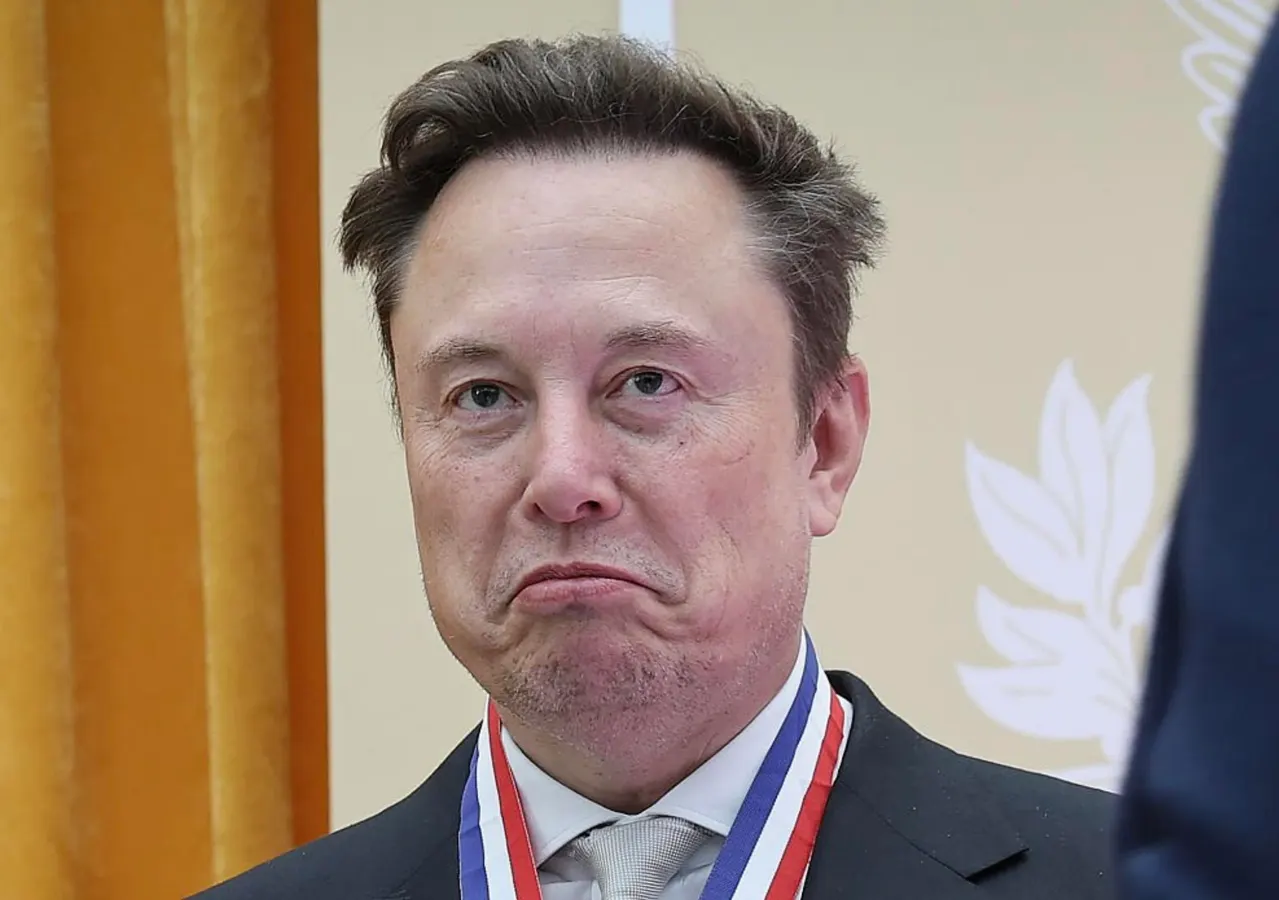
Elon Musk, the richest man in the world, entered the 2026 midterms as the most powerful private force in American politics. His pinned tweet—at least until Tuesday night—summed up his apocalyptic message: if Democrats won the midterms and then the presidency in 2028, it would be “the end of democracy in any meaningful sense of the word.” In his telling, Democrats would abolish the filibuster, pack the Supreme Court, expand the Senate, and institute open borders, all policies that he claimed would lock Republicans out of power forever. In the waning days of the campaign, he put his money where his mouth was, flooding races across the country with at least $458 million, according to Federal Election Commission filings and other reporting. That made him by far the largest individual donor of the cycle—more than three times as much as the billionaire Uihlein couple in second place, and nearly three times what George Soros, the man Musk spent years casting as the hidden hand behind the Democratic Party, disclosed spending in his biggest election ever. But when the returns rolled in Tuesday night, it became clear that his fortune had hit a wall. Democrats swept races across the country, and Musk’s money could not hold back the blue tsunami. His investments produced almost nothing in the races that mattered most, raising an uncomfortable question for every megadonor who believes elections can be bought: in a wave year, can all the money in the world really change the outcome?
Forbes set out to track exactly where Musk’s money went and what races it may have impacted, and the results form a kind of report card on his spending. A review of campaign finance records and other reporting found at least ten political groups that Musk gave to directly, either in his own name or through related entities. He also gave directly to 23 candidates’ campaigns. Forbes then examined spending records through November 2 to determine which candidates those groups spent to support. In total, candidates in 106 House and Senate races had Musk’s support behind them. As of about noon eastern time on Wednesday, only 19 of those candidates had won, and every single one of those victories came in seats that Republicans were expected to win anyway. Another 47 had lost, and 40 races had still not been called. To be sure, many races were flooded with money this year—it was reportedly the most expensive election cycle ever—and just because Musk gave to a group that spent in a race does not mean his money made the difference. But the overall picture was unmistakable. His return on $458 million was not high, and his support seemed almost like a curse in competitive races. In district after district, Democratic candidates outperformed the national environment, while Republicans backed by Musk’s super PACs went down to defeat. The results raised serious questions about how much money actually matters when the political tide is moving in one direction.
Nowhere was Musk’s failure more vivid or more personal than in Texas. The biggest beneficiary of his largesse was scandal-plagued Texas attorney general Ken Paxton, whose race against state senator James Talarico became this cycle’s marquee Senate matchup. Musk gave $75 million to the main Republican Senate super PAC, the Senate Leadership Fund, on September 9, and then sent another $83 million on September 23, for a total of $158 million. Each time, the Senate Leadership Fund transferred matching amounts to another super PAC called Texas PAC, which was backing Paxton to the hilt. America PAC, Musk’s own political operation, spent another $47 million in the race, and a third PAC called Lone Star Liberty PAC—which had received a $10 million donation from him in August—also backed Paxton. That added up to a staggering $215 million in Musk dollars flooding ads and doorknockers into Texas. It seemed personal. Two days before the election, Musk, the father of a transgender woman, posted on X: “Talarico will vote to trans your kids.” It was a cruel, inflammatory message, and it did not work. Talarico swept to a double-digit victory on Tuesday night, becoming the first Democrat since 1988 to win a Senate race in Texas. He also led a Democratic slate that captured the Texas governor’s mansion and may even take the state legislature. In his victory speech, Talarico delivered the line that summed up the entire evening: “We just proved that all the money in the world is no match for the people of Texas. We just showed that a politics of division is no match for a politics of love. And we just sent a message to every billionaire megadonor—every trillionaire megadonor, every corrupt defender of this broken political system—that in this state, in this country, power belongs to the people.” Musk’s first post in nine hours, early Wednesday morning, read: “Data centers in space looking pretty appealing right now.” It was the closest he came to admitting defeat.
The losses were not confined to Texas. America PAC, entirely funded by $216 million from Musk, spent in at least 44 races all over the country. After Texas, its biggest money holes per FEC filings were shoring up Republican Senate candidates in Ohio, where it spent $9.7 million; Michigan, where it spent $9.2 million; Iowa, where it spent $3.3 million; and Maine, where it spent $2.3 million. Democrats won all four of those Senate races on Tuesday night. Beyond America PAC, Musk’s money was spread through many other channels. He gave another $10 million directly to the Senate Leadership Fund, along with $30 million to the Congressional Leadership Fund, the SLF’s sister organization for House races, and $5 million to the Trump-aligned MAGA Inc. He also reportedly donated $10 million to the Republican Governors Association and $2 million to the Republican Attorneys General Association. Those groups concentrated their spending in competitive races, and their results were almost uniformly bad for Republicans. In the governor and attorney general races considered competitive, only seven Republican governors and just one Republican attorney general candidate won, out of 22 and 11 competitive races, respectively. Two governor’s races and three attorney general races remained uncalled as of Wednesday afternoon. Everywhere Musk’s groups spent serious money in a genuinely competitive state, Democrats seemed to come out ahead.
A closer look at the state-by-state results shows just how thoroughly the blue wave washed over Musk’s investments. In Iowa, he lost the Senate race, three House races, and the governor’s mansion. In Michigan, he lost the Senate race, the governor’s race, the attorney general’s race, and a House race, with several other contests still uncalled. In Ohio, Senate candidate backed by his money lost, as did the Republican governor candidate and several House candidates. In Pennsylvania, he lost four House races. In Wisconsin, he lost two House races, the governor’s race, and the attorney general’s race, though he managed to win one solidly Republican House seat. In Arizona, he lost the governor’s race and the attorney general’s race, with many House races still too close to call. He lost in Maine, where the Democratic governor and senator both prevailed. He lost in Minnesota, Nevada, New Mexico, New York, Oregon, and Virginia. His wins were almost entirely in safe Republican territory: the Florida Senate seat, a handful of House seats in Florida and Alabama, the Tennessee governor’s race, the Nebraska Senate seat, the Oklahoma governor’s race, and a few other districts where a Democrat had no realistic chance. The pattern was clear. Musk’s money did not expand the Republican map; it merely defended places that were never at risk. In the races that actually decided control of the country, his checks were not enough to change the outcome.
The lesson of 2026 may be as simple as it is profound: in a wave election, money cannot override the national mood. Voters were clearly animated by issues that no super PAC attack ad could erase—by fears for democracy, by questions of fairness, by a desire to reject the politics of division that Musk himself had embraced. His apocalyptic predictions may have motivated Democrats as much as his money motivated Republicans. The Texas result was the most symbolic of all. Talarico’s victory speech, with its promise that “power belongs to the people,” became a rallying cry for a Democratic Party that had just survived an assault from the world’s richest man. Musk’s post-election tweet about moving data centers into space read like a man retreating from reality. For all his billions, he could not buy a single competitive state, and his candidates lost in wave after wave across the country. His failed experiment will likely be studied for years as a cautionary tale about the limits of megadonor influence. Whether Musk doubles down in 2028 or decides to pull back, the 2026 elections have already answered a crucial question: American democracy, at least in that moment, was not for sale. No matter how many billions are spent, when the people show up and vote, they have the final word.