



1. The Unbundling of Smartsheet
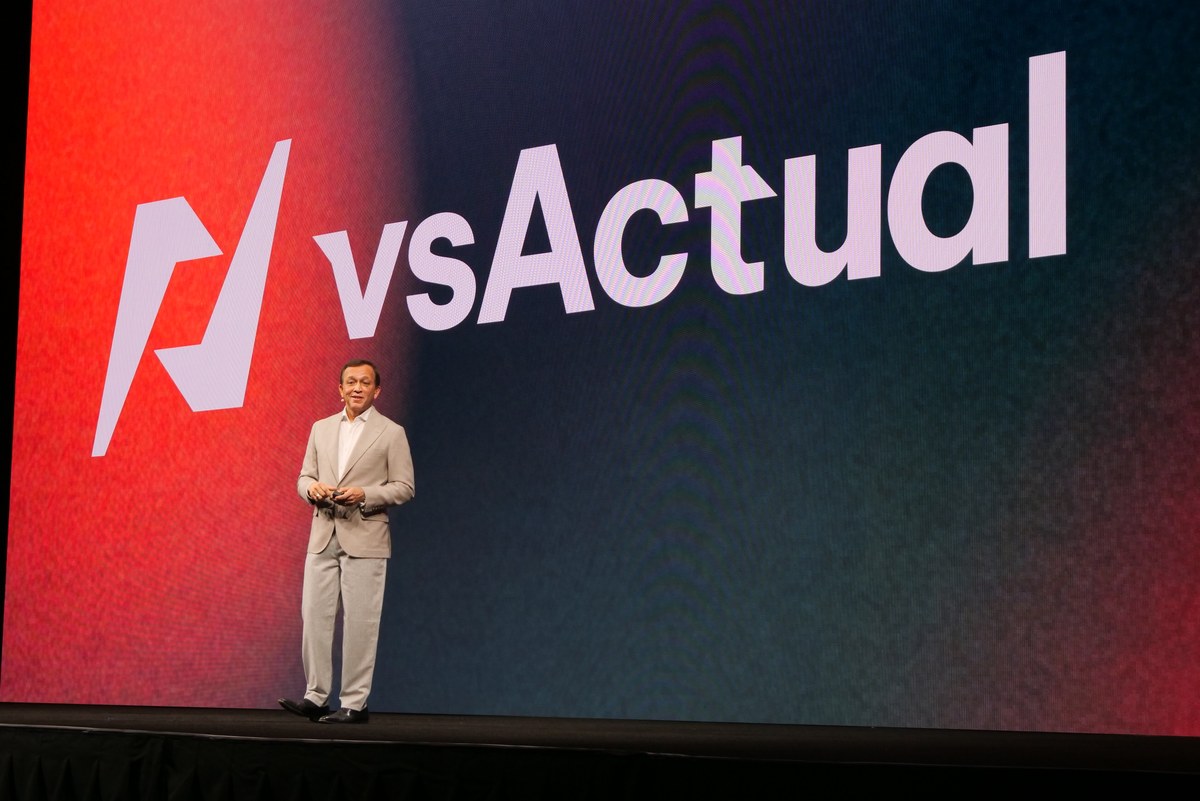
On a crisp Wednesday morning in Seattle, Raj Singh stood before a packed auditorium at Smartsheet’s Engage conference, ready to redefine not just his company’s product lineup, but its very identity. The setting felt familiar—a typical software keynote with glowing screens and eager customers—but the message was anything but. Singh, who took the helm as CEO just over a year ago, unveiled vsActual, the company’s most significant new product in years. And here’s the twist: it doesn’t require Smartsheet at all. Pronounced “plan versus actual,” this new AI-powered tool is designed to read a company’s strategic plans and budgets, then track the actual execution of that work across a patchwork of existing enterprise software like Jira, Workday, and Slack. When projects drift off course, vsActual flags the discrepancy in real time, giving executives a bird’s-eye view of where their organization is succeeding or stumbling. It’s a bold departure from the spreadsheet-style project management software that has been Smartsheet’s bread and butter for two decades. Instead of focusing on the project managers who meticulously track tasks, vsActual aims squarely at the C-suite—CEOs, CFOs, and COOs who want to see the big picture without getting lost in the tactical weeds. Singh’s presentation was a coming-out party for a company that, until now, had been defined by a single, albeit successful, product. A year ago, he showed the audience, his own slide had labeled Smartsheet “a product company,” with the company and its software trapped in a single box. Now, he proudly proclaimed, that ceiling had been lifted. Smartsheet was becoming a multi-product company, and vsActual was the key that unlocked the door.
2. The Brain Behind the New Vision
To understand the significance of vsActual, you have to understand the man introducing it. Raj Singh is no stranger to building serious enterprise technology. He co-founded Concur in the early 1990s with his brother Steve Singh and Mike Hilton, growing it into a dominant force in corporate travel and expense management before SAP acquired it for $8.3 billion in 2014. After leading health benefits company Accolade through its IPO and sale, Singh stepped into the Smartsheet CEO role in October 2025, succeeding longtime leader Mark Mader. This wasn’t a typical tech succession. Singh arrived during a period of significant turbulence—Smartsheet had cut jobs shortly after his arrival and again in February, leaving employees uncertain about the future. But Singh moved quickly to rebuild the leadership team, bringing in several executives he had worked with at Concur and Accolade. By the time of the Engage keynote, he described the leadership team as fully assembled and said the company was in hiring mode, albeit with a modern caveat: AI means headcount won’t grow the way it once did. On stage, Singh was relaxed and charismatic, joking with the teleprompter operator when he went off script and engaging warmly with fellow presenters. His talk ran so long that it threw off the morning’s schedule, but the audience didn’t seem to mind. This was a leader who was comfortable in his own skin, confident in the path ahead. He credited his predecessors, calling Mader and co-founder Brent Frei friends, but made it clear that the opportunity ahead was much bigger than what came before. “You take a company that has a great foundation, and you ask: what do you do next?” he seemed to be saying. With vsActual, that answer was beginning to take shape.
3. The Execution Graph and a World Beyond Smartsheet
The technical underpinning of vsActual is something Smartsheet calls its “Execution Graph.” For two decades, the company has tracked how work gets planned, approved, and executed within its own platform. That vast repository of behavioral data—literally billions of interactions showing how teams move from idea to completion—has become the lifeblood of the company’s new AI strategy. The Execution Graph doesn’t just power vsActual; it also underpins Smartsheet’s flagship product and Brandfolder, its digital asset management service acquired in 2020. The idea is that by drawing on this deep understanding of execution patterns, vsActual can spot problems before they become crises. Singh illustrated this with a compelling example: imagine a product launch that has slipped by nine weeks. In one system, the project plan still shows an on-time delivery. In another, the status report looks green. But vsActual, by cross-referencing the plan against the actual work happening in Slack channels, Jira workflows, and Workday resource allocations, recognizes the disconnect. It flags the launch as off course, compelling executives to ask questions they might otherwise have missed. This is the heart of vsActual’s value proposition: it doesn’t replace the tools companies already use—it sits on top of them, connecting the dots and providing a singular, honest view of organizational health. For years, Smartsheet’s competitors have argued that the best way to gain control over your business is to move all your work onto their platform. Singh actively rejects that notion, telling GeekWire that every CIO he talks to is never going to consolidate everything into one system. Instead, he believes the future lies in working with the software customers already have, making it smarter and more connected. “The Execution Graph is the long-term differentiated value of our company,” he said. It’s a vision that positions Smartsheet not as a destination, but as an intelligence layer—a neutral orchestrator that understands how work happens, regardless of where it lives.
4. A New Pricing Philosophy for an AI Era
Alongside the product unveiling, Singh announced a fundamental shift in how Smartsheet charges its customers. The company is moving away from the traditional per-seat licensing model that has dominated the software industry for decades. In its place, Smartsheet is introducing a consumption-based model: customers pay a base fee, then draw down credits as they use various features—including AI tools, automations, and API connections. This is a significant change. Singh argued that customers have long balked at paying full price for employees who only occasionally use the software. Under the new system, a manager might create a dashboard for fifty cents, rather than paying for a license that costs hundreds of dollars a year. The logic is straightforward: lower the barrier to entry, and more people will use the product. The credits system also acknowledges a new reality in the workforce: AI agents are becoming users too. “Agents are clearly going to be users moving forward,” Singh said, noting that the consumption model is better suited to a world where AI copilots and autonomous processes will interact with software without a human at the keyboard. For existing customers who switch to the new model, Singh promised that they won’t be charged for exceeding their credits during the transition, though he declined to specify exactly how long that grace period would last. He was bullish on the financial impact, calling it “nothing but positive” for revenue. The shift is designed to unlock demand from customers who have previously held back under rigid per-seat pricing, allowing them to scale usage organically without worrying about ballooning license costs. It’s a gamble, but one that aligns Smartsheet with the broader industry trend toward flexible, value-based pricing, and it positions the company to capitalize on the AI-driven transformation of work.
5. Navigating a Crowded Field and Existential Risks
Of course, the launch of vsActual doesn’t happen in a vacuum. The market for AI-powered work management is intensely competitive. Microsoft is embedding AI agents into its own ecosystems, ServiceNow and Workday are developing similar capabilities, and a wave of AI-native startups is targeting the same status-report busywork that vsActual aims to eliminate. Smartsheet’s reliance on other companies’ data also presents a challenge. To be effective, vsActual must integrate deeply with tools from companies that are, in some cases, direct competitors. Singh acknowledged this, explaining that Smartsheet will use APIs and the Model Context Protocol (MCP)—an open standard for linking AI models to external software—depending on how deep the integration goes. But the bigger risk is strategic and, frankly, existential. If vsActual successfully tracks work without requiring companies to move their projects into Smartsheet’s core platform, what incentive do customers have to expand their use of that platform? The core software is, after all, the company’s main source of revenue. Keith Kirkpatrick, an analyst with Futurum Group, captured the tension succinctly: “Decoupling widens the market but strains the main differentiator.” He also noted that vsActual forces Smartsheet to sell to a very different type of buyer. Its salespeople are used to working with project managers and IT teams, not with CFOs who demand long evaluation cycles and complex procurement processes. Singh pushed back on this skepticism, insisting that the sales force already knows how to sell to large enterprises, though he admitted the company will need to hire specialists who understand corporate planning and finance. Smartsheet plans to build a dedicated team of vsActual experts, much as it did for Brandfolder. For now, the product is being developed with 12 enterprise design partners, including major players in food service, financial services, and health systems. The next few months will be critical for proving that the vision can translate into execution.
6. A Founder’s Heart in a CEO’s Body
For Raj Singh, the launch of vsActual is not just a business strategy—it’s a personal mission. At 58, he has already amassed more success than most people could dream of, from Concur’s meteoric rise to leading Accolade through a public offering and a successful sale. He certainly doesn’t need the paycheck. “I’m not doing this because I need to make an extra buck,” he said. “I’m doing this because I think there’s a very important company in here, and we just have to unearth it, and then we have to get to customers and make them see that new vision.” That vision extends beyond simply being a better project management tool. Singh sees Smartsheet becoming one of the most important software companies in the world—a linchpin for how businesses run themselves in the age of AI. The company, he says, is already growing, particularly internationally and with government customers. More than 100 customers now pay Smartsheet at least a million dollars a year, a record for the company, and retention remains strong even as AI disrupts traditional software models. The journey hasn’t been easy. The initial job cuts and the shifting strategy created uncertainty and skepticism. But Singh radiates a quiet confidence that comes from having done this before. He has rebuilt the leadership team, stabilized the business, and laid out a clear path forward. He is also realistic about the challenges ahead, acknowledging that the company will need to prove that its Execution Graph offers the same depth for organizations whose work lives primarily in other systems. But he is unapologetically ambitious. Smartsheet was born as a tool for project managers. Under Singh, it is transforming into something far more audacious: a strategic nervous system for the modern enterprise. The stage in Seattle was a preview of that future—a future where Smartsheet isn’t just a product you use, but a partner that helps you lead.