


Election nights can feel like a blur of red-and-blue maps, spin rooms, and endless cable chyrons, but the 2026 midterms were different. They were the kind of night that lingers in the memory not because of one dramatic upset, but because of a cascade of firsts that changed the face of American leadership at the highest levels. From the governor’s mansion in Atlanta to the U.S. Senate chamber in Washington, voters across the country chose candidates whose victories broke barriers that had stood for generations. Black and female politicians are slated to serve as governors for the first time in several states; the first Muslim has been elected to the U.S. Senate; and the first Native American woman is now set to become a governor of any state. These are not just political outcomes. They are deeply human milestones that speak to the long, unsteady arc of representation in a nation still learning what its own democracy is supposed to look like. For many Americans, watching the results come in was less about cheering a party than about seeing themselves — their histories, their struggles, their potential — reflected in the highest offices of the land. The night was historic not because every contest was close, but because so many of the winners were people who would never have had a chance in eras past.
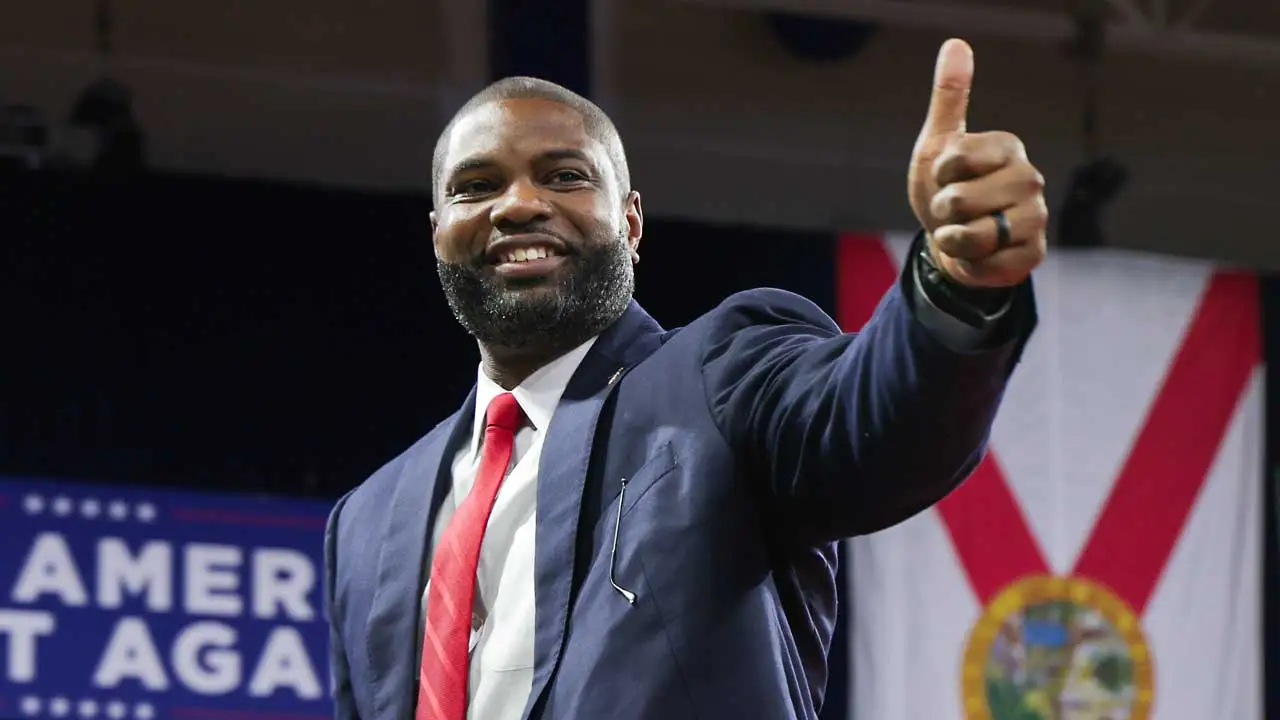
The gubernatorial results alone were enough to rewrite the record books. In Florida, Republican Rep. Byron Donalds won the Sunshine State’s top job and, in doing so, became the state’s first Black governor. His victory was not merely a personal triumph; it was a reminder that the Deep South, with all of its complicated racial history, is capable of change that once seemed impossible. Up in the Midwest, Milwaukee County Executive David Crowley, a Democrat, won Wisconsin’s gubernatorial race and secured his place as the Badger State’s first Black governor, a breakthrough that carries enormous weight in a state whose politics have often been sharply divided. But perhaps the most astonishing glass ceiling shattered when former Atlanta Mayor Keisha Lance Bottoms won Georgia’s gubernatorial election. She is on track to become the first Black woman to serve as governor of any state in the entire history of the United States. Not just the first Black governor of Georgia, and not just the first female governor of the Peach State, but the first Black woman in all of America to hold a governorship. It is a milestone that hundreds of years of trailblazing activists, organizers, and ordinary citizens worked toward without ever seeing realized. Meanwhile, in Texas, Democratic state Rep. Gina Hinojosa defeated incumbent Republican Gov. Greg Abbott, making her the state’s first Hispanic governor. For a border state with a massive Latino population, this victory felt long overdue, a sign that political power is finally beginning to catch up with lived experience. These races were not simply left-versus-right battles; they were moments in which identity, history, and aspiration all collided at the ballot box.
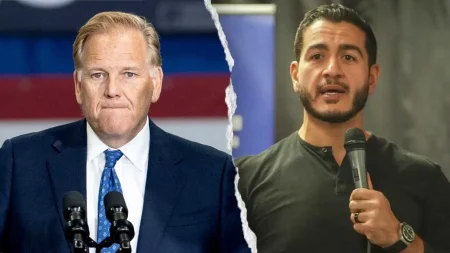
The U.S. Senate was another place where old barriers fell. Dr. Abdul El-Sayed, a Michigan Democrat who defeated Republican former Rep. Mike Rogers, is slated to become the first Muslim senator in the nation’s history. His candidacy was especially powerful because it drew on his work as a physician and public health advocate, a path that proved service can be just as compelling as political pedigree. In New Hampshire, Rep. Chris Pappas defeated former Sen. John Sununu and will become the first openly gay man to serve in the U.S. Senate. His election speaks to the growing acceptance of LGBTQ Americans in public life, but also to the simple truth that qualified, dedicated leaders come from every walk of life. South Carolina offered a unique and bittersweet history of its own. Sen. Darline Graham, a Republican who had been appointed to the Senate after the death of her brother, the long-serving Sen. Lindsey Graham, was the first woman to represent the Palmetto State in that chamber. She ultimately lost the special election to Democrat Annie Andrews, who then became the first woman ever elected to the U.S. Senate from South Carolina. Both women made history in different ways — one by stepping into an unthinkable role after personal tragedy, the other by proving that voters were ready to send a woman to Washington on their own terms. The Senate also saw significant forward motion for Native American representation. Minnesota Lt. Gov. Peggy Flanagan is the first Native American woman elected to serve in the Senate chamber, a role that puts her at the center of legislative life. And in Alaska, former Rep. Mary Peltola was waiting on a still-unclear result that, if it broke her way, would make her and Flanagan the first two Native American women elected to the U.S. Senate. The imagery alone is breathtaking: two Indigenous women taking their places in the most exclusive legislative body in the land.
Women also made commanding gains in governorships across the country, sometimes in states where such a result had been anticipated, and sometimes in places where it had stubbornly never happened. Minnesota and Tennessee were cases where the outcome was expected because both major parties had nominated women. Democratic Sen. Amy Klobuchar won Minnesota’s governorship, while Republican Sen. Marsha Blackburn won Tennessee’s, each becoming the first woman to hold that office in their respective states. Their wins may not have been surprises, but they were still historic departures from a long line of male governors. Ohio, however, delivered a barrier-breaking moment that felt especially poignant. Dr. Amy Acton, a physician who first became a household name as Ohio’s public health director during the pandemic, defeated Republican businessman Vivek Ramaswamy and became the first woman ever elected governor of the Buckeye State. More than two decades ago, Ohio’s then-Lt. Gov. Nancy Hollister briefly ascended to the governorship for less than two weeks after George Voinovich left to become a U.S. senator, but no woman had ever been elected to the office in her own right. Acton’s victory closed a gap that had persisted for the entire modern history of a major industrial state. And out in the American West, another ceiling collapsed when former Interior Secretary Deb Haaland, a Democrat, won New Mexico’s gubernatorial race. Haaland is slated to become the first Native American woman to serve as governor of any state. Her journey from Laguna Pueblo to the U.S. Cabinet to a governor’s mansion is the kind of American story that sounds like fiction, but it is now fact. Her victory brought tears to the eyes of Indigenous people across the country, who have long been overlooked and marginalized in politics, and it sent a powerful message that Native women belong in the highest seats of power.
There were other notable firsts that added texture to the evening’s broader narrative. In Louisiana, Rep. Julia Letlow won the state’s U.S. Senate race and will become its first Republican female senator. This came after years of women making inroads in the state’s delegation, but never quite reaching the U.S. Senate as a Republican. Letlow’s personal story of resilience — she first came to national attention after the tragic death of her husband, and she chose to continue his mission of public service — added a deeply emotional layer to her victory. Her success, like the others, was a reminder that campaigns are not just about policies and projections; they are about real people who carry grief, conviction, and hope into the public square. Taken together, the 2026 midterms offered a portrait of an America that is more diverse, more willing to trust newcomers, and more ready to honor the contributions of people who have historically been left out of the room when decisions were made. It would be easy to dismiss these firsts as symbolic gestures, but symbols matter deeply in a democracy. They send a signal to a child in a small town that the highest office in the land is not off-limits. They tell a young Muslim student that faith is not a barrier to leadership. They tell a Native American girl that her ancestors’ land is also her platform. They tell a Black mother in Georgia that the governor’s mansion truly belongs to her as much as to anyone else. This election was not only about winning; it was about expanding the American imagination about who can govern, in every sense of the word.
When the confetti is swept away and the new governors and senators take their oaths of office, the hard work of governing will begin. They will face daunting challenges: economic uncertainty, divisions over policy, the slow grind of legislating and managing. But the historic nature of their presence in those halls will not disappear when the cameras stop rolling. Every day they walk into their offices, they will be proof that the arc of history, however uneven, does bend. The 2026 midterms were a testament to the courage of candidates who dared to believe they belonged, and to the wisdom of voters who decided to agree. It would be naive to claim that all barriers have fallen or that representation alone solves the deep inequalities that still plague American life. There are still many glass ceilings left unbroken, many communities still waiting for their children to see themselves in power. But on this night, the map of American leadership looked a little more like the country it serves. The first Black governor of Florida, the first Black woman governor in American history, the first Muslim senator, the first Native American woman governor — these are not just footnotes in a news cycle. They are the names that a new generation will learn in classrooms, and the faces they will remember when they cast their own first votes. Election night 2026 will be remembered not as the end of a long journey, but as the turning point when the doors of power swung open just wide enough to let a little more light in. And once that light enters, it is almost impossible to close the door again.