


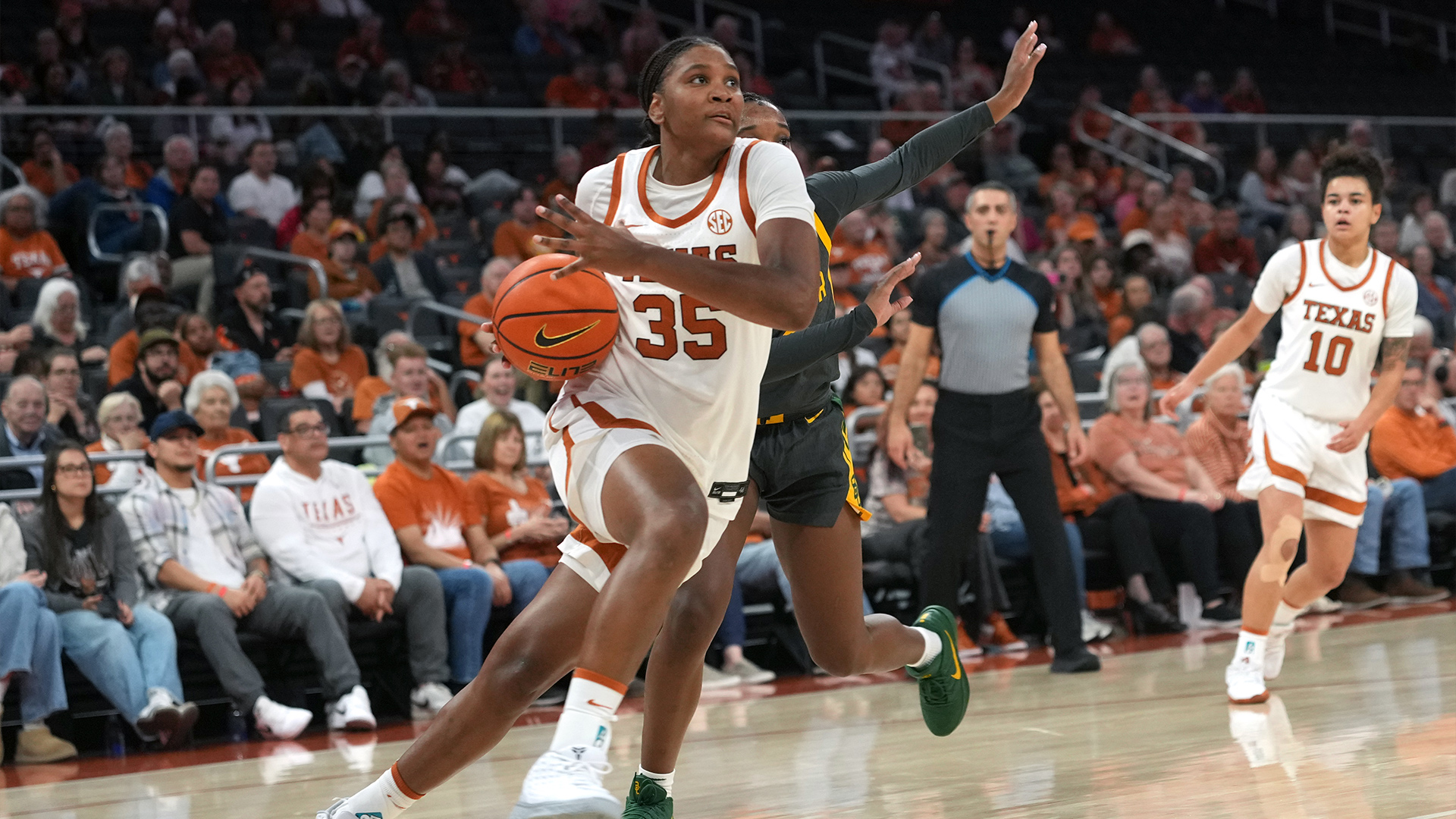
The Texas Longhorns women’s basketball program finds itself standing at a familiar crossroads this season, a place where triumph and heartbreak intertwine like the vines of an old Texas oak. For the third straight year, the Longhorns have earned a No. 1 seed in the NCAA Tournament, a testament to the program’s consistency under coach Vic Schaefer. For the second consecutive season, they reached the Final Four, an accomplishment that had eluded the program for two full decades. Yet, the ultimate prize—a national championship that has felt tantalizingly close since the team’s sole title in 1986—remains locked in the distance. The immediate reaction to such a successful season would normally be one of unbridled optimism, a belief that the returning core could finally break through. But the modern landscape of college athletics, with its unruly transfer portal and unprecedented player mobility, brought a stark and stunning reality check. As the Longhorns returned home from a gut-wrenching loss to UCLA in the Final Four, the air wasn’t just filled with the sting of defeat; it was filled with the impending exodus of key contributors. The roster, once so sturdy, suddenly had cracks, and the path forward required a level of emotional resilience and pragmatism that has become a prerequisite for any team chasing glory in this volatile era of women’s basketball.
The departures were not just significant; they were seismic. Jordan Lee, the team’s sharp-shooting wing and second-leading scorer at 13.2 points per game, announced she was transferring to the defending champion South Carolina Gamecocks, landing directly in the conference rival’s camp. Aaliyah Crump, a former top recruit whose progress had been hampered by injuries but whose potential remained immense, packed her bags for Duke. And forward Justice Carlton opted to head back to her home city to join the Houston Cougars. Each of these players had played substantial minutes in the run to the Final Four, filling essential roles in Schaefer’s demanding system. The feeling of betrayal or abandonment could easily have taken root, a poison that often spreads through locker rooms in the wake of such moves. Yet, the humanity of the situation was beautifully captured by the responses of the players who stayed. Point guard Bryanna Preston, preparing to take the reins of the offense full-time, spoke directly to the complex mix of emotions, admitting, “That broke my heart, but at the end of the day, they are individual players and have to do what’s best for them.” There’s a profound maturity in that statement, an acknowledgment that the bonds forged in the trenches of practice and battle do not supersede the individual rights of athletes to chase their own stars. Madison Booker, the team’s transcendent All-American leader, echoed that sentiment with an even simpler, more forgiving philosophy, saying, “I mean, that’s their journey. What they thought is going to be better for their journey is what they thought. I’m supporting them always.” It is a humanizing reminder that even as fans and media view these moves through a lens of corporate strategy, the reality is far more personal, rooted in dreams, ambitions, and the constant desire for a better fit.
Perhaps no single void is more critical to fill than the one left by the legendary Rori Harmon. For five years, Harmon was the connective tissue of the Longhorns, a diminutive but ferocious point guard who dictated the tempo on both ends of the floor. Her statistical career was absurdly unique—she is the only player in Division I history to amass more than 1,500 points, 900 assists, 600 rebounds, and 350 steals. Her legacy is now part of the WNBA, where she suits up for the Washington Mystics. What made Harmon special wasn’t just her command of the offense, but her relentless, ankle-biting defense. She was routinely assigned to the opponent’s most dangerous perimeter threat, using her quickness and tenacity to turn stars into ghosts on the court. Replacing that production is like trying to replace the engine of a Formula 1 car with a standard V-6. Coach Schaefer knows this all too well. Enter Bryanna Preston, a player whose profile is distinct. “Rori was fast. Bri’s electric,” Schaefer said with an excitement that belied the difficulty of the transition. Preston’s athleticism and ability to push the ball create a different kind of chaos that can be just as effective. But the coach’s main concern is raw defense. “I’m excited to see her this year. She’s really special. I don’t worry about her running our team or doing things for us on offense,” he elaborated. “What we’ll have a hard time replacing is the defense. Who is going to step to be that No. 1 defender?” The challenge for Preston is not just to be a better scorer or a better passer, but to embrace that ferocious, unsettling style of play that Harmon personified. It’s a burden of legacy that goes beyond skills; it’s about adopting a mindset that refuses to be screened, denied, or intimidated. The human struggle of assuming an iconic role is real, but so is the potential for Preston to carve out her own identity within those larger shoulders.
The absolute centerpiece of Texas’s championship chase remains Madison Booker, whose journey has been a masterclass in adaptation and perseverance. When she arrived as a freshman, she was thrust into the point guard role because Harmon had suffered a knee injury. Instead of shrinking, she flourished, learning to command an elite offense on the fly. Now, in her fourth year, she is the complete package—a player with the size to punish smaller guards, the ballhandling to blow past slower forwards, and a fluid jump shot that makes her a threat from anywhere on the floor. But the Final Four loss to UCLA has left a scar that only a title can heal. In the biggest game of the season, Booker experienced the absolute worse shooting night of her career. She shot a brutal 3-of-23 from the field, enduring a gruesome stretch of 17 consecutive misses. Even in the final 20 seconds, her driving layup that could have brought Texas within one point was emphatically blocked. Adding to the trauma, it was her second consecutive poor performance in the Final Four; the year prior, she managed just 11 points in a blowout loss to South Carolina. To hear her tell it, the pain is real, but so too is the resolve. “It’s a new year and a new team. That loss was heartbreaking … but it’s in the past, we move on. That was my mentality,” Booker said, her words carrying the weight of a player who has learned to compartmentalize disappointment. She did not retreat from the gym. Instead, she took a month to let her body and mind heal, then returned with a new, sharper focus. The loss of teammates only hardened her determination; she knows she cannot rely on the same support system, so she must elevate