


On a day when democracy takes center stage, you might expect California’s political heavyweights to dress like they’re walking into a boardroom, a fundraiser, or at least a Sunday morning news show. But when Xavier Becerra, Nithya Raman, and Karen Bass showed up to cast their ballots, they delivered something far more relatable: a glimpse of what real people actually wear when they have to be somewhere important but don’t necessarily want to dress up for it. The result was a surprisingly contentious debate among fashion experts about who nailed the assignment and who looked like they rolled out of bed. Election Day may be about the future of California, but for two celebrity stylists watching from the sidelines, it was also an impromptu fashion show — and not everyone made the cut. The three politicians couldn’t have been more different in their approaches. There was Becerra, the gubernatorial candidate who looked ready for a weekend farmers market in a muted olive sweater and faded blue jeans. There was Raman, the Los Angeles mayoral hopeful who actually seemed to put together a coordinated outfit, albeit one that reminded some critics of Halloween. And there was Bass, the incumbent mayor, who split the difference with a business-casual look that was practical but perhaps a little tired. The stylists, Phillip Bloch and Jessy Cain, didn’t hold back. Bloch gave scores, snark, and a surprisingly philosophical take on what clothing says about a candidate. Cain was a bit more exacting, demanding polish and a sense of occasion for a day that should feel historic. In the end, they agreed on a winner, a loser, and a whole lot of free fashion advice. If you thought the California election was going to be decided solely at the ballot box, think again. The fashion police were out in full force, and they had opinions.
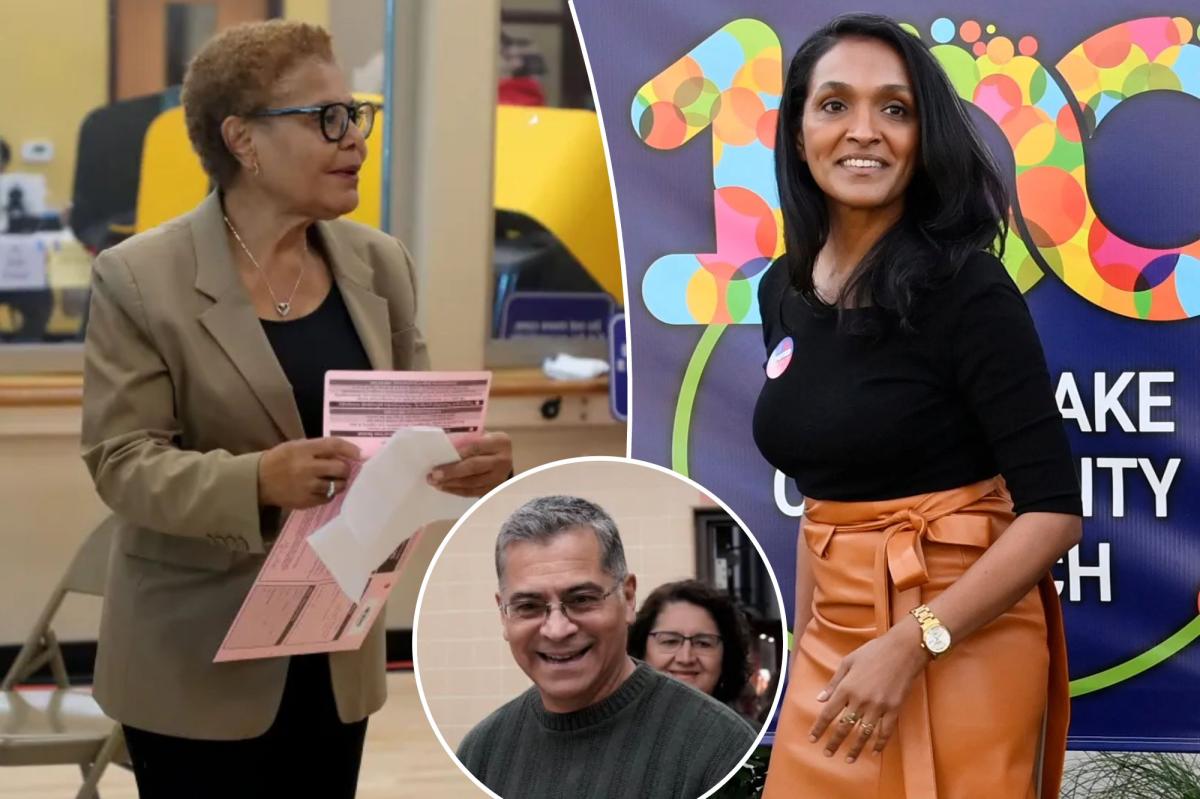
Let’s start with the man who ended up dead last in this impromptu style contest. Xavier Becerra, the former attorney general and current candidate for California governor, arrived at the Belle Cooledge Community Center in Sacramento with his wife, Dr. Carolina Reyes, looking like he had just wandered over from a casual Saturday errand run. His outfit consisted of an olive green sweater, baggy faded blue jeans, and black Adidas sneakers. There was nothing wrong with it, exactly — it was comfortable, practical, and deeply unremarkable. But that was precisely the problem for the fashion experts. Celebrity stylist Phillip Bloch gave Becerra a mediocre 5 out of 10, interpreting the look as a calculated attempt to appeal to grassroots voters rather than a moment of high style. “He’s definitely appealing to the grassroots kind of voter,” Bloch said. But he couldn’t resist a cutting joke: “Fashion says something. Fashion is drag… his drag says ‘I’m a drag.’” Bloch also noted, with a smirk, that Becerra’s sweater definitely wasn’t purchased on Rodeo Drive, adding, “He did not get into his political slush fund.” Los Angeles stylist Jessy Cain was even harsher, handing Becerra a dismal 3 out of 10. “I wanted to see more polish for Election Day,” she said. “The chunky, muted green sweater and light-wash jeans feel too casual for the occasion. I’m usually a fan of classic Levi’s on men, but this combination doesn’t feel special enough for the moment.” It’s a tough review, but it raises a fair point: Election Day is one of the few moments when voters see politicians as themselves, not on a debate stage or at a rally. For Becerra, the message seemed to be “I’m just like you.” But for the stylists, it came across as “I didn’t try.” In a race all about connecting with everyday Californians, maybe that’s a risk he was willing to take. But it also made him the clear loser of the day’s unofficial fashion contest.
At the other end of the spectrum was Nithya Raman, the Los Angeles mayoral hopeful and DSA-backed city councilmember who clearly put some thought into her Election Day ensemble. Raman showed up at the Silverlake Community Church with her son, daughter, and husband Vali Chandrasekaran, wearing a long black sleeve top paired with an orange wrap-around skirt and black boots. It was a bold, deliberate look — not exactly red-carpet, but far more intentional than a sweater and jeans. Bloch immediately recognized the effort, giving Raman a 7 out of 10, the highest score of the day. “She gave it a vibe. She got up and thought about it at least, the boot with the top,” he said. But even the day’s best-dressed couldn’t escape the critics. Bloch admitted, “I am not an orange and black fan because you look like you’re at Halloween.” Cain also crowned Raman the style winner, awarding her a 6 out of 10, but she echoed the same concern. “I appreciate that she put some thought into her ensemble,” Cain said. “I like the boots and the neckline of her top, but the orange skirt paired with black feels a little too Halloween for me.” Still, Raman’s willingness to take a fashion risk seemed to resonate with both experts. In a political landscape where everyone is terrified of saying or wearing the wrong thing, she showed up with an actual outfit — something that had a point of view, even if it was slightly spooky. Bloch summed it up best: “I think Nithya brings it. You can go a lot of different places in that outfit.” That versatility, that sense of intentionality, is what set her apart from the field. She wasn’t just casting a vote; she was making a statement. And while the Halloween comparison might sting a little, it’s hardly a fatal blow. In a contest where the other options were “forgettable” and “tired,” being memorable was enough to take the crown.
Then there was Karen Bass, the incumbent mayor of Los Angeles, who managed to avoid the fashion police’s worst wrath but didn’t exactly dazzle them either. Bass voted early, showing up at a Koreatown YMCA on Sunday in an outfit that screamed “I have a full day of work ahead of me.” She wore a black top, black pants, a camel-colored suit jacket, and Adidas sneakers — a business-casual ensemble that balanced comfort with a nod to professional polish. Bloch gave Bass a respectable 6 out of 10, praising her for wearing clothes that actually fit her and suited her coloring. “I like that her clothes fit her. She’s got a worker’s wardrobe. I think for her, I like these colors for her coloring,” he said, adding that the mayor is simply “not a style girl.” It was a backhanded compliment, but not a mean one — more like an acknowledgment that Bass dresses for function, not fashion. Cain was a bit less forgiving, giving Bass a 4.5 out of 10 and suggesting the mayor’s wardrobe could use a serious refresh. “I like the black base with the Adidas sneakers — they bring a little California cool to the outfit,” Cain said. “The blazer, though, feels tired, and the color doesn’t do much for the overall look. A winter white suit would have looked incredibly chic and pulled together.” It’s a fair critique. The sneakers added a modern, casual touch, but the camel blazer felt safe, almost anonymous. In a city as fashion-forward as Los Angeles, where every public appearance is scrutinized, Bass’s look was fine — but fine isn’t exactly a compliment. Still, there’s something to be said for a mayor who shows up to vote looking like she’s ready to govern, not like she’s auditioning for a Netflix series. Bass’s approach was practical, grounded, and unpretentious. She didn’t come to play fashion games; she came to cast a ballot and get back to work. The stylists may have wanted more drama, but her constituents might just appreciate the relatability.
What do these wardrobe choices actually tell us about the state of political fashion? For one, it’s clear that California politicians are caught between two competing instincts. On one hand, they want to appear relatable — just another person waiting in line to vote, wearing the same sneakers you’d find at any mall. On the other hand, they’re running in one of the most image-conscious states in the country, where a single outfit can be parsed, memed, and analyzed within minutes. Becerra’s choice to dress down was probably strategic. He’s running for governor in a state where voters appreciate authenticity, and showing up in a suit might have felt out of touch. But as the stylists pointed out, there’s a difference between dressing casually and looking like you didn’t care. A well-fitted casual outfit — a clean jacket, a sharp pair of jeans, a sweater that actually flatters — would have made the same “I’m one of you” statement without looking like an afterthought. Raman, by contrast, understood the assignment. Her orange-and-black ensemble was a little playful, a little bold, and undeniably intentional. It didn’t matter that some people thought it was too Halloween-adjacent; the point was that she showed up with a point of view. In a political world full of bland, focus-grouped messages, that kind of visual clarity can be a powerful tool. Bass, meanwhile, demonstrated that you don’t have to be a fashion icon to be an effective leader. Her look was competent, comfortable, and appropriately workmanlike. But in a moment when every detail can become a story, “competent” and “comfortable” might not be enough. The stylists’ critiques weren’t just about clothes; they were about what clothes signal. A politician’s outfit is a form of communication, a visual shorthand for their values, their energy, and their respect for the occasion. Voters might say they don’t care about fashion, but they do notice when someone looks put-together. They notice when a candidate looks like they rolled out of bed. They notice when a mayor looks tired. Whether we like it or not, these subconscious judgments shape our perceptions of who is ready to lead.
In the end, the fashion verdict was unanimous. Raman took the crown, earning the top spot from both stylists with her bold, thoughtful outfit. Bass landed comfortably in the middle, appreciated for her practicality but dinged for her lack of flair. And Becerra finished dead last, his “lazy dad jeans” and ordinary sweater becoming the punchline of the day. Bloch was diplomatic, noting that none of the candidates brought red-carpet glamour to the voting booth. “I would say all three of them definitely left the glitz and glamour of the red carpet at home. Nobody brought it to the polls, that’s for sure,” he said. But that’s perhaps the most honest takeaway: Election Day fashion isn’t about looking like a celebrity. It’s about showing up, participating in democracy, and doing so in a way that feels true to who you are. Raman did that with flair. Bass did it with function. Becerra did it with a sweater that probably needs to be retired. The election results are still up in the air, and voters will have the final say on the future of California. But when it comes to the style vote, the outcome is already clear. Nithya Raman is the best-dressed politician of Election Day, Karen Bass gets points for effort and practicality, and Xavier Becerra might want to consult a stylist before his next public appearance. The fashion police have spoken, and their verdict is final. Whether the candidates were trying to appeal to grassroots voters, show off their creativity, or simply get through the day in comfortable shoes, they all reminded us that politics is human. And sometimes, being human means showing up to the most important event of the year in a slightly questionable outfit. At least they showed up.