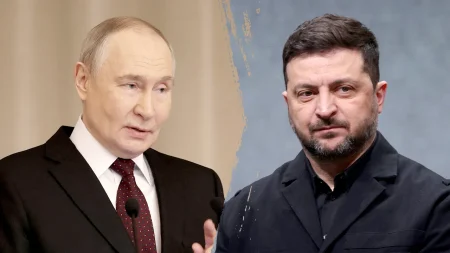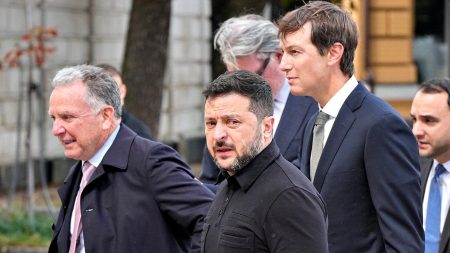


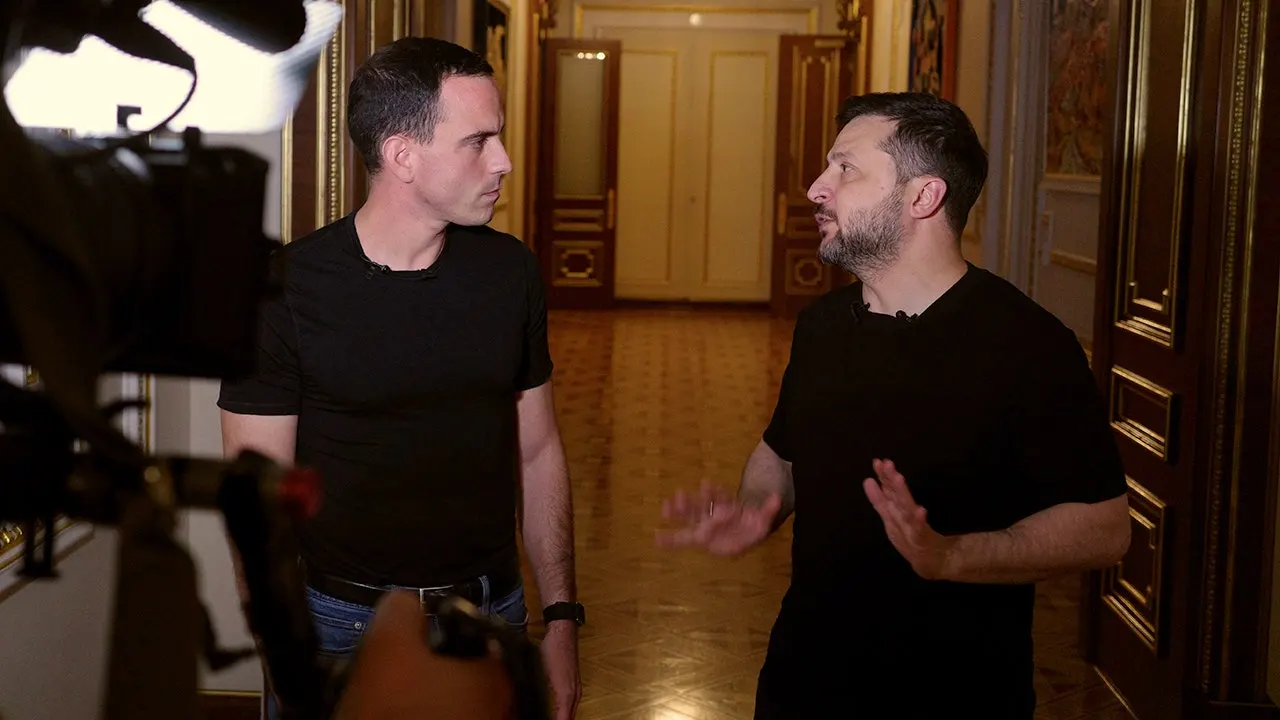
Beneath a cold, grey Kyiv sky, in a city that has learned to live with the hum of generators and the brittle silence of air-raid sirens, Ukrainian President Volodymyr Zelenskyy sat down for an interview that cut straight to the heart of a growing transatlantic tension. The message he delivered was simple, stubborn, and deeply human: Ukraine will not stop defending itself, even if that defense makes Washington uncomfortable. At issue is the Trump administration’s quiet but persistent pressure on Kyiv to stop launching drone strikes deep into Russian territory, specifically against Russian oil refineries. President Donald Trump has publicly linked those strikes to rising gas prices at American pumps, arguing that when Ukrainian drones hit Russian refineries, the global energy market shudders, and American consumers end up paying the price. But Zelenskyy, speaking with the weariness of a leader who has spent nearly four years shepherding his country through war, rejected that framing outright. He acknowledged that he had held multiple conversations with Trump and his team about the refineries, conversations that were frank and at times difficult. But he refused to accept the premise that Ukraine should simply absorb Russian attacks on its own energy system while holding back its long-range capabilities. “Our response must be painful,” he said, and in those words lay the entire tragedy of a war fought not just on battlefields, but in the dark, cold hours when the lights go out and the heat stops working.
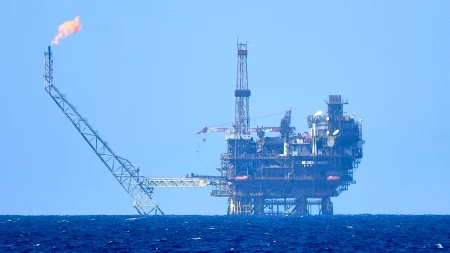
The conversation between Zelenskyy and the Fox News correspondent unfolded in a city that has become a living metaphor for resilience and exhaustion. As the president spoke, Ukrainian engineers were racing to repair the latest damage from Russian missile and drone barrages aimed at the country’s power grid. For months, Moscow has targeted energy infrastructure with near-daily precision, plunging entire regions into darkness and cutting off water and heating for millions of civilians just as winter tightened its grip. The timing was not accidental, and Zelenskyy knew it. He looked at the cameras and laid out the brutal logic of the energy war: Ukraine cannot be asked to show restraint against Russian refineries while Russian missiles and Iranian drones are shredding Ukrainian substations and power plants. “That’s why we have to respond,” he said. “But our response has to be painful for Russian military people.” He made it clear that he was not speaking in abstractions. The strikes on Russian oil infrastructure were not acts of revenge or political theater; they were a strategic answer to a coordinated campaign designed to break Ukrainian civilian morale. If Ukraine stopped striking back, he argued, Russia would simply keep going, emboldened by the knowledge that its own energy sector was off-limits. The only way to force Moscow to reconsider its tactics, in Zelenskyy’s view, was to make the war hurt Russia where it counted—its economy, its fuel supplies, its military logistics. And for him, that was not cruelty. It was survival.
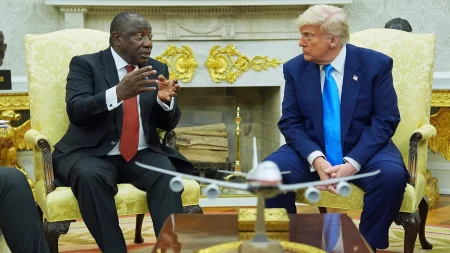
The tension between Washington and Kyiv has been simmering for months, but it boiled over in October when news broke that the Trump administration had approved a deal to import millions of tons of Russian diesel into the United States. For Ukraine, the deal felt like a betrayal disguised as pragmatism. Here was America, the country that had armed Ukraine, supplied it with intelligence, and repeatedly spoken of standing with it, now purchasing fuel from the very state that was trying to erase Ukraine from the map. Zelenskyy did not hide his disappointment. He suggested that the United States was caught in a contradiction, trying to keep gas prices low while simultaneously supporting a country fighting for its existence. The result, he said, was a confusing message: America wants Ukraine to defend itself, but not if that defense rattles global markets. In the interview, the Ukrainian president tried to bridge that gap by offering a practical solution. He suggested that Ukraine might be willing to hold off on further attacks on Russian oil facilities—if the United States delivered more Patriot missile interceptors to protect Ukrainian skies. To some, that sounded like leverage, a way of trading military restraint for advanced weaponry. But Zelenskyy pushed back on that interpretation with a flicker of frustration. “I don’t have any concerns when I share the truth between partners,” he said. He framed it not as blackmail or bargaining, but as the plain truth between two countries that needed to be honest with each other. “Our countries are huge partners. American society is a huge supporter,” he reminded his audience. “And that’s why I have to share with the president the truth, the real situation: that America can’t help Russia. The president can’t help Putin.”
There was something poignant about Zelenskyy’s repeated insistence on truth, as if he were trying to cut through the fog of political calculation and remind everyone of what was really at stake. He was not just asking for weapons; he was asking for coherence. How could the United States call itself Ukraine’s partner while making deals that filled Russia’s war chest? How could President Trump pressure Ukraine to stop hitting Russian refineries while remaining silent about Russia’s relentless destruction of Ukrainian civilian infrastructure? Zelenskyy seemed to understand that the Trump administration approached the war through a lens of transactional realpolitik, where energy prices and trade deals mattered as much as territorial integrity. He was not naive about that. But he argued that even a transactional approach could be squared with Ukrainian survival. “If the American president thinks that this war has influence on the prices,” he said, “he can ask, energy ceasefire, during the Abu Dhabi trilateral meeting: energy ceasefire.” That was the heart of his pitch—not a plea for more money or more weapons, but a call for a specific, targeted ceasefire that would remove energy infrastructure from the battlefield entirely. In his imagination, the upcoming talks in the United Arab Emirates could become a turning point, a moment when both Russia and Ukraine agreed to stop attacking each other’s power systems, easing the pressure on global fuel prices while giving millions of civilians a winter without constant dread. It was an elegant idea, simple enough to grasp, yet devastatingly hard to achieve in a war where both sides have learned that striking energy is the surest way to hurt the other. Zelenskyy knew that. But he also knew that if President Trump wanted lower gas prices, an energy ceasefire was the most direct path—a path that did not require Ukraine to surrender its right to fight back.
The interview with Fox News took place on the same day that a small miracle unfolded on the banks of the Dnipro River, a moment of humanity in a war that has often seemed stripped of it. Hours before Zelenskyy sat down to speak, starved and exhausted residents of the Russian-controlled town of Oleshky were finally allowed to cross into Ukrainian-held territory under a humanitarian truce brokered by First Lady Melania Trump. It was the first operation of its kind in more than four years of war, a fragile corridor carved out of the chaos to let civilians escape a town that had become a symbol of suffering under occupation. The people who emerged were hollow-eyed, carrying whatever they could, their faces etched with months, perhaps years, of fear and hunger. For many, it was the first time they had seen the Ukrainian flag in a long time. Zelenskyy spoke about the evacuation with genuine warmth, his voice softening in a way that betrayed how much these small successes meant. He called it “a huge result,” and he thanked the first lady by name. “I don’t know how many such steps will be available for us,” he admitted, “but if the First Lady can do it … it’s very helpful. I’m very thankful to her.” In that moment, the hard-edged politician, the defiant wartime leader, gave way to something plainer and more human—an acknowledgment that progress in this war is not only measured in tanks, drones, and missile interceptors, but in the battered bodies of grandparents, mothers, and children who just want to sleep somewhere safe and wake up to a quiet morning.
As the interview concluded and Zelenskyy returned to the business of governing a country at war, the larger picture remained unresolved. Ukraine was still under attack, its energy grid still fragile, its people still bracing for the next wave of missiles. The Trump administration was still pushing for a deal on Russian oil, still asking Ukraine to limit its long-range strikes, and still searching for a diplomatic off-ramp that could end the war without handing Putin a victory. Zelenskyy’s message, repeated over and over in slightly different words, was that there could be no shortcut, no cheap solution, no way to make peace without making Russia stop. He welcomed the possibility of talks in Abu Dhabi, but he insisted that any ceasefire must be reciprocal and enforceable. He welcomed the evacuation from Oleshky, but he warned that one truce was not a substitute for a broader peace. He welcomed the partnership with the United States, but he refused to pretend that America’s energy needs and Ukraine’s survival were somehow in conflict. The truth, as he saw it, was that Russia was the problem, and any solution that let Russia off the hook—whether through cheap diesel imports or pressure on Ukraine to hold its fire—would only prolong the war and deepen the suffering. In the end, the president’s words were not just a policy statement or a diplomatic argument. They were a plea from a man who has spent years asking the world to look past its own inconveniences and see the stakes. The cold was coming. The bombs were still falling. And Ukraine, Zelenskyy seemed to say, would keep answering with whatever it had—not because it wanted to, but because it had no other way to live.