


In the final days before Michigan’s Senate election, many Jewish voters are finding themselves caught between two difficult and deeply personal choices: support a Democrat whose rhetoric about Israel and antisemitism troubles them, or turn to a Republican whose broader politics they find alarming. The contest between Democrat Abdul El-Sayed and Republican Mike Rogers has become something far more than a routine political race. For lifelong Jewish Democrats across Michigan, it has become a painful reckoning with identity, belonging, safety, and loyalty. Some say they have never felt more politically homeless, watching a party they have supported for generations wrestle with internal divisions over the Middle East, antisemitism, and what it means to feel safe in one’s own community. Others insist that the stakes of this election—democracy, reproductive rights, economic fairness—remain too high to allow a single issue to decide their vote. The result is a community in turmoil, where conversations around dinner tables and synagogue halls are filled with uncertainty, grief, and a longing for a politics that feels like home again.
The emotional weight of this moment was captured by Regina Hayut, a lifelong Democrat from Ann Arbor who told Newsweek that she has felt “politically homeless” since the Michigan Democratic Convention in April. Hayut once felt comfortable openly identifying as Jewish in her progressive community. But since Hamas’ attack on Israel on October 7, 2023, and the subsequent war in Gaza, she says she has encountered increasingly hostile rhetoric at Democratic gatherings and progressive demonstrations—language she believes crosses the line from legitimate criticism of Israeli policy into antisemitism. She describes watching spaces that once felt inclusive become places where she must brace herself for casual prejudice. Beth Bashert, another Michigan Democrat, echoed that sentiment, saying she goes into Democratic spaces “with armor on,” ready to hear something offensive, hurtful, or hateful. Yet despite her serious objections to El-Sayed’s positions on Israel, Bashert plans to vote for him. Her reasoning reflects the agonizing calculus so many Jewish voters are attempting: she fears for democracy itself, and believes the consequences of a Republican victory would be too dangerous to risk. That decision does not come easily. It is a choice made with a heavy heart, not a confident one—an acknowledgment that no candidate fully represents who they are or what they hold dear.
The controversy surrounding El-Sayed intensified in late October when Rebellion PAC, an independent progressive group associated with commentator Cenk Uygur, released an advertisement supporting the Democratic candidate. The ad tied American grocery prices to U.S. military support for Israel, showing shoppers complaining about costs before suggesting that American tax dollars were funding violence against Palestinians. For many Jewish voters, the advertisement invoked dangerous antisemitic tropes—the idea that Jews exercise outsized influence over American money and that Israel is somehow responsible for American economic hardship. Although El-Sayed’s campaign distanced itself from the advertisement, saying it was produced independently, the damage was done. Critics questioned whether El-Sayed had done enough to condemn the messaging and to confront antisemitism among his own supporters. The conflict burst into full view on Sunday when Democratic Representative Haley Stevens, who narrowly lost the Senate primary to El-Sayed, endorsed Rogers just two days before Election Day. Stevens explained her extraordinary decision by pointing to the advertisement and El-Sayed’s response to it. Her endorsement drew sharp backlash from fellow Democrats, revealing how deeply the war in Gaza and debates over Israel have strained party unity. For Jewish voters watching from the sidelines, the episode reinforced a painful sense that their concerns were being treated as inconvenient obstacles rather than legitimate human fears.
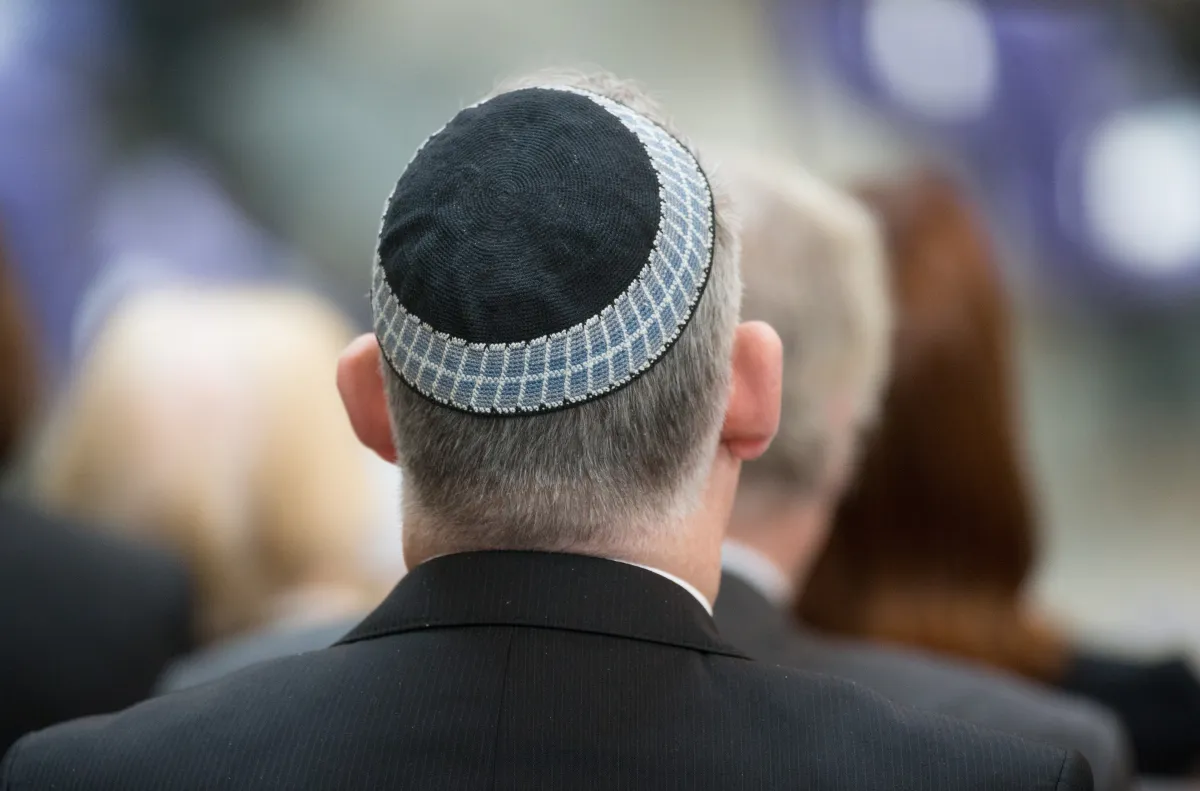
Security concerns have made the election even more visceral. In March, the FBI described an attack on Temple Israel, a synagogue and childcare center in West Bloomfield, as targeted violence against the Jewish community. That attack left Jewish residents across Michigan shaken, forcing them to reconsider the safety of even the most routine acts of faith. Steven Ingber, CEO of the Jewish Federation of Detroit, said Jewish residents expect public officials to prioritize their security, simply so they can gather, pray, and educate their children without fear. Rabbi Aaron Starr of Congregation Shaarey Zedek in Southfield described how that fear has visibly changed daily life: some men now cover their yarmulkes with baseball hats; some college students tuck their Jewish star necklaces beneath their shirts. These small, almost invisible acts of self-censorship speak volumes about a community that no longer feels fully at ease in public. Starr helped found Nonnegotiable Michigan, a movement advocating for Jewish safety, recognition of Jewish identity, and the right of Jewish Zionists to participate fully in public life. For voters in this camp, supporting a candidate whose rhetoric they see as legitimizing antisemitism feels like a betrayal not just of their values, but of their children’s safety and their own right to exist openly as Jews. The election is not abstract for them. It is about whether the political spaces they once trusted will still protect them when hatred appears.
Yet even within the Jewish community, there is no single response to the crisis. Eileen Freed, CEO of the Jewish Federation of Greater Ann Arbor, emphasized that Jewish voters are not a monolith and cannot be reduced to one issue. Some lifelong Democrats say they are so disturbed by El-Sayed’s positions that they are willing to vote for Rogers, despite disagreeing with much of the Republican agenda. Others plan to support El-Sayed because reproductive rights, economic policy, and Senate control matter more to them in this moment. Joan Lowenstein, an Ann Arbor Democrat, put it plainly: what matters most to her is whether people have jobs, and whether even those with good jobs can afford housing and healthcare. For her, the everyday economic struggles of American families outweigh the painful cultural and political arguments that have consumed the campaign. Freed cautioned against assuming that Michigan’s Jewish voters are increasingly prioritizing Israel and antisemitism over bread-and-butter concerns. The reality, she said, is far more complicated. Many are struggling with a deep sense of alienation from the Democratic Party, but they also recognize that the alternative may be even worse for the causes they believe in. This is not a community making a uniform choice. It is a community full of individuals, each carrying their own history, their own fears, and their own hopes, trying to find their way through an election that feels like a no-win situation.
The longer-term question behind Tuesday’s vote is whether the Democratic Party can hold onto Jewish voters while navigating a deeply divided coalition over Israel. For generations, Jewish Americans have been among the party’s most loyal supporters, drawn to its commitments to social justice, civil rights, and democratic values. But events like the Temple Israel attack, the Rebellion PAC advertisement, and the bitter conflict between El-Sayed and Stevens have forced a reckoning. Some voters, like Hayut, describe feeling exiled from spaces they once called home, uncertain where their political allegiance belongs. Others, like Bashert, are voting with clenched teeth, holding their noses while casting ballots for a candidate whose views they distrust because the alternative feels even more frightening. The election will decide who represents Michigan in the Senate, but for many Jewish voters, the ballot box is only the beginning of a longer search for belonging. They want to know whether they are truly welcome in the progressive coalition, whether their fears will be taken seriously, and whether they can be both proudly Jewish and proudly Democratic without contradiction. No single election can answer those questions. But for the men covering their yarmulkes and the students hiding their necklaces, the outcome of this race will shape how they see their place in American politics for years to come. The decision they make on Tuesday is not just about policy or party. It is about survival, dignity, and the fragile hope of feeling at home again in the country they love.