

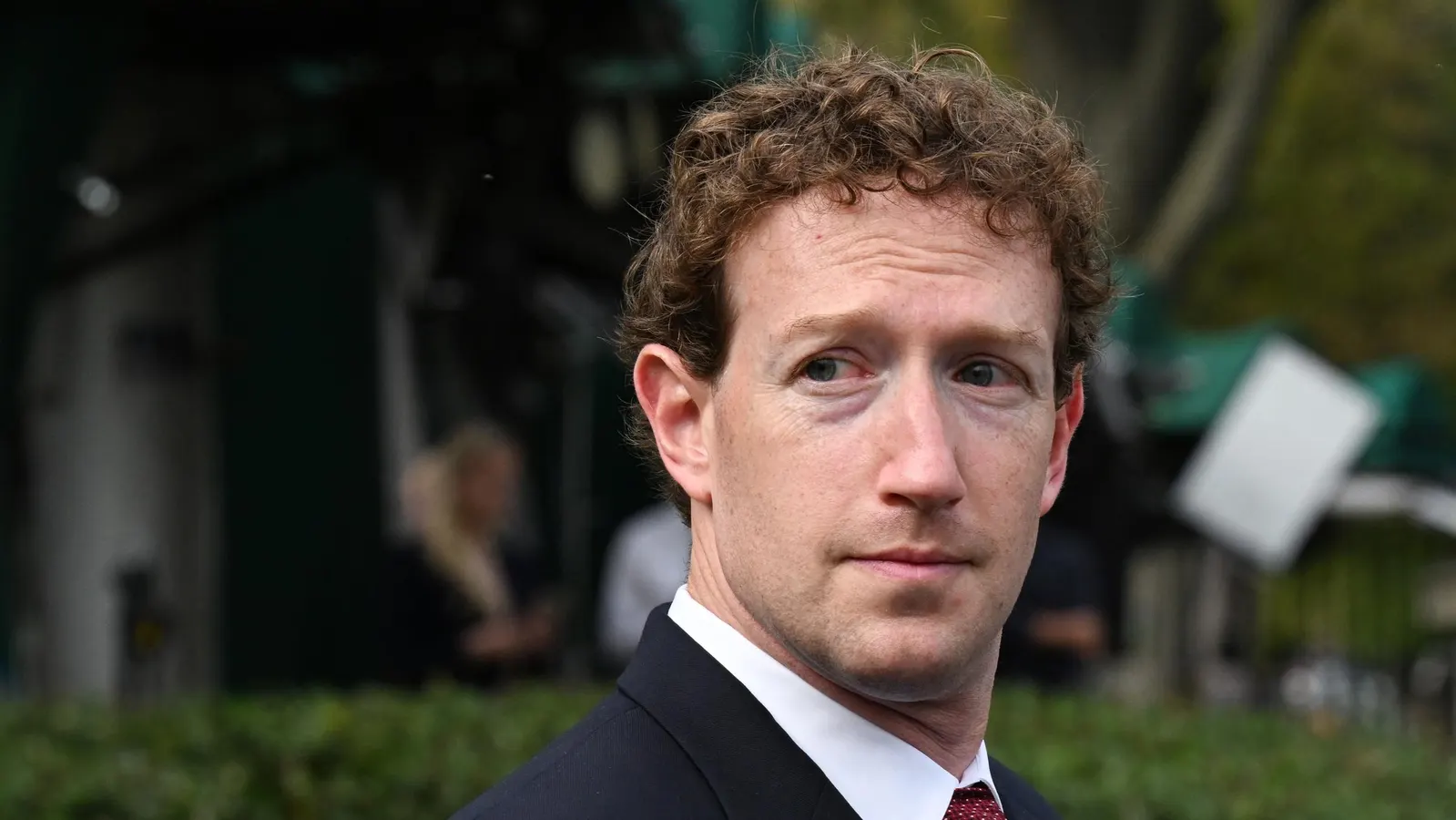
Here in California, a dramatic experiment in taxing extreme wealth is on the ballot this November, and the numbers alone are enough to make anyone’s head spin. The proposal, known as a one-time wealth tax, would impose a 5% levy on the net worth of the state’s billionaires, a group that Forbes estimates includes hundreds of individuals who have amassed fortunes of a billion dollars or more. For the ten richest residents alone, that would translate into a collective bill of roughly $31.5 billion—a sum larger than the entire GDP of many small nations. To put it in more human terms, these aren’t just abstract percentages on a spreadsheet; they represent choices between private jets and public schools, between luxury yachts and healthcare for the working class. The very idea of taxing wealth, rather than income, has ignited a fierce debate about fairness, opportunity, and whether the most fortunate among us have an obligation to give back to the state that helped them prosper. And at the center of this storm is Mark Zuckerberg, the Meta CEO who, thanks to a labyrinthine corporate maneuver, has become the face of both immense fortune and cautious acquiescence.
Zuckerberg’s estimated tax bill alone is staggering: $10.9 billion, based on his more than $200 billion net worth. He is now the richest person in California, in part because other tech titans like Google cofounders Sergey Brin and Larry Page have chosen to flee to tax-friendlier states. But Zuckerberg is reportedly staying put, thanks to a deal he struck with Meta’s board. The arrangement allowed the company to create a special class of stock that he can sell specifically to cover his tax obligations, a move that feels less like a sacrifice and more like a carefully engineered accommodation. Yet even he seems to understand the gravity of the situation, acknowledging the need to pay his share. Right behind him is Jensen Huang, the charismatic CEO of Nvidia, whose net worth has soared past $170 billion on the back of the AI revolution. Huang has taken a surprisingly philosophical stance, telling CBS that he doesn’t “mind paying taxes” and that it’s a “privilege” to do so. “I’m not afraid of paying taxes,” he said. “I’m just afraid of being poor.” His words strike a rare note of humility in a world of scarcity, suggesting that even the ultra-wealthy can understand the social contract that underpins a functioning society.
But not everyone feels so magnanimous. Eric Schmidt, the former Google CEO, faces an estimated $1.8 billion bill on his roughly $30 billion fortune. Behind his calm exterior, Schmidt has become one of the tax’s most vocal and powerful opponents, pouring about $40 million into a political action committee dedicated to defeating it. He isn’t alone. John Doerr, the legendary venture capitalist, has also contributed tens of millions to the fight, standing to lose over a billion dollars from his roughly $20 billion wealth. These men represent a broader cohort of billionaires—Henry Samueli of Broadcom, Robert Pera of Ubiquiti, Kingston Technology’s John Tu and David Sun, OpenAI cofounder Greg Brockman, and Brett Adcock of Figure—each of whom would pay between $1.2 and $1.6 billion under the proposal. Notably, many of them have remained publicly silent, choosing to let their donations speak for them. The opposition is substantial: when a handful of individuals can fund campaigns to sway public opinion, the democratic process itself feels weighed down by the very wealth being taxed.
The mechanics of this tax are as complicated as they are controversial. Forbes calculated its estimates using its own real-time billionaires list, which is based on market values, private business valuations, and other metrics. But the state’s tax authority would use a different method, potentially leading to very different final bills. For example, assets held in certain types of trusts might be excluded, significantly lowering a person’s taxable net worth. Private companies, like OpenAI or Figure, are valued by Forbes based on best estimates of market value, but the tax code might require a different approach, one that could be more generous or more punitive depending on the circumstances. This uncertainty makes the whole exercise feel less like a concrete policy and more like a high-stakes gamble. The final amount each billionaire pays could vary by billions of dollars, depending on legal interpretations and the advice of tax lawyers. And those lawyers are undoubtedly working overtime, because the stakes are existential for the state’s fiscal health and for the residents who dream of a more equitable distribution of wealth.
The political battle is now reaching its climax, and the latest polls suggest the wealth tax is on shaky ground. A survey from UC Berkeley and the Los Angeles Times released in late October found that only 42% of likely voters support the measure, while 50% oppose it, with 8% undecided. That’s a significant reversal from just six weeks earlier, when a narrow majority favored the idea. The opposition has been well-funded and strategically effective, framing the tax as a punitive measure that will drive innovation and job creators out of California. But the story doesn’t end with the vote. Even if the measure passes, it could be immediately nullified by other proposals on the same ballot. Propositions 40, 41, and 42 are competing measures, each with its own set of rules. Proposition 40 is the wealth tax itself. Proposition 41 would prohibit certain exemptions that the wealth tax relies on, while Proposition 42 would impose a full ban on any future wealth taxes. The California constitution dictates that whichever measure receives the most yes votes will prevail. So even if a majority of voters say yes to the wealth tax, if even more people say yes to Proposition 42, all of it becomes moot. This Byzantine arrangement has left many voters confused, and it’s a perfect example of how a single ballot can become a tangled web of competing interests.
And what about the future? The tax’s potential impact could shift dramatically if Anthropic, the AI safety company, goes public. The firm recently filed for an IPO, and its valuation is expected to be enormous. Forbes currently values CEO Dario Amodei and his sister Daniela Amodei at around $13 billion each while the company remains private. If Anthropic goes public at the expected price range, their individual net worths could jump to more than $20 billion, putting them on the hook for over $1 billion each in tax. That would add a new, hyper-wealthy couple to the list, but it also raises the question of whether they might reconsider their California residency. Meanwhile, the broader economic consequences are uncertain. A working paper from Stanford University, published by the National Bureau of Economic Research, analyzed the impact of billionaires leaving the state. Across 100,000 potential scenarios, 85% of them resulted in negative revenue for California. That’s because the state would lose the income tax, property tax, and other contributions from the departing billionaires, which would likely outweigh the one-time windfall from the wealth tax. The irony is striking: a tax intended to fund public services by taking from the rich could end up costing the state far more than it brings in. Ultimately, the debate over this wealth tax is not just about numbers. It’s about what we owe to each other, what it means to be a community, and whether the American dream still thrives in the Golden State. As the votes are counted, Americans are watching to see if California decides to lead the nation in redistributive policy—or if the power of a few will once again shape the destiny of millions.