


-
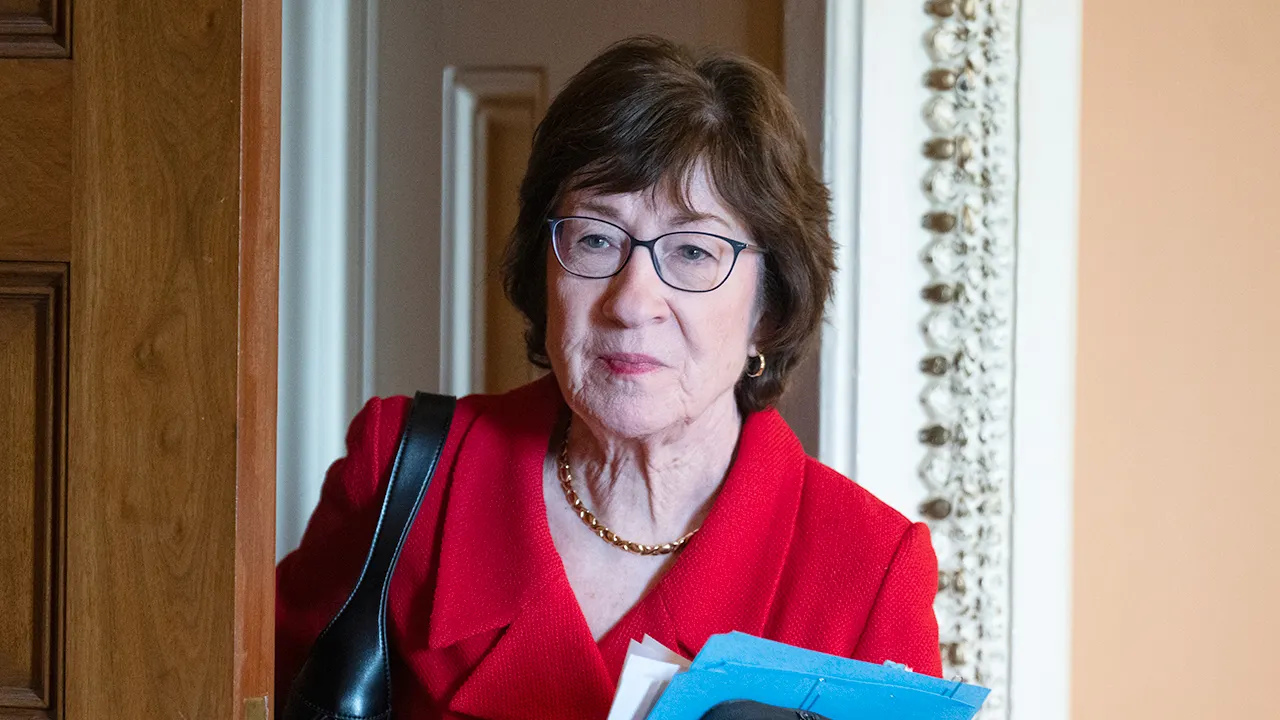
On the eve of an election that could decide the balance of power in the United States Senate, Susan Collins sat down with Fox News and let the frustration she had been carrying for months spill out. The four-term Republican senator from Maine, known for her polite, measured demeanor, was visibly exasperated as she described a relentless barrage of attack ads that she says have flooded Maine’s airwaves in the final weeks of her reelection fight. “I have never seen a campaign with so many outright lies,” she said, her voice carrying equal parts anger and disbelief. Collins, who has been a fixture in Maine politics for decades, said she was not just fighting a local challenger in Troy Jackson, the Democratic state senator who had risen in the polls. She was fighting what she called “Chuck Schumer’s playbook”—a coordinated, big-money effort orchestrated by the Senate Minority Leader and national Democratic groups to take her down by any means necessary. “One of the outrageous, completely false ads against me had to do with Jeffrey Epstein,” she explained. “And it turns out, in talking to two of my colleagues who are in tough races, that they had virtually identical ads run against them. So this is part of Chuck Schumer’s playbook.” For Collins, the accusation was not just a campaign attack; it was a personal affront, an attempt to smear a reputation she had spent a lifetime building. As she spoke, the stakes felt almost tangible: a tie in the latest Fox News poll, two days before Election Day, and a national spotlight fixed firmly on a state that often seems a world away from Washington’s partisan trenches.
-
The Epstein ad, Collins argued, was the most egregious example of a broader strategy designed to mislead voters. She described how the same narrative had been deployed against other Republican senators in difficult races, with only minor tweaks in names and local details. It was, in her view, a Washington-driven operation that had little to do with Maine and everything to do with controlling the Senate chamber. “There are a lot of differences between my opponent and me,” she said, “but I’ve never seen a campaign with so many outright lies. It’s very frustrating.” The frustration was not just about the falsehoods themselves, but about what they represented: a political culture that rewards destruction over debate, that reduces a candidate’s record to a series of distorted soundbites, and that treats the truth as an inconvenience rather than a principle. Collins, who has often positioned herself as a bridge between the parties, seemed genuinely wounded that her long history of independent judgment could be erased by a thirty-second commercial. She paused, as if weighing her next words carefully, before lamenting the loss of civility and accuracy in modern campaigns. “It’s certainly an attempt by my opponent and Chuck Schumer and their allies to nationalize this race,” she said. For Collins, that was the deeper tragedy: Maine voters deserved a real conversation about their state—its economy, its woods, its working families—but instead they were being treated to a carefully manufactured national script, written by consultants who had probably never set foot in a Maine town meeting or walked the docks of its fishing villages.
-
Her own campaign, Collins insisted, was built on a different foundation. She pointed to her record as a bipartisan lawmaker, a moderate voice in a Senate that increasingly favors ideology over compromise. She spoke of the departing centrists—colleagues who had retired, resigned, or simply given up on a broken institution because they could no longer stomach the extremes. “Unfortunately, a lot of them have given up and retired or decided they just didn’t want to run again. And that’s one reason I am running again,” she said. In an era when political tribalism reigns, Collins argued, the Senate desperately needs people willing to cross the aisle, to listen, to find common ground. “We need more people who are willing to work across party lines. That is really important,” she emphasized. Her words were not abstract talking points; they were a plea to the voters who had sent her to Washington six times before, asking them to remember what she had accomplished when the cameras were not rolling. She had voted against her own party on key issues, she reminded them, and had angered Republicans and Democrats alike with her independence. In a state where independent-minded voters pride themselves on splitting tickets, Collins has long been a symbol of that tradition. Now, as her race tightened into a dead heat, she was asking Maine to believe in that identity once more—not the caricature painted by her opponents, but the real record of a woman who had spent two decades priding herself on answering to her conscience first and her party second.
-
The senator also took sharp aim at a statistic that had dogged her throughout the campaign: the claim that she voted with President Trump 95 percent of the time. Collins dismissed the figure as a “phony” artifact of selective counting, designed to make her look like a loyalist rather than an independent. “That’s based on a sample of only 30% of the votes,” she explained. “If you look at a broader sample of 90% of the vote, that drops significantly to like 72%. And I voted against the president’s policies 138 times.” She wanted voters to understand the difference between a number and the reality behind it. Her opposition to President Trump had been real and consequential, she argued, from her role in blocking the repeal of the Affordable Care Act to her votes against his border wall and his tax cuts. Yet in the world of campaign ads, nuance had no place. The ninety-five percent figure, repeated endlessly, had taken on a life of its own, translating into a simple narrative: Collins was Trump’s rubber stamp. She disagreed, and she wanted Maine voters to look closer. Her independence, she said, was not a slogan but a discipline. “There is this phony figure out there,” she repeated, shaking her head. She pointed to her votes on Supreme Court nominations, on criminal justice reform, on infrastructure, as evidence of a senator who weighed each issue on its merits, not political affiliation. In an age of rigid partisanship, Collins argued, such independence was not a weakness but a rare virtue—one that the country desperately needed to sustain a functioning democracy.
-
The political landscape around her was precarious. The latest Fox News poll showed Collins and Jackson locked in a statistical tie at 49 percent, a remarkable tightening for a state that had not elected a Democrat to the Senate since 1988. Jackson, a former logger and union leader from northern Maine, had campaigned relentlessly, crisscrossing the state with a message that Collins had lost touch with working families. “I believe we have a good shot at defeating her,” Jackson had told Fox News, and his confidence was not unfounded. The national political winds, energized by a polarized electorate, were at his back. But Collins remained steadfast in her own optimism, rooted in the power of personal connection. “I’m feeling very optimistic based on the great response I get in visiting communities all over the state,” she said. She spoke of the town halls, the diner visits, the county fairs—the old-fashioned rituals of Maine politics that had kept her grounded through two decades in Washington. She believed that voters, when given the chance to see her in person, still sensed her authenticity. They might not agree with her on every issue, she acknowledged, but they trusted her to listen. And in a world of attack ads and dark money, that trust was the most valuable currency she had. She had outlasted previous challengers by honoring that trust, and she believed she would do so again, even as the national machinery worked against her.
-
For Collins, the deeper meaning of this election went beyond one seat or one state. She saw it as a referendum on the kind of Senate America wanted—one filled with ideological warriors who never compromise, or one that still made room for moderates and dealmakers. “We need more people who are willing to work across party lines,” she repeated, returning to the theme she believes could save the institution. The fate of the Senate majority hung in the balance, with control of the chamber likely to be decided by a handful of races, and Collins’s race was at the center of it all. If she lost, the Republican majority would almost certainly fall, and Democrats would gain the power to shape the judiciary, pass legislation, and set the agenda for the next two years. If she won, her victory would stand as proof that there was still a place for centrism in American politics. As she looked toward Election Day, Collins was not promising a revolution. She was offering a message of steadiness, of patience, of the slow, unglamorous work of governing. She asked voters to reject the notion that every election had to be a culture-war battlefield, and to instead consider the practical results of her service: the funding for Maine’s fisheries, the mental health care for veterans, the infrastructure for rural communities. With two days left, she had done all she could. The rest was in the hands of the people of Maine, whose judgment she had always trusted, even when the political storm around her grew loud. “I’m feeling very optimistic,” she said, and for a moment, the frustration in her voice softened into something steadier—a belief that truth, even in the face of a thousand lies, might still have one more chance to prevail.