




Another week in the Pacific Northwest tech world brought a mix of corporate restructuring, political friction, legal settlements, and fresh ideas, and GeekWire’s latest roundup captures all of it. The biggest headline is Microsoft’s decision to offer buyouts to roughly 60,000 employees across the U.S., Canada, the U.K., and India. Unlike many corporate buyout programs, this one has no age or tenure requirement, meaning a wide range of workers can raise their hands and leave with the company’s standard severance package. That’s a significant moment for a company that has been careful about headcount, and it puts a deeply personal choice in front of tens of thousands of people. Do they stay, or do they take the money and move on to something new? Microsoft, for its part, seems to expect that far fewer people will accept than during its spring retirement program, which suggests this is more of a gentle nudge than a mass exodus. Still, the offer alone creates a sense of uncertainty, especially for employees who might be wondering whether this is the start of a larger shift in the company’s culture and structure. For a tech giant that has long been seen as a stable place to build a career, the buyout news is a reminder that even the most established names are constantly rethinking their workforces.
Microsoft also found itself in an awkward political spotlight this week, and it wasn’t because of a product launch or earnings call. Washington Governor Bob Ferguson publicly criticized the company for funding a political action committee whose television ad, aired during Seahawks games, declares that “Olympia is broken.” The PAC, called Washington Needs to Compete, has raised $13.8 million, and Microsoft has contributed more than $5 million of that total. For a company that needs to work closely with state government on everything from regulation to infrastructure, bankrolling an ad that attacks the state capital is a risky move. Ferguson’s rebuke suggests that Microsoft’s money is buying tension rather than goodwill. It’s a classic clash between corporate influence and public accountability, and it raises uncomfortable questions about how far a company should go to shape the political environment where it does business. Meanwhile, Zillow Group is closing a painful chapter in its own history. The real estate giant has agreed to pay $212.5 million to settle a shareholder class action lawsuit that accused the company of misleading investors about Zillow Offers, the home-flipping business it abruptly shut down in 2021. The settlement still needs court approval, but it comes just three weeks after the U.S. Supreme Court declined to hear Zillow’s challenge to the case’s class status. For shareholders, the payout is at least some measure of closure, but for Zillow, it’s a costly reminder that promising too much, too quickly, can have serious consequences.
On the startup side, one of the most intriguing stories is the launch of Entire, a new platform for hosting and reviewing code that is being pitched as a direct alternative to GitHub. The company is led by Thomas Dohmke, the former CEO of GitHub, so this isn’t some unknown player trying to make a name for itself. Entire’s big bet is that the traditional pull request is obsolete. Instead, its “Trails” feature uses AI agents to score each code change, letting developers merge their work without having to read every single line. That’s a bold promise, and it touches on one of the biggest debates in software development right now: how much trust should we place in AI when it comes to code quality and safety? Supporters will say this is the natural next step, saving developers time and letting them focus on bigger problems. Skeptics will worry that automation is moving too fast, and that reviewing code is exactly the kind of careful human work that shouldn’t be rushed. Either way, Entire is making a statement, and having Dohmke at the helm means the tech world is paying attention. In a completely different corner of consumer tech, T-Mobile is shaking up its pricing with the new T-Mix plans. Instead of bundling a bunch of services into every package, customers get a set number of “Picks” to spend on perks like Netflix, ESPN, Xbox Game Pass, or even a new phone. Plans start at $55 a month for one line, and customers can swap their perks every 90 days. It’s a flexible, choose-your-own-adventure approach to wireless service, though there is a catch: phones and extras all draw from the same allowance. That means a shiny new device could mean giving up your streaming subscriptions, at least for a while. It’s an interesting experiment in consumer choice, and it will be worth watching whether customers love the flexibility or find it frustrating.
The week also brought a wave of leadership changes that show how restless talent can be in the tech industry. Two former Amazon executives who helped build Discovery’s direct-to-consumer operation in Bellevue are stepping down, leaving a gap in a major media company’s digital strategy. At the same time, an Amazon leader is heading back to Microsoft to join its CoreAI effort, a sign that the battle for top AI talent remains as intense as ever. VertueLab, a nonprofit focused on clean energy innovation, also named a new executive director, adding another piece to the region’s growing climate tech ecosystem. Perhaps the most surprising move came from Xbox, where COO Helen Chiang abruptly left Microsoft after 21 years with the company and only a few months into her new role. Sudden departures at that level always spark speculation, and this one is no exception. Was it a personal decision? A strategic realignment? A disagreement about direction? The company isn’t saying, but Chiang’s exit leaves a notable void in the gaming division during a critical time for the industry. Elsewhere, SeekOut, a talent intelligence company, has shaken up its leadership, and Fred Hutch has named a new vice president. These moves may not make the biggest headlines individually, but together they paint a picture of an industry in constant motion, with experienced leaders moving between companies, taking on new challenges, and leaving others to fill the gaps.
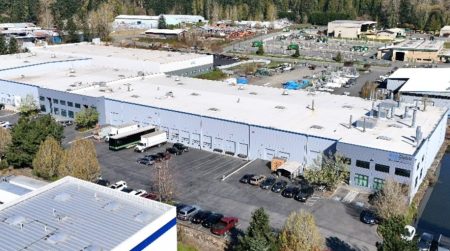
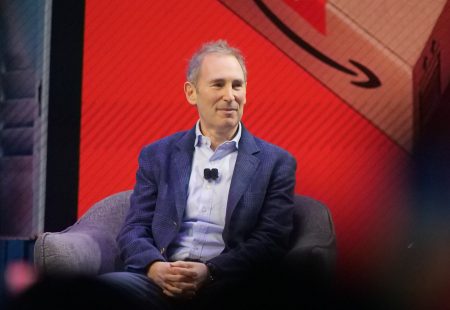
Money and ambition are also driving big bets in the region’s future industries. Amazon is preparing to report its third-quarter earnings on Thursday, and the buzz is all about cloud computing. AWS is seeing more demand than it can supply, and CEO Andy Jassy has already said that capacity is booked for this year and most of next. That’s an extraordinary position to be in, and analysts expect the company to report revenue of about $202 billion, up 12 percent from a year ago. The bigger question is what Amazon plans to spend in 2027, and investors will be looking for signals about whether the company can keep up with the AI-driven explosion in cloud demand. Meanwhile, the aerospace scene in Washington state is getting a major boost. Blue Origin, the space company founded by Jeff Bezos, is planning a facility in Des Moines that could employ hundreds of people, joining Shield AI, which has announced plans for 4,000 regional jobs. That’s a huge deal for a small city, and it shows how the Pacific Northwest is becoming a serious hub for space and defense innovation. On a smaller but no less fascinating scale, Seattle startup Emerald Nuclear is leading a Norwegian project backed by a $2.1 million award to develop nuclear power for ships and offshore uses. The team is starting with a non-nuclear prototype, and its first commercial deployment is targeted for 2031. There are still big hurdles ahead, including financing, fuel supplies, and regulatory approvals, but the idea of clean nuclear power for the maritime industry could be transformative. It’s the kind of ambitious, long-term thinking that defines the region’s entrepreneurial spirit.
Taken together, this week’s news is a snapshot of an industry that is both thriving and wrestling with its own contradictions. Microsoft is offering buyouts to tens of thousands of employees while also pouring millions into political ads that anger the governor. Zillow is paying a massive settlement for past mistakes, while Amazon is struggling to build enough cloud capacity to meet future demand. Startups like Entire are pushing the boundaries of what AI can do, while T-Mobile is trying to give consumers more control over their own plans. Leaders are coming and going, new facilities are rising, and ambitious projects like nuclear-powered ships are moving from fantasy toward reality. There’s a sense of momentum here, but also a sense of caution. The tech industry is learning that growth isn’t always smooth, and that every decision, whether it’s a buyout offer, a political contribution, or a new product launch, has ripple effects. For those of us watching from the outside, it’s a reminder that behind every headline are real people making real choices, and that the future of technology is being built one complicated week at a time. If you want to stay on top of all these stories and more, GeekWire’s weekly email newsletter is a great way to keep up, delivering the latest news and analysis to your inbox every Sunday.