


-
The quiet Sunday afternoon in the South Florida neighborhood of Cresthaven was shattered in an instant when a private jet carrying nine people slammed into the residential area, turning a normal day into a scene of fire, smoke, and chaos. The crash happened at approximately 12:50 p.m. local time, and the impact was so violent that the aircraft erupted into a massive fireball, with dark plumes of smoke rising into the sky that could be seen from blocks away. Just nine miles from Mar-a-Lago, the crash site placed the tragedy within the broader orbit of one of the most recognizable landmarks in the region, but for the people who live along the streets near Military Trail, this was not a matter of proximity to power or politics—it was their own backyard, their own homes, their own sense of safety torn apart by a falling plane. The Federal Aviation Administration confirmed that nine people were aboard the aircraft, which had departed from Austin-Bergstrom International Airport in Texas and was bound for North Eleuthera Airport in the Bahamas. In the immediate aftermath, the focus turned to survival, rescue, and the frantic efforts of emergency crews to make sense of an event that seemed to defy comprehension on a lazy Sunday afternoon.
-
For those who witnessed the aircraft’s final moments, the scene was both terrifying and surreal. Video footage shared across social media captured the plane dropping rapidly through the sky, its trajectory unmistakably wrong, before it disappeared into an explosion that sent billowing smoke and tongues of flame into the air. The FAA’s statement was brief and clinical, but it carried the weight of an unfolding disaster: the plane had crashed in a residential area near Cresthaven, Florida, and nine people were on board. The investigation would be led by the National Transportation Safety Board, with the FAA also gathering facts and supporting the response. The aircraft, according to the flight tracking site Flightradar24, was a Learjet that had left Austin at 15:37 Greenwich Mean Time, climbing to a cruising altitude of 41,000 feet on a routine journey toward the Bahamas. But that routine ended over Florida. The tracking data showed that at 17:35, near Naples, the aircraft began a descent down to 35,000 feet. A few minutes later, at 17:48, it briefly climbed, and then entered a steep, right-hand descent—the kind of maneuver that suggests a serious emergency, a loss of control, or a desperate attempt to reach a runway that ultimately ended in tragedy.
-
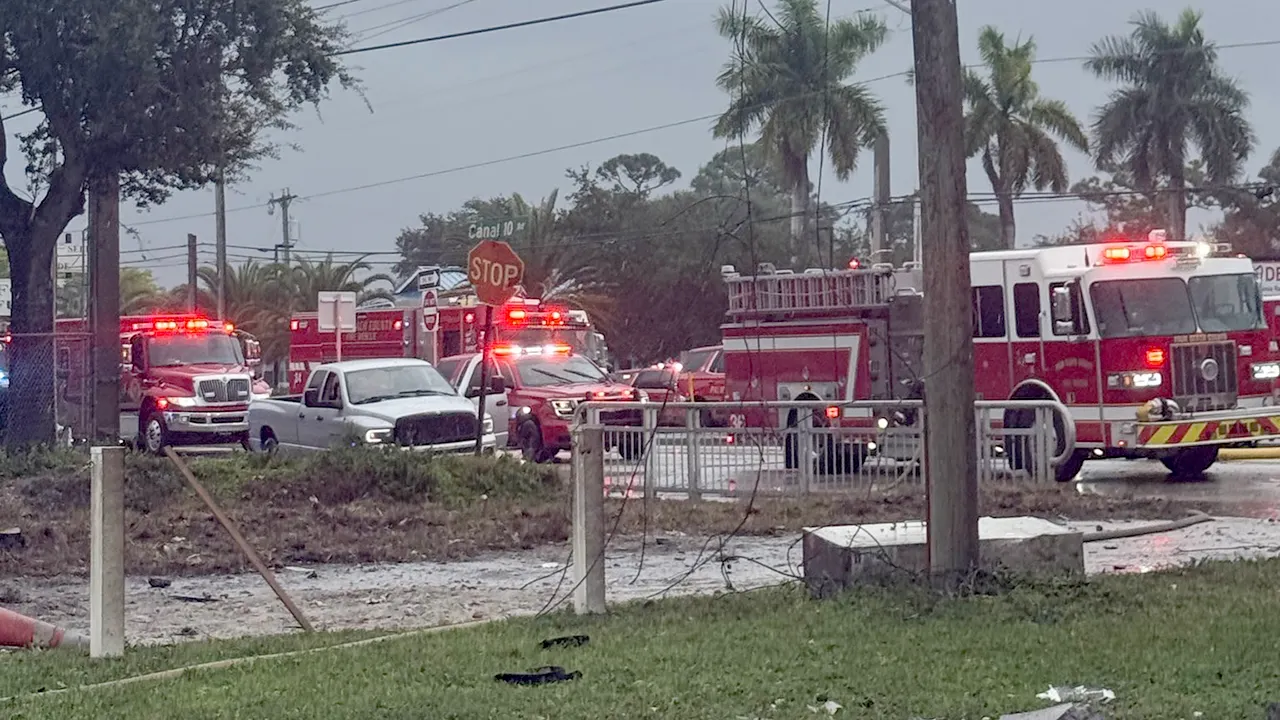
As the fireball erupted, emergency response teams raced to the scene. Palm Beach County Fire Rescue quickly took to social media with an urgent warning, telling the public to avoid the area and describing the situation as an extended incident. “Aircraft Incident,” the agency posted on X, in a message that was stark and chilling. “Avoid the area. This will be an extended incident.” Crews shut down Military Trail between Cresthaven Boulevard and 10th Avenue North, cordoning off a neighborhood that had suddenly become a makeshift disaster zone. First responders, firefighters, law enforcement officers, and medical personnel converged on the scene, their sirens wailing against a backdrop of smoke and shattered expectations. For the people who lived in the area, the road closures and emergency lights were more than just logistical interruptions—they were the visible signs of a catastrophe unfolding in their midst. The phrase “extended incident” signaled that this would not be quickly resolved; the investigation, the cleanup, and the painful human accounting would take hours, days, and perhaps longer. In the moments after the crash, the neighborhood was left in a state of shock, with residents emerging from their homes to stare at the smoke and try to understand how something so mundane as a Sunday afternoon had turned so disastrous.
-
The flight data painted a haunting picture of the aircraft’s final minutes. After departing Austin and climbing to 41,000 feet, the Learjet appears to have flown smoothly for much of its journey toward the Bahamas. But as it approached Florida’s Gulf Coast, something changed. The descent to 35,000 feet near Naples was the first sign that the flight was no longer routine. Then came the brief climb, as if the pilots were fighting to regain altitude or stability, followed by a steep, right-hand descent. That final maneuver, as described by Flightradar24, suggests an aircraft that was losing altitude quickly, perhaps spiraling or diving in a way that left little time for corrective action. The steep descent ended over a residential neighborhood in Cresthaven, near the retirement communities and shopping centers that define much of South Florida’s landscape. For the nine people on board, the flight that began in Texas and was bound for the Bahamas ended miles short of its destination, in a place where children’s toys and garden ornaments now shared space with wreckage. The technical details of the flight path are crucial for investigators, but they also carry a human weight: every altitude change, every turn, every fluctuation in speed was a moment of fear, hope, or finality for those inside the cabin.
-
In times like these, the numbers and the jargon—nine on board, a Learjet, a descent from 41,000 feet—can only tell part of the story. The rest is made up of the lives behind those numbers, the families and friends who were waiting for news, the colleagues who had said goodbye at the airport in Austin, the people in the Bahamas who expected a familiar arrival. There were nine names on a manifest, nine people whose stories were suddenly interrupted, and hundreds, perhaps thousands, of people whose lives were forever changed by their loss. The neighborhood where the plane crashed is not just a coordinate on a map; it is a community of residents who will now carry the memory of a fireball in their sky. The emergency crews who responded will replay the images in their minds. The families of the victims will face a long night of waiting, hoping, and grieving, while investigators begin the painstaking work of determining what went wrong. The proximity to Mar-a-Lago adds a layer of national attention, but it does not diminish the personal tragedy that unfolded in those final seconds, when a plane full of hopes and plans came down in a place where no one expected it to land.
-
As the sun began to set on Sunday, the smoke likely still hung in the air over Cresthaven, and the work of investigation had only just begun. The NTSB is now in charge, and all updates will come from the agency as it pieces together the evidence: the flight data, the cockpit voice recorder if it is recovered, the wreckage, the eyewitness accounts, and the final moments of the aircraft. The FAA will support the effort, and local authorities will continue to secure the scene, tend to the affected neighborhood, and support the families of those who were on board. This is a developing story, and the full picture may not emerge for days or even weeks. But in the immediate aftermath, the focus must remain on the human cost of the disaster—the nine people who did not arrive in the Bahamas, the community that will never see that intersection the same way again, and the responders who ran toward the fire when every instinct might have told them to run away. In a region familiar with hurricanes and unpredictability, this was a different kind of storm, one that arrived without warning and left behind a scar. The prayers of a community go out to the victims and their families, and the search for answers begins in earnest.