


The eastern Mediterranean has never been a quiet corner of the world. It is a sea of ancient ports, contested histories, and now, increasingly, a high-stakes arena for energy and influence. The latest storm to break over its blue waters is a maritime agreement between Turkey and Libya’s eastern administration, a deal that has reignited old grievances and created new ones. To outsiders, this may look like a technical matter of nautical boundaries, but to the nations involved, it feels like a land grab on the open sea, a unilateral rewriting of the map that could determine who gets to tap into vast underwater gas fields and who gets shut out. The pact, approved in mid-October by the eastern Libyan parliament, is not just a piece of paper. It has become a symbol of how fragile alliances can be, how quickly diplomatic language can harden into anger, and how the search for energy can redraw friendships and enmities overnight. Washington has called it provocative and unhelpful. Greece has condemned it as legally worthless. Israel has accused Turkey of destabilizing the region. The European Union has declared it null and void. And Turkey, defiant, insists that everyone else is the problem. Beneath the official statements, there is a deeply human story of pride, insecurity, ambition, and the persistent fear of being left behind in a region where power is measured by access to the sea and what lies beneath it.
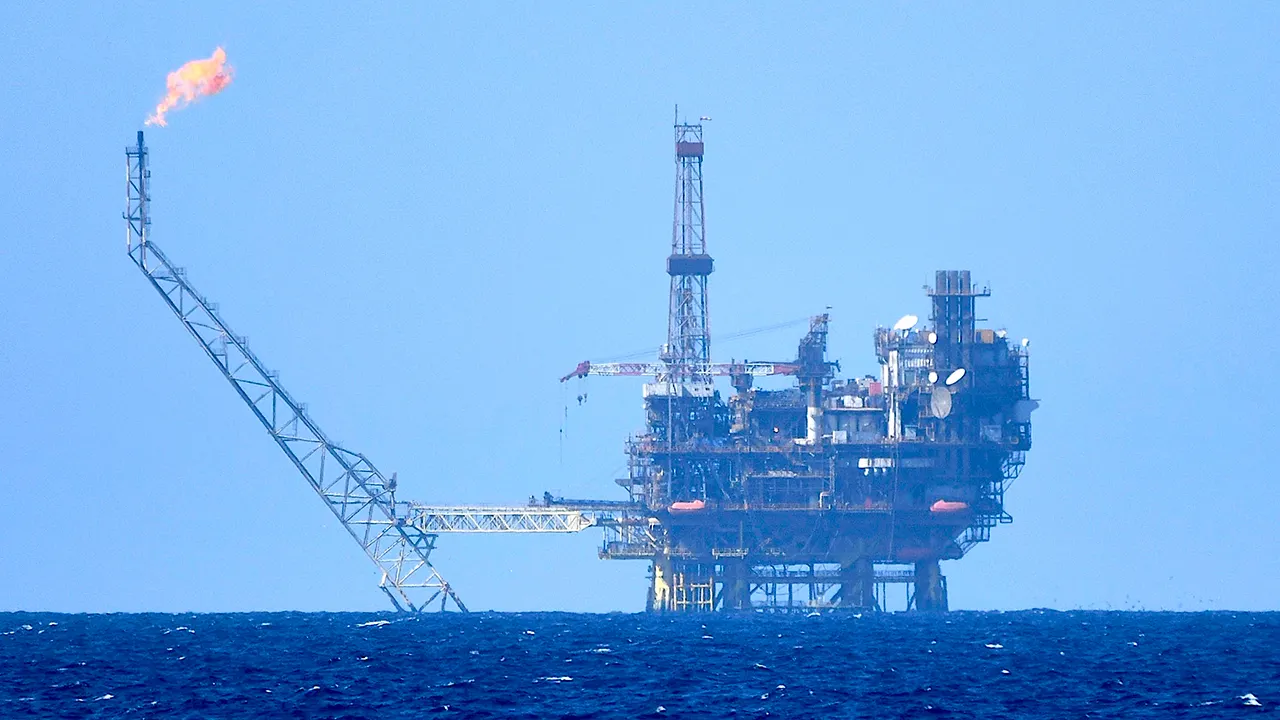
The agreement itself is complicated, layered with the chaos of Libya’s fractured politics. There is no single Libya today. In the northwest, in Tripoli, sits an internationally recognized government that most of the world treats as the legitimate authority. In the east, military leader Khalifa Haftar rules a large territory with his own parliament, and it is this eastern body that ratified the maritime accord with Turkey. That alone is enough to raise eyebrows, because it means the deal was made by a part of Libya that many countries do not formally recognize as sovereign over the whole state. But the real problem is what the accord does to the map. It draws maritime boundaries between Turkey and Libya in a way that cuts across what Greece considers its own continental shelf and exclusive economic zone. It effectively ignores the presence of Greek islands, including Crete, which sits like a giant sentinel in the middle of the eastern Mediterranean. For decades, maritime law has tried to balance the interests of coastal states and island nations, but this agreement, critics argue, throws that balance aside. And there is a powerful reason why this matters so much: the seafloor of the eastern Mediterranean is believed to hold enormous natural gas deposits. Whoever controls the water controls the energy, and whoever controls the energy gains leverage over pipelines, prices, and political alliances. This is not an abstract legal dispute. It is about money, security, and the ability of nations to shape their own futures in a region that has seen more than its share of conflict.
The United States has made its position clear, though it has done so with the careful language of a country trying not to alienate its NATO partners. A State Department spokesperson told Fox News Digital that the ratification of the Turkish-Libyan memorandum has “raised tensions in the region and is unhelpful and provocative.” It is a strong statement, but it is also measured, and it reflects the uncomfortable position Washington finds itself in. Turkey is a NATO ally, a crucial player in the alliance’s southern flank, and a country with immense strategic importance. Greece is also a NATO ally, one that has often felt overshadowed and threatened by its larger neighbor. The United States does not want to choose sides openly, so it urges dialogue. The spokesperson added that Washington encourages all countries, including partners in the Eastern Mediterranean, to resolve maritime disputes through good-faith negotiations and avoid provocative behavior. There is a hopeful note in that message, a belief that peaceful resolution can open the way for commercial investment and exploration that will benefit the entire region. But hope is not always enough. Behind closed doors, there is frustration in Washington that Turkey continues to act in ways that seem designed to challenge the pro-Western order, and there is worry that the United States, with its attention stretched across the Middle East and beyond, does not have the leverage or the appetite to enforce a settlement. For American officials, this is not just a remote foreign squabble. It affects American energy companies, American military bases, and the stability of a region where the United States has deep commitments and old friendships.
Turkey, for its part, is not backing down. Turkish Foreign Minister Hakan Fidan responded to the criticism with a mixture of confidence and defiance. He called the maritime agreement “entirely legitimate,” both legally and politically, and said there is no need to debate it. Reuters reported that he shot back at the deal’s critics, suggesting that some countries were reacting because they felt compelled to, while others genuinely had strategic problems with the agreement. There is a certain pride in his words, a refusal to accept that Turkey has done anything wrong. To understand this, one has to understand Turkey’s perspective. For years, Ankara has felt hemmed in by what it sees as the hostile maritime claims of Greece and its allies. Turkey is a large country with a long coastline, and it believes that international law should give it a fair share of the eastern Mediterranean. The deal with Libya, from Ankara’s point of view, is a way to break out of that box, to assert its rights, and to remind the world that it cannot be ignored. But Turkey’s critics see something darker: an increasingly assertive government under President Recep Tayyip Erdogan, one that has built ties with Haftar despite the fact that he controls only part of Libya, and one that seems willing to challenge the rules of international order when those rules do not suit its interests. The Turkish media has also been accused of ramping up anti-Greece rhetoric, feeding a climate of suspicion and hostility. This is not just diplomacy; it is emotion, identity, and the long memory of empires and wars.
Greece, naturally, is at the center of the resistance to this deal, and its reaction has been passionate. Greek Foreign Minister George Gerapetritis wrote on his ministry’s website that the memorandum “will not be implemented” and that it produces no legal effects whatsoever, because it is entirely contrary to international law. He accused Turkey of establishing a system of influence in Libya, essentially advancing its own interests, and he pointed to the steady stream of Turkish media reports pushing the Turkish government to become even more aggressive. There is a deep sense of grievance in his words, a feeling that Greece is being bullied by a larger, more powerful neighbor. Endy Zemenides, the executive director of the Hellenic American Leadership Council, put the stakes even more starkly. He told Fox News Digital that the Turkey-Libya agreement “absolutely” endangers the security of the United States and its allies. He explained that the memorandum specifically infringes on U.S. companies and U.S. energy policy, and that it effectively denies maritime rights and zones around Crete. Crete, he noted, is NATO’s southernmost base, and the United States has been relying on it more and more because of wars in the Middle East. American energy giants Exxon and Chevron are present in Crete, and their operations depend on stable, internationally recognized boundaries. Zemenides said the deal is a way of pushing the United States out of the region, and he argued that allowing Turkey to challenge the pro-Western order is simply not good for American interests. His language is direct, almost blunt, and it captures how high the tension has risen. This is no longer a quiet diplomatic squabble. It is a confrontation that touches the very foundations of alliance politics, energy security, and the future of the Mediterranean.
The European Union has weighed in with unusually strong language, declaring that the memorandum infringes upon the sovereign rights of third states and does not comply with the Law of the Sea. The EU said it is null and void and cannot produce any legal consequences for third states. Israel has also added its voice, strongly condemning the decision of the Libyan House of Representatives to ratify the memorandum. Israel has developed a close alliance with both Greece and Cyprus, a kind of eastern Mediterranean partnership that is rooted in shared interests and mutual concerns. Israel’s foreign ministry said the agreement infringes upon the sovereign rights of its close allies in the region and accused Turkey, once again, of working to destabilize the eastern Mediterranean. The web of alliances and rivalries here is dizzying. Turkey and Israel, once close friends, have become bitter adversaries. Turkey and Greece, historical rivals, are locked in a struggle that has ebbed and flowed for centuries. Libya, torn between two governments, has become a chess piece in a larger game. And the United States, the great power that once seemed able to calm these waters, now finds itself navigating a region where old certainties have collapsed. What makes this moment so human is the sense that everyone feels threatened. Greece fears being encircled and overpowered. Turkey fears being excluded and disrespected. The eastern Libyans fear being treated as illegitimate and irrelevant. And the nations of Europe and the Middle East fear that a small maritime dispute could spiral into something much larger. In the end, the Turkey-Libya agreement is not just about lines on a map. It is about how nations see themselves and how they want to be seen by others. It is about the fear of losing what one has worked so hard to build, and the temptation to grab what one believes is rightfully owed. Until the parties can sit down together, with honest minds and open hearts, the Mediterranean will remain a sea of beautiful blue water and dangerous, unresolved dreams.