



Paragraph 1
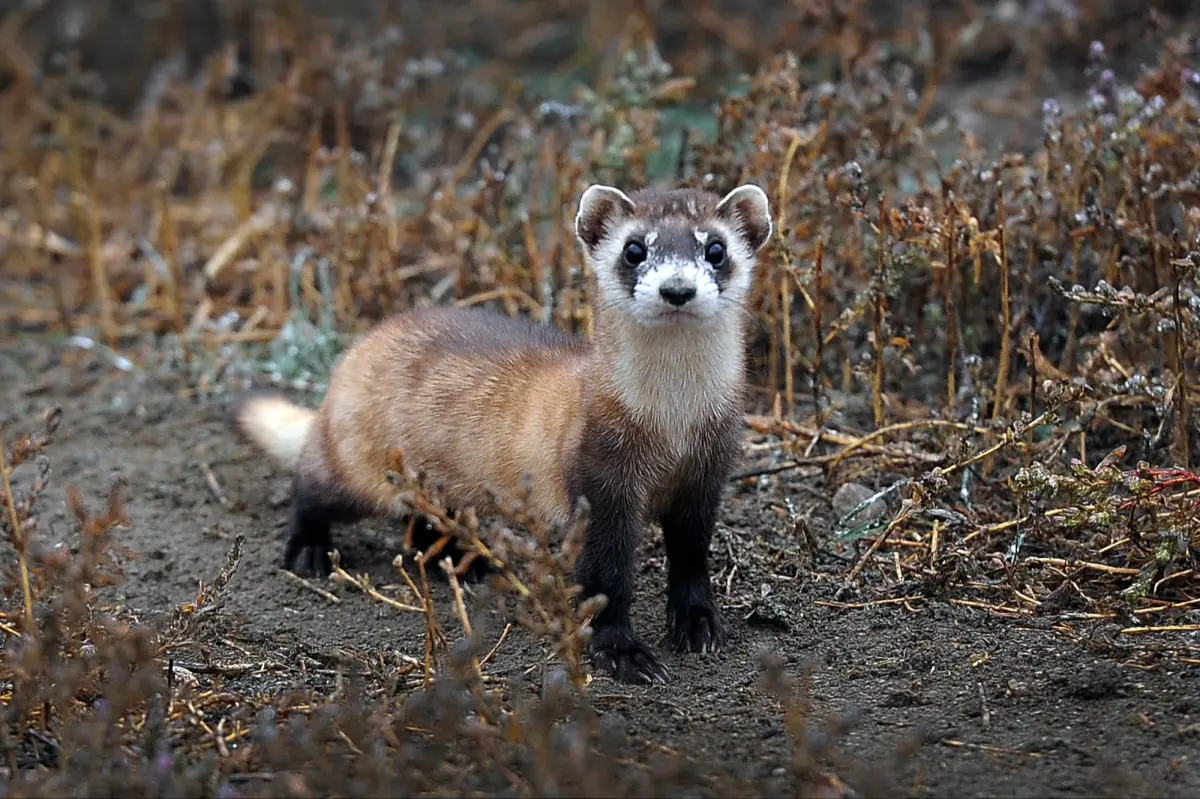
In the moonlit grasslands of South Dakota’s Badlands National Park, a creature no larger than a house cat slips silently from its burrow, its bandit-like mask gleaming under the stars. This is the black-footed ferret, one of North America’s most elusive and endangered mammals, and against all odds, it is alive and well here. For decades, this species teetered on the brink of vanishing forever, a victim of habitat loss, disease, and the wholesale destruction of its primary prey. Yet today, thanks to a remarkable conservation saga filled with near-misses, dedicated scientists, and a small farm dog in Wyoming, the ferret is clawing its way back. The story is not just about survival; it is about human determination, second chances, and the fragile web of life that connects a tiny predator to the prairie dogs it depends on. As the sun sets over the rugged badlands, these nocturnal hunters wake from their long slumber, ready to continue a fight for existence that has spanned nearly half a century—and the people who watch over them know that every single ferret counts in this delicate balancing act.
Paragraph 2
The black-footed ferret’s journey to oblivion began long before the 1970s. These animals are completely nocturnal, sleeping up to 21 hours a day in the safety of abandoned prairie dog tunnels, only emerging at night to hunt, eat, and tend to their young. Their diet is almost exclusively prairie dogs, which once covered the Great Plains in vast numbers. But as ranchers and farmers across the American West exterminated prairie dogs as pests, the ferrets’ food supply vanished, and their own population plunged. By 1974, the wild black-footed ferret was declared extinct. Six years later, in 1980, even the captive population died out, and wildlife biologists believed the species was gone forever. It was a crushing loss, a quiet extinction that barely made headlines. Yet nature had one last secret to reveal. In 1981, on a ranch in Meeteetse, Wyoming, a farm dog named Shep killed a small, strange animal and brought it to his owners. Curious, they took it to a local taxidermist, who recognized the animal as a black-footed ferret—a species thought to be lost. That single chance encounter triggered an intensive search, and a relic population of 130 ferrets was discovered living on that very ranch, monitored closely by biologists who could hardly believe their luck. But their joy was short-lived, as disease soon struck the colony.
Paragraph 3
The disease that ravaged the wild ferrets was canine distemper, likely introduced by other animals, and it cut through the fragile population with terrifying speed. By 1987, only 18 of the original 130 ferrets remained. Faced with losing the species entirely, scientists made the difficult decision to intervene, capturing all 18 survivors and bringing them into captivity. This was a desperate gamble—captive breeding of such a specialized creature had never been attempted successfully. But those 18 ferrets became the genetic foundation for every single black-footed ferret alive today. Over the next two decades, researchers perfected breeding techniques, nursing the animals through fragile infancy, and slowly building up a healthy, genetically diverse population. In the mid-1990s, the first reintroductions began, releasing ferrets back into the wild across eight US states, as well as parts of Canada and Mexico. One of the most promising release sites was Badlands National Park, where between 1996 and 1999, 147 ferrets were introduced into the Conata Basin area. The population flourished, exceeding expectations. In 2007, scientists were able to capture 33 ferrets from this thriving group and relocate them to Wind Cave National Park, where today around 60 individuals live. It was a true conservation triumph, a testament to what can happen when dedication meets science.
Paragraph 4
But the story in Badlands National Park has not been without its heartbreaks. Just a year after the successful translocation, in 2008, a new threat emerged: sylvatic plague. This deadly disease, carried by fleas, can wipe out entire prairie dog colonies, and since prairie dogs are the ferrets’ primary food source, the chain reaction was catastrophic. The ferrets themselves were also vulnerable, as the plague could infect them directly. In response, researchers launched an urgent, hands-on effort to save both the ferrets and their prey. They vaccinated individual ferrets against the plague, a painstaking process that required trapping and handling each animal. At the same time, they dusted prairie dog burrows with insecticide to kill the fleas, creating a barrier against the disease’s spread. These interventions, repeated year after year, have been crucial in preventing a total collapse. The work is labor-intensive and never-ending, but the results speak for themselves. Today, scientists estimate there are about 120 black-footed ferrets living in Badlands National Park, with roughly 80 of those still holding on in Conata Basin. The population is fragile, but it is alive—and it is fighting.
Paragraph 5
What makes the Badlands population even more remarkable is that it is one of the few that is truly self-sustaining. This means the ferrets are reproducing on their own in the wild, with no need for supplemental animals from captivity to keep the numbers up. That is a rare and precious achievement in the world of endangered species conservation. National Park Service biologists continue to monitor the ferrets closely, using radio collars, night-vision surveys, and tracking dogs to keep tabs on every individual. They watch for signs of disease, changes in prairie dog populations, and any other threat that could upset the delicate balance. The work is a labor of love, fueled by the knowledge that each ferret represents a lineage that nearly vanished. The ferrets themselves are incredibly cute, with their sleek bodies, black-tipped tails, and those almost comical dark eye patches, but they are also fierce predators, taking down prey much larger than themselves when necessary. Their presence in the badlands is a sign that the ecosystem is still healthy enough to support them, and their survival is a hopeful beacon for other endangered species across the plains.
Paragraph 6
Yet the fight is far from over. In total, the National Park Service reports about 280 black-footed ferrets living in captivity, while the wild population hovers between 200 and 300 individuals. To consider the species fully recovered, scientists estimate we need at least 3,000 ferrets in the wild—a number that still seems daunting. The ferrets remain at risk from disease, especially the ever-present threat of plague, as well as ongoing habitat loss and the related decline of prairie dog populations. Climate change, too, could further disrupt the delicate prairie ecosystem. But the story of the black-footed ferret is one of resilience—both of the animal and of the people who refuse to give up on it. From the chance discovery by a farm dog named Shep to the painstaking efforts of modern wildlife biologists, every chapter has been marked by improbable survival and relentless hope. The ferrets in Badlands National Park, snoozing away the daylight hours in their burrows, are a living reminder that extinction is not always final, and that with enough dedication, even the most endangered species can find a way back. As long as there are people willing to dust prairie dog holes with insecticide, vaccinate tiny ferrets, and watch over these masked creatures under the night sky, the black-footed ferret will continue to run wild in the badlands—a small but mighty survivor on an ancient landscape.