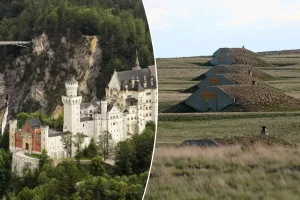



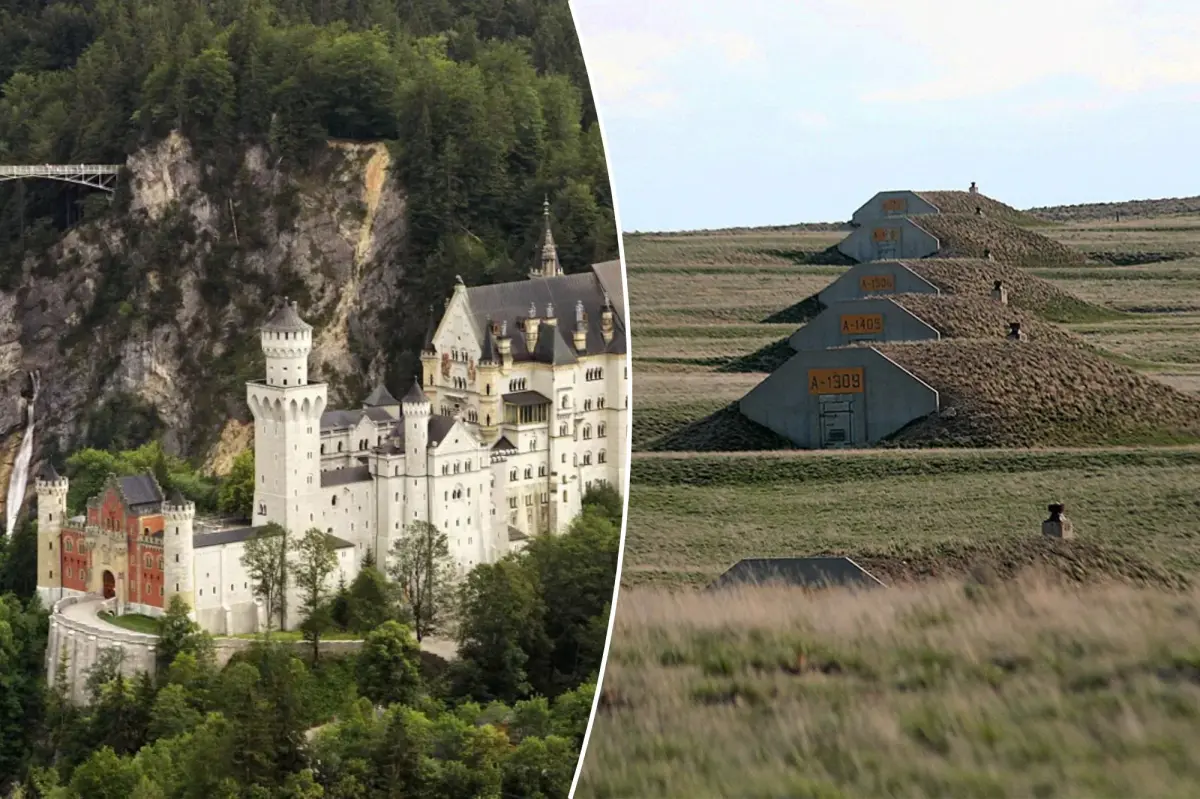
For most of us, the word “castle” conjures up a very specific picture: soaring stone towers, battlements cutting into a grey sky, a drawbridge over a moat, and maybe a dragon or a damsel somewhere in the background. The Neuschwanstein Castle in Germany certainly fits that image, with its fairy-tale turrets and romantic mountain setting. So does the Tower of London, ancient and formidable. But an ammunition bunker in South Dakota, especially one marketed as a place to go “glamping,” does not immediately scream castle. Yet that is exactly the point historian Dan Jones makes in his new book, “Castles: A Fortified History of the World.” Instead of insisting on a single architectural checklist, Jones opens the term wide enough to embrace Bronze Age walled cities in the eastern Mediterranean, the grand homes of British monarchs, modern underground survival shelters, and even Mark Zuckerberg’s Hawaiian compound. What ties all these places together, he argues, is not their battlements or their stonework but the basic human desire for safety, status, and luxury. As Jones writes, “Safety, status, and luxury are things that can best be enjoyed from behind strong defenses in secure locations. Protecting one’s person, family, and property is the starting point of projecting power.” In other words, a castle is less about the architecture and more about the feeling it gives its owner: the comfort of being protected and the pride of being important.
The question, then, is not what a castle looks like, but how much defense its builder actually needs. For some wealthy Americans, the answer was “not much at all.” They simply wanted the look, the romance, the grandeur of a European fortress without any real intention of defending it. George Washington Vanderbilt II is a perfect example. His Biltmore estate in North Carolina was a 250-room mansion inspired by France’s Château de Blois, complete with a banqueting hall, a carved Gothic throne, and a library filled with 20,000 books. When he welcomed guests at Christmas in 1895, they could stroll through the house, swim in the pool, bowl a few frames in the alley, and admire a collection of historic armor that included Japanese samurai pieces from the age of the Tokugawa shoguns. As Jones dryly notes, “Besides a collection of historic armor… there was nothing remotely defensive about the Biltmore.” But that was the point. Vanderbilt was not preparing for a siege; he was building a monument to his own success. In an age when the leading men of new American industries were creating vast fortunes, Jones says, they “founded dynasties and built dynastic seats to match.” The castle had become a status symbol, a way of saying to the world that you had arrived, that you belonged among the old aristocracies of Europe, even if your ancestors had never worn a crown. It is a deeply human impulse: the urge to make your home look like a place of power, to surround yourself with beauty and grandeur, and to pretend, even for a moment, that you are the lord of a great medieval domain.
The early twentieth century was full of such personal fantasies, and some of them are wonderfully strange. Hotelier George Boldt built a six-story residence on Heart Island in the St. Lawrence River, complete with conical towers and medieval-themed buildings, a whimsical dream of old-world charm on an American river island. Then there was William Gillette, the actor famous for playing Sherlock Holmes, who constructed a castle in Connecticut outfitted with secret passageways and a mirror-based spying system, so he could keep an eye on his guests in true detective style. Gillette was understandably particular about who would inherit his creation. In his will, he warned against leaving it to “some blithering saphead who had no conception of where he is or with what surrounded.” His words are both funny and touching: he had poured his personality into the stones and passageways, and he wanted future owners to appreciate the playful spirit behind them. Perhaps the grandest of these American castle builders was William Randolph Hearst, the newspaper magnate who spent decades constructing his California estate. He imported pieces of Europe wholesale, putting a painted fourteenth-century ceiling in his bedroom and installing doors brought over from Spain. When photographer Cecil Beaton first arrived at the estate, he recorded the impression in a way that captures the magic of the place: “We caught sight of a vast, sparkling white castle in Spain. It was out of a fairy story.” There is something wonderfully human about Hearst’s obsessive construction. He was not simply buying a house; he was assembling a dream, a private world where he could live as a king among his treasures. These men were not defending their homes from invaders. They were defending their self-image, their place in history, their right to be remembered as something larger than ordinary mortals.
Eventually, the fantasy of the castle became a product to be sold to everyone. At Disneyland, Sleeping Beauty Castle turned the European dream into a commercial attraction, a cheerful symbol of childhood wonder rather than a serious fortress. Jones captures this transformation perfectly when he writes, “Castles had always been buildings where function and imagination commingled; here, imagination was everything, and what function lay beneath was concerned with profit and not war.” It is a brilliant observation. The same image that once meant power and protection, that represented the ability to defend your family from an attacking army, became a backdrop for fairy tales. Yet underneath the fantasy, the old impulses never really disappeared. Even today, for buyers of massive homes, the ability to keep people out remains a major selling point. Security gates, privacy walls, gated driveways, advanced surveillance systems—all of these are modern versions of the moat and the portcullis. We may not say it out loud, but when we dream of a beautiful home in a safe location, we are still dreaming of a castle. We want to feel enclosed, protected, set apart from the mess and danger of the outside world. And for those who can afford it, that dream increasingly takes on literal, industrial proportions. The impulse to protect one’s person, family, and property, as Jones says, is where power begins. For the ultra-rich, the modern castle is not just an expression of taste but a statement of invulnerability.
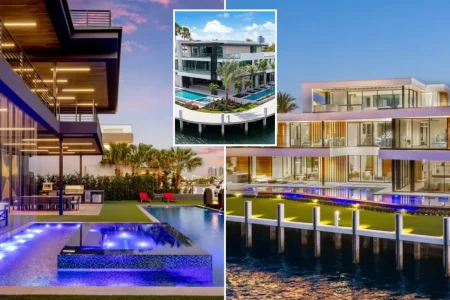
Take, for example, Mark Zuckerberg’s Koolau Ranch on the Hawaiian island of Kauai. In the reporting Jones cites from 2023, the estate covered 1,400 acres, and the plans were staggering: dozens of bedrooms, kitchens, and entertaining rooms, along with a series of precautions against unwelcome visitors. “Planning documents also suggested it will have an underground shelter, blast-resistant door, private energy and water supplies, and food-production capacity,” Jones writes. By July 2025, the estate had grown to more than 2,300 acres, with plans for additional buildings. This is a castle in the most literal sense, a fortified compound designed to keep its owner safe from everything from intruders to natural disasters to the collapse of public infrastructure. Then there is Peter Thiel, who has been trying to build a massive luxury lodge in New Zealand overlooking Lake Wānaka. The roughly 1,080-foot-long complex would have a grass roof to help it blend into the hillside, accommodate up to thirty guests, include a separate owner’s residence and a meditation building, and be entirely self-sufficient. But Thiel’s castle hit a wall that no medieval lord ever faced: modern zoning authorities. Planning authorities rejected the project in 2022, finding that its enormous size would dominate the protected landscape and that it would be too visible from a nearby public walking track. In May 2024, the Environment Court rejected his company’s appeal, concluding that the proposed tree planting would not adequately screen the buildings. There is something almost comic about this clash between billionaire ambition and government paperwork, but it also underscores how much the meaning of a castle has shifted. In the past, a castle’s defenses were aimed at enemies outside. Today, its defenses are as much about bureaucracy, public scrutiny, and the desire for absolute privacy.
The most surprising turn in Jones’s story is that you do not have to be a billionaire to own your own fortified compound. As Jones notes, “Twenty-first-century fortified compounds are also currently being developed and marketed to the merely moderately wealthy.” At Vivos xPoint, a former Army munitions depot in South Dakota, buyers can choose from 575 bunkers buried beneath thick layers of soil, with 400 feet between neighbors. Prices begin at around $55,000 before outfitting, and the company says you can turn your shelter into “a very chic glamping bunker on a barebones budget.” It is a strange and darkly humorous pitch: the end of the world as a camping trip, complete with concrete and steel instead of a tent and sleeping bag. Modern shelter owners face their own uncertainty about what might await them outside, and so these compounds come equipped with independent water and power supplies, medical dispensaries, and a year’s stockpile of fuel and toilet paper. There are even detention centers, a detail that suggests not everyone in the survivalist community expects to get along after a catastrophe. Jones asks the chilling question: “What sort of world would be left for the inhabitants of such a fortress to rule over, should such a war break out?” It is a good question, and it lingers in the mind long after you finish reading. The Vivos sales pitch makes the preparations sound manageable, like a long camping trip with extra walls. But the difficult part, as the book observes, is knowing when the trip ends. When do you decide it is safe to open the hatch and step back into the world? What kind of world will it be? At its core, the history of the castle is the history of that uncertainty, of the human desire to build walls against a world we cannot control, and of the strange, beautiful, and sometimes absurd ways we try to make those walls feel like home.