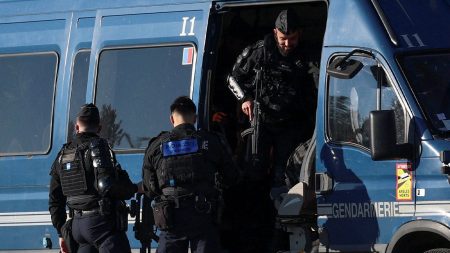



There is a kind of courage—or maybe it is just arrogance—that only shows up in the middle of the night, when the cameras are off and the city is asleep. President Abelardo de la Espriella of Colombia, better known as “El Tigre,” seems to thrive in that darkness. In the early hours of a recent morning, he stood in the Barranquilla police command as 587 police officers and soldiers moved out into the Caribbean port city and its suburbs, raiding 50 locations in an operation codenamed Blindaje 360. It was not a press conference with charts and talking points; it was a manhunt, and the president wanted to be there for it. Days earlier, Colombian media had played an intercepted recording in which a suspected gang leader calling himself “Keko” had mocked de la Espriella, boasting that “The Tiger’s got nothing. Let him come out, and we’ll put lead in him.” It was the sort of challenge that most politicians would answer with a prepared statement. El Tigre answered it with a raid before dawn, standing face to face with Keko in the flesh. According to a video released by the presidential office, de la Espriella looked at the captured man and said he had been “a tough guy on the phone… but the look of the fear on his face matched that of his many victims.” By the time the operation ended, 72 people were in handcuffs. For a country that had spent years watching its leaders talk to criminals rather than confront them, the image was electric—a president who did not just give orders, but showed up to see them carried out.
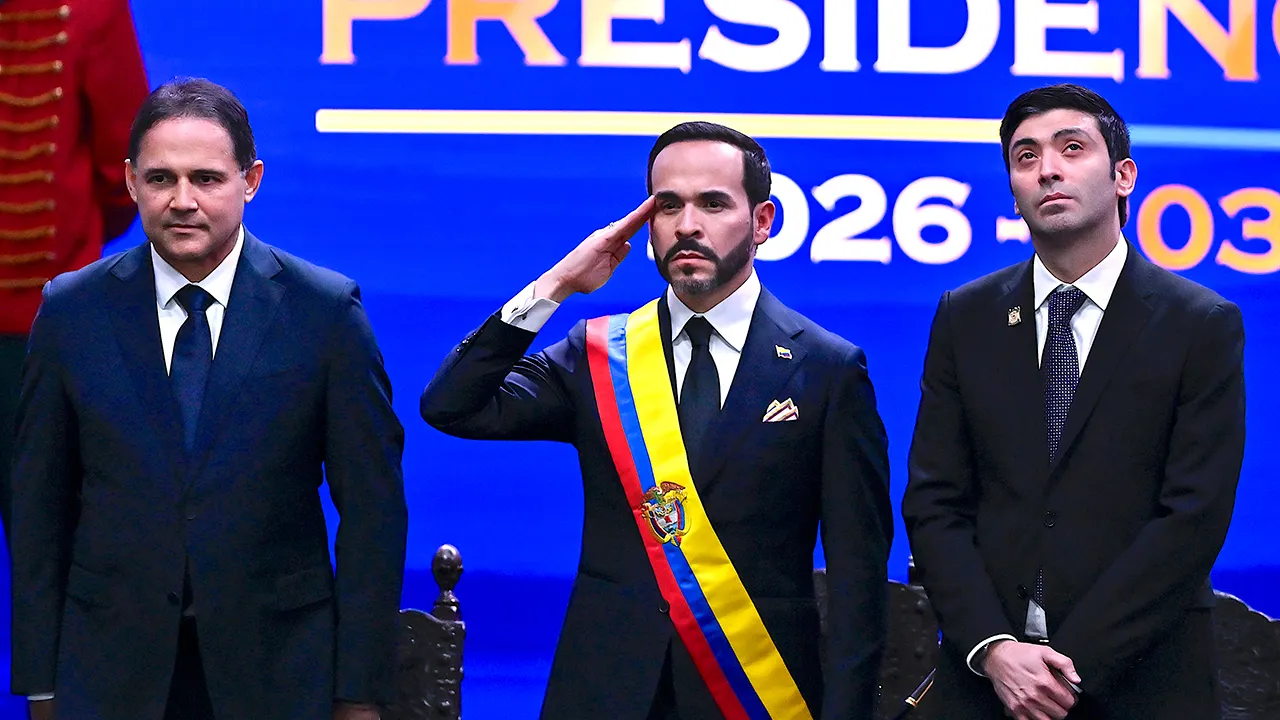
The theatrics were not just about ego. They were a promise to a Colombian public that had grown exhausted with the approach of the previous president, Gustavo Petro. Petro had staked his reputation on a policy of “total peace,” which meant negotiating with drug traffickers and armed groups as if they were political actors rather than criminal enterprises. In practice, many Colombians felt the policy gave cartels room to expand, deepened the alliance between Colombian and Venezuelan trafficking networks, and left ordinary people at the mercy of armed men who controlled entire neighborhoods and rural regions. When de la Espriella took office on August 7, he inherited a country that was tired of being told to understand its captors. The 48-year-old lawyer, who had campaigned on a law-and-order platform, moved quickly to dismantle everything Petro had built. He scrapped the “total peace” talks, ordered every armed group to be treated as a terrorist organization, reactivated arrest warrants that had been frozen, and began signing extradition orders at a pace no one had seen in years. Nearly three months into his term, he claims more than 32,000 arrests, 33 ringleaders taken out of action, and 679 drug-production sites destroyed or disabled. The numbers are dizzying, and they are meant to be. For many Colombians, it feels like a whiplash return to a harder, more muscular era—but after years of failed dialogue, a large portion of the population is willing to let El Tigre try.
What makes this new war different from Colombia’s old ones is that it is being fought arm in arm with Washington. De la Espriella is a dual U.S.-Colombian citizen who lived in Miami before running for president, and he has embraced President Donald Trump’s anti-cartel coalition with the enthusiasm of someone who genuinely believes in it. Colombia became the nineteenth member of Trump’s “Shield of the Americas” alliance in August, and U.S. War Secretary Pete Hegseth announced that Bogotá had authorized “joint military operations to destroy terrorists and terror networks domestically.” The administration has pledged $1 billion in security aid, pending congressional approval, and U.S. Southern Command chief Marine Gen. Francis Donovan has been touring Colombian bases. But the most striking moment of this partnership came last month, when de la Espriella personally handed over a guerrilla boss to DEA agents in Washington. The prisoner, Geovany Andrés Rojas, alias “Araña,” was accused of leading the “Comandos de la Frontera” dissidents and supplying Mexico’s Sinaloa Cartel. He arrived with his hands and feet shackled, and the image of the Colombian president delivering him into American custody was a powerful symbol of how much had changed. In one gesture, de la Espriella signaled that Colombia was no longer going to treat drug lords as negotiation partners, but as prisoners to be brought to justice—even if that justice happened in a California courtroom. He has signed more than 100 extradition orders, including five for former armed-group peace negotiators wanted in the United States, whose handovers Petro’s government had quietly frozen.
The offensive is not just about city raids and high-profile deliveries. It reaches deep into the countryside, where the battle against cartels is fought in jungle paths, river routes, and forgotten villages. Conflict monitor ACLED counted August as the deadliest month for clashes between security forces and armed groups since it began tracking Colombia in 2018. De la Espriella has made it clear that he wants guerrillas to feel hunted everywhere, not just in the cities where cameras roll. In late August, he warned FARC dissident chief Iván Mordisco: “When you least expect it, a bomb is going to fall on you.” Two days later, he was walking among the bagged bodies of 23 suspected dissidents at an army base in Guaviare, looking at the results of the airstrike he had promised. It was a grim and unsettling image, and it was exactly the point. In La Guajira, troops also killed the top commander of a paramilitary-rooted trafficking group. For every Keko caught in a city apartment, there are dozens of smaller commanders being hit in the mountains and along the coasts. The strategy is to make the cartels feel that no corner of Colombia is safe, that the state is no longer willing to cede territory in exchange for a quiet life. It is a violent, visceral approach, and it has won de la Espriella a great deal of popularity among people who long ago stopped believing that peaceful talks with armed murderers could produce anything but more violence.
Yet not everyone is convinced that the tiger’s claws are enough. Benjamin Gedan, a senior fellow and director of the Latin America Program at the Stimson Center in Washington who once served as a White House South America director, acknowledges that the renewed partnership between Bogotá and Washington is a return to a familiar and often successful script. For decades, the United States and Colombia cooperated closely under Plan Colombia, and the Colombian military is now well-trained and battle-tested. But Gedan warns that “flashy military strikes on criminal targets will not answer the mail.” These groups are well-armed, well-funded, and thrive in regions where the state barely exists. Images of criminals in body bags may give the impression of forward progress after the failed strategy of Colombia’s last leader, much as videos of exploding speedboats have become the calling card of the Shield of the Americas. But in both cases, Gedan argues, a more sophisticated strategy is needed to deal lasting blows to criminal groups. Oscar Palma, a professor of security studies at the University of Rosario in Bogotá, adds another layer of caution: it is too early to say whether this open war strategy will actually make Colombia safer. The gangs are acting more forcefully now to defend their territories and business deals, and there is a real debate within Colombian society about whether a strong police presence will eventually reduce organized crime or simply provoke more violence in the short term. Palma also points out that the choice between all-out war and dialogue is something of a false dichotomy. The better example, he says, is the strategy of President Juan Manuel Santos, who negotiated with the FARC while also continuing to fight them with arms and bring them to justice. Talks alone did not save Colombia; force alone may not either.
For now, the mood in Bogotá is confident, and the alliance with Washington is the centerpiece of that confidence. Colombian Vice President José Manuel Restrepo told Fox News Digital that his country is embracing President Trump’s push for a new security alliance across the Western Hemisphere, but he drew a clear line: Colombian troops—not U.S. forces—will carry out operations inside Colombia. “There is a wave of freedom, a wave of democracy, a wave of free market,” Restrepo said. “There is a new momentum for the region and we have to take advantage of that momentum. That’s what I said to President Trump. If we want to keep and preserve democracy in the region, the Shield of the Americas is going to be the best opportunity to do it.” It is a bold vision, and El Tigre is clearly the face of it. But as the applause fades and the body bags are counted, the deeper question remains whether this war will give ordinary Colombians what they actually want: the ability to live without looking over their shoulders, to send children to school without fear of extortion, to walk through a marketplace without the shadow of an armed man. The raids, the arrests, the extraditions, and the airstrikes are all impressive, but they are only the beginning. The true measure of Abelardo de la Espriella’s presidency will not be how many criminals he captured or killed, but whether he can build a society where the cartels no longer thrive, where the state is present in the forgotten places, and where the peace is more than the silence after a bomb. Until then, the tiger’s war will remain a spectacle—fierce, terrifying, and uncertain, just like the country he is trying to save.