

Here is a humanized and expanded summary of the reported situation, written in six paragraphs.
—
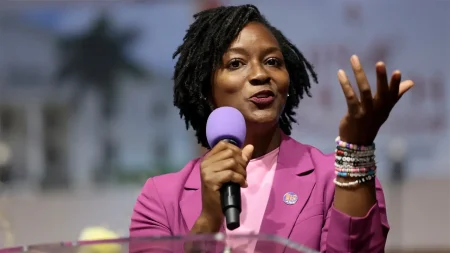
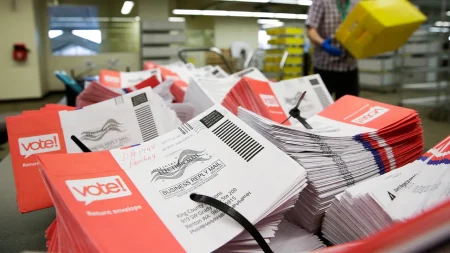
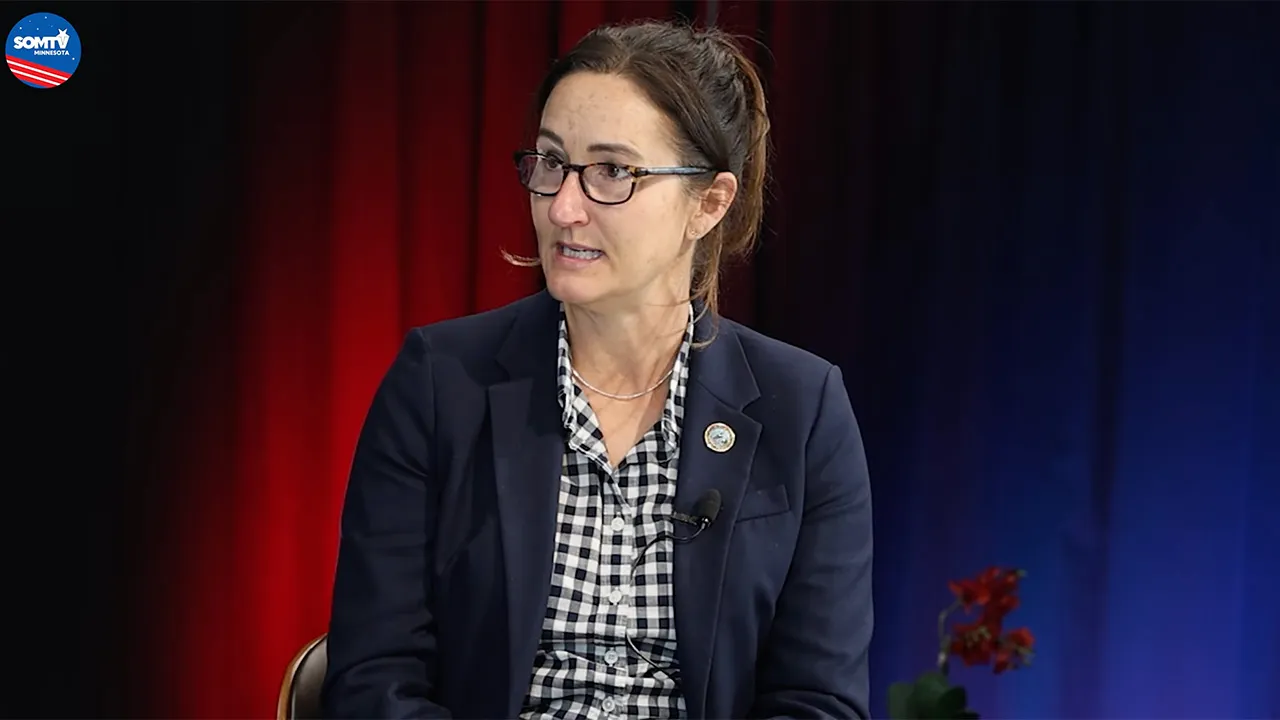
It began as a routine public service announcement, a civic-minded official offering practical guidance to a community that often feels marginalized and confused by the electoral process. Melanie Hazelip, Minnesota’s voter outreach director, appeared on Somali TV with a simple, reassuring message about the mechanics of casting a ballot. She explained that if you are already registered, you simply show up at an early voting location—often a county office, city hall, or, in larger cities like Minneapolis, a library or community center. No paperwork, no fuss. If you are not registered, she continued, there are still options: a current Minnesota ID is enough, and for those without one, a list of accepted documents on the state’s website can point you toward same-day registration. The tone was calm, helpful, and entirely consistent with state law. But in the hyper-charged atmosphere of a presidential election year, those few minutes of bureaucratic reassurance quickly became a firestorm. A conservative social media account with a massive following clipped the segment, and within days, millions of people had watched, reacted, and formed conclusions. What was intended as a civic service was now being framed as a glaring vulnerability in the nation’s election machinery.
The backlash was swift, emotional, and deeply partisan. Commentators seized on the fact that Hazelip was speaking to a Somali audience, noting that the community includes a significant number of immigrants, some of whom are not naturalized citizens. One former Navy intelligence officer, Phillip C. Parrish, posted a now-viral message that encapsulated the outrage: a Minnesota election official was apparently explaining how to register and vote with a state ID, and Minnesota hands those IDs to non-citizens without any citizenship marking. He pointed to a further wrinkle in state law that allows one registered voter to “vouch” for up to eight others seeking same-day registration, an oath-based system that, in the eyes of critics, places enormous faith in a signature rather than verifiable proof of citizenship. The implication was clear: in this system, someone who is not a citizen could effectively check a box, swear an oath, and cast a ballot that would be counted, with any verification deferred until after the fact—if it ever happened at all. Other prominent voices piled on. A co-founder of the Federalist Society called it a mission to tell every non-citizen how to get away with voting. A conservative strategist sarcastically dismissed it as nothing to see. And a well-known commentator used the moment to argue for the SAVE Act, a federal bill requiring proof of citizenship to register to vote. The clip had become a Rorschach test for every anxiety about electoral integrity, immigration, and the changing demographics of the American electorate.
The Minnesota Secretary of State’s office, visibly caught off guard by the intensity of the reaction, responded with a carefully worded defense. In a statement to Fox News Digital, officials insisted that the outreach director had simply provided accurate information about Minnesota election laws, and that her remarks were being deliberately misinterpreted by political actors online. They emphasized that the office regularly speaks to hundreds of nonpartisan community groups, that the goal is to ensure every eligible voter knows how to participate, and with only days until the election, they remain focused on that singular mission. There was no acknowledgment of wrongdoing, no apology, and no suggestion that the information itself was misleading. In a narrow, literal sense, they were right: same-day registration, vouching, and accepting a state ID are all legal in Minnesota. But critics were not arguing about the letter of the law; they were arguing about the spirit of it and about the wisdom of advertising these provisions to a specific immigrant community so close to an election. The official statement, for all its polish, did little to quell the anger. It read as a bureaucratic shrug: everything is legal, therefore everything is fine. That stance, in an information ecosystem where trust is scarce and motives are questioned, only deepened the sense among many that the system is built on good intentions rather than rigorous safeguards.
Adding a powerful layer of context to the controversy is Minnesota’s recent and painful experience with fraud in social services programs, some of which has been tied to the Somali immigrant community. The most notorious case, known colloquially as “Feeding Our Future,” resulted in the conviction of a noncitizen who was sentenced to thirty years in federal prison. That case, involving hundreds of millions of dollars siphoned from a federally funded child nutrition program, has become a recurring reference point for those who argue that Minnesota has a pattern of failing to verify eligibility for government benefits. The timing of Hazelip’s appearance on Somali TV, coming on the heels of those scandals, made it impossible for many to see her words as innocent. It seemed, to them, like an extension of the same laxness: a system that trusted people on their word, that gave out benefits without checking citizenship, and that now seemed to be doing the same with the sacred right to vote. This broader narrative—of a state that had already lost hundreds of millions to documented fraud in childcare, nutrition, and Medicaid—made the election outreach clip feel less like a misunderstanding and more like a confirmation of a deeply embedded cultural problem. The emotional resonance of that connection cannot be overstated; it turned a dry policy discussion into a moral story about accountability, citizenship, and the erosion of public trust.
The legal landscape in Minnesota does, in fact, create a more complex reality than the state’s defenders often acknowledge. In 2023, Governor Tim Walz signed the “Driver’s Licenses for All” bill, which allows Minnesota residents to obtain driver’s licenses and state IDs regardless of immigration status. By law, those IDs cannot carry any marking that indicates the holder is a noncitizen. This policy was widely celebrated as a practical measure for public safety and economic inclusion—ensuring that everyone can drive legally, buy insurance, and go about daily life without fear. But for election integrity advocates, it created a dangerous ambiguity: a document that looks identical for citizens and noncitizens is routinely used to register to vote and to fulfill same-day registration requirements. The law also preserves the vouching system, under which a registered voter can appear with up to eight applicants, sign an oath attesting to their residency, and effectively clear them to vote without any documentary evidence. A policy fellow at the Center of the American Experiment, Bill Glahn, articulated the frustration succinctly: it’s a penalty of perjury, but if someone signs as “Mickey Mouse,” they’re not going to be found. The state points to these safeguards as meaningful deterrents, but critics see them as tautological—a legal promise to tell the truth is only as strong as the enforcement behind it, and enforcement, in a same-day registration context, is nearly impossible in real time.
Ultimately, this conflict is less about Melanie Hazelip’s words than about the friction between two irreconcilable visions of democracy. On one side is an inclusive, trust-based model that prioritizes access, believing that the most serious threat to elections is the disenfranchisement of eligible voters. In this vision, requiring additional proof of citizenship is akin to a poll tax—a burdensome obstacle that would disproportionately affect minorities, the elderly, and students, all while solving a problem that genuinely almost never occurs in terms of documented noncitizen voting. On the other side is a security-focused model that prioritizes verification, believing that the most serious threat is a corrupted ballot box, and that even one illegal vote is one too many. In this vision, the system’s openness is an open invitation, and the fact that fraud is rare is merely because most people are honest—which is not the same as a guarantee. The Somali TV clip, the Driver’s Licenses for All law, the vouching rule, the Feeding Our Future fraud, and the criminal indictment of an illegal immigrant from India for allegedly voting in 2024 all slot into one or the other of these overarching narratives. Neither side is likely to be convinced by the other, and this incident, for all its heat, is just one more skirmish in a long-running war over who we are as a country and what citizenship is supposed to mean. In that sense, the controversy was never about a single outreach video. It was about the fundamental question of how much trust to place in the people who walk into a polling place, and whether that trust has already been betrayed.