


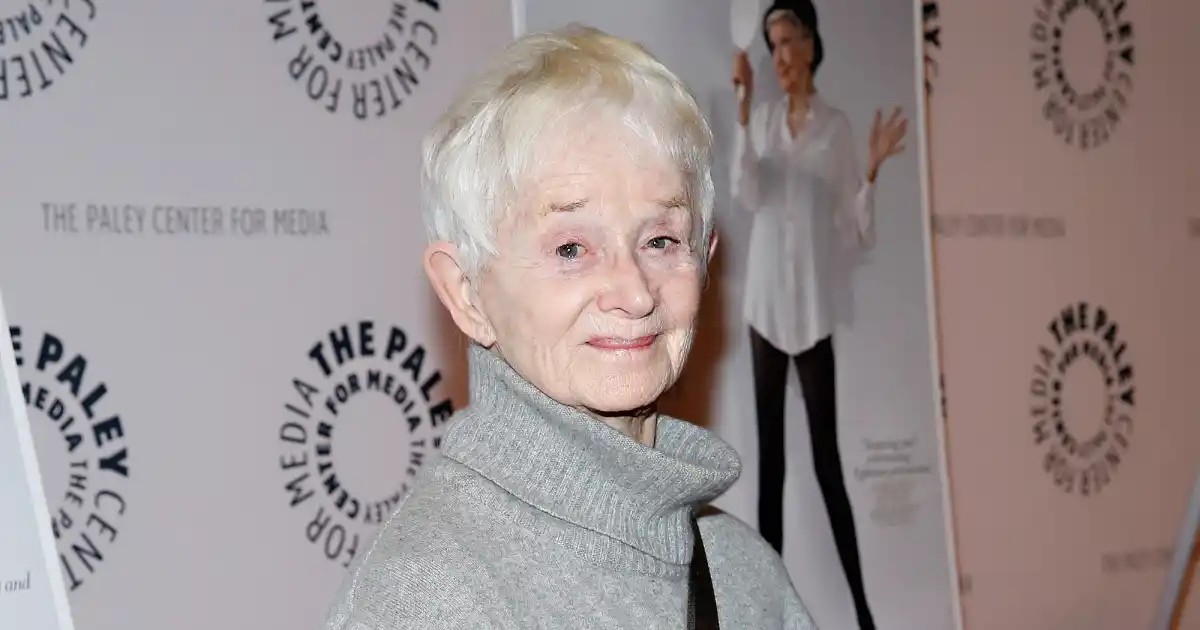
Barbara Barrie, the beloved stage and screen actress whose warmth and intelligence graced audiences for more than six decades, has died at the age of 95. Her death, confirmed on Wednesday, October 28, came not as a sudden tragedy but as a carefully chosen farewell, medically assisted in accordance with the New York State Medical Aid in Dying law. Barrie had been diagnosed with terminal cancer, and in her final chapter she made the deeply personal decision to end her life on her own terms, surrounded by the comfort of her home in New York City. Her representative shared the news with a quiet, respectful statement, noting that Barrie had long been a proponent and advocate for the law that allowed her this final measure of autonomy. Her daughter, Jane Harnick, confirmed the details, adding that Barbara passed peacefully at home. She is survived by Jane and her son, Aaron Harnick, the two children she raised with her late husband, director Jay Malcolm Harnick, who passed away in 2007. For those who loved her, the news was both sorrowful and strangely fitting: Barrie had always faced life with candor, courage, and an unshakable sense of self, and she approached her own ending with the same clear-eyed dignity.
Barrie’s health battles were not new to her, and she had long been an open and honest voice about the realities of serious illness. In the 1990s, she was diagnosed with rectal cancer, a terrifying and intimate challenge that she refused to suffer in silence. She underwent treatment and survived, but the experience left a mark on her soul and shaped the way she viewed life. Later, she disclosed that she also suffered from idiopathic pulmonary fibrosis, a chronic and incurable lung disease that slowly saps the breath from a person’s body. Rather than retreating into fear or privacy, Barrie chose to speak openly about her conditions, offering hope and practical wisdom to others walking the same difficult road. In a 2014 interview with Playbill, she reflected beautifully on the paradox of her situation: “I have a very full, active life, but what lies ahead is unknown and yet known at the same time. I am living full steam ahead and am now trying to help other people do the same.” That quote captures the essence of who she was—someone who refused to be diminished by prognosis, who understood that the future could be both uncertain and inevitable, and who believed that the best response to mortality was to live with intention, energy, and generosity. Her advocacy extended to writing as well; after her cancer diagnosis, she authored two books, “Second Act” in 1997 and “Don’t Die of Embarrassment” in 1999, both aimed at helping others navigate the confusing and frightening world of serious illness. She told the South Florida Sun Sentinel in 1997, “I think if I can get the word out on this thing, that will be my legacy.” It was not a statement of resignation, but one of purpose. Even in her own struggle, she was thinking of others.
Long before illness defined any part of her story, Barbara Barrie had already made an indelible mark on the arts. She rose to prominence with a role that was both daring and groundbreaking for its time: the 1964 film “One Potato, Two Potato,” in which she played a white woman in an interracial marriage, a subject that was still deeply controversial in America. Her performance was raw, tender, and fearless, and it earned her the Best Actress Award at the Cannes Film Festival, an extraordinary achievement that catapulted her into the spotlight. She did not rest on that early success. A few years later, she delivered another memorable performance as Evelyn Stohler, the loving, slightly overwhelmed mother in “Breaking Away,” a role that earned her an Academy Award nomination and endeared her to audiences who recognized in her the warmth and worry of real families. The film was so beloved that it was adapted into a television series, and Barrie joined the cast, earning an Emmy Award nomination for her work. These roles were not just career milestones; they were proof of her ability to find the humanity in every character, to make the ordinary feel extraordinary, and to connect with viewers on a deeply emotional level. She had a face that felt familiar, a voice that carried both humor and heartbreak, and a presence that could fill a screen without ever overwhelming it.
Her work on television made her a household name. From 1975 to 1978, Barrie brought her signature charm and wit to the beloved sitcom “Barney Miller,” where she appeared in a recurring role that showcased her impeccable comedic timing and her ability to hold her own in an ensemble cast. Years later, she found a new generation of fans with a scene-stealing turn on “Suddenly Susan,” the sitcom starring Brooke Shields, where she appeared from 1996 to 2000. She had a rare gift for making even the smallest role memorable, turning a few lines into a moment of genuine connection. Her filmography also included the classic comedy “Private Benjamin,” where she added depth and humor to a star-studded cast, and the independent film “Judy Berlin,” which gave her the chance to explore more nuanced, character-driven material. But perhaps her greatest artistic home was the theater. In 1971, she originated the role of Sarah in Stephen Sondheim’s groundbreaking musical “Company,” a role that earned her a Tony Award nomination for Best Featured Actress in a Musical. To originate a role in a Sondheim musical is to be part of theatrical history, and Barrie brought her customary intelligence and vulnerability to the part, helping to create a character that has been revisited by actresses for decades. Whether on stage or screen, she approached every performance with the same commitment, the same honesty, and the same deep respect for the story she was telling.
Behind the accolades and the applause, Barbara Barrie was also a devoted wife and mother, and she often spoke about the delicate balancing act between her art and her family. She married director Jay Malcolm Harnick, and together they built a life that was rich in both love and creative collaboration. Raising two children while pursuing a demanding career in the arts was not always easy, and Barrie was refreshingly honest about the compromises and choices she made along the way. In a 2024 interview on “How Art Changed Me,” she reflected on that balancing act with characteristic grace: “My entire professional work, almost, I was married, I had children to take care of. If [a] part came along that I wanted to do, I would do it.” There is something deeply admirable in that simple statement. She did not pretend that she could have it all without sacrifice, nor did she romanticize the struggle. Instead, she acknowledged the reality of her life—that her family was her anchor, her children were her priority, and her work was a passion she pursued when the opportunity truly called to her. That approach gave her career a sense of intentionality; the roles she chose were not about ambition alone, but about genuine interest and meaning. And it gave her family the knowledge that they always came first. The loss of her husband in 2007 was undoubtedly a profound blow, but she carried on, still working, still advocating, still living with the same full-steam-ahead determination she had always shown.
In the end, Barbara Barrie’s death was as thoughtful and deliberate as her life. She was a woman who understood the value of time, who faced her own mortality with clear eyes and an open heart, and who used her final days to advocate for the right of others to choose how they leave this world. Her support for medical aid in dying was not abstract; it was deeply personal, born from years of living with illness and watching the slow decline of her own body. She believed that death should be as dignified as life, and she had the courage to act on that belief. But her legacy is not defined by the manner of her passing. It is defined by the characters she brought to life, the stories she told, the books she wrote, and the countless people she helped through her honesty about sickness and survival. It is defined by the love she shared with her children, the art she created with her husband, and the way she moved through the world with a rare combination of strength and softness. Barbara Barrie leaves behind a body of work that will continue to inspire, and a life that will be remembered not just for its final decision, but for the decades of beautiful, human moments that came before it. She lived full steam ahead, exactly as she promised. And in the end, she chose to stop the train herself—peacefully, on her own terms, and with the quiet dignity that marked everything she did.