



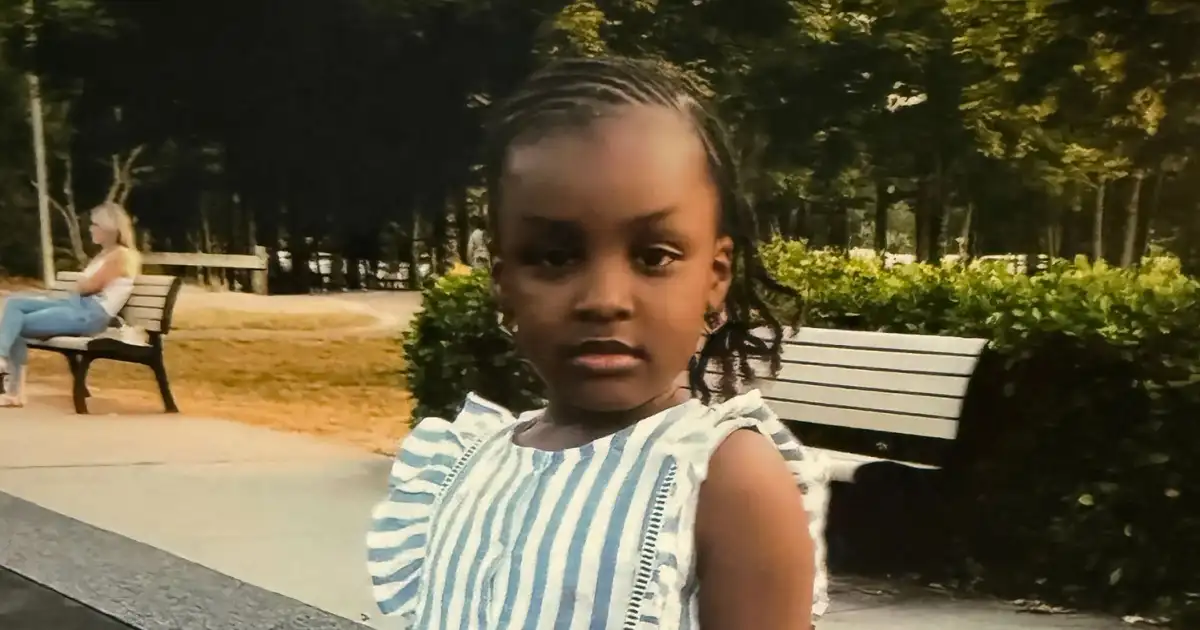
The federal lawsuit filed on an October Tuesday has pulled back the curtain on a horror that no child should ever endure. Behind the legal language and the list of defendants is a little girl named Jor’Dynn Duncan, a seven-year-old whose short life ended not in a sudden accident, but after what prosecutors and her mother describe as months of calculated cruelty, starvation, and inflicted pain. The complaint, brought by her biological mother, Portia Duncan, names Suffolk County, New York, the county’s Child Protective Services agency, and school officials as defendants, accusing them of ignoring warning signs that might have saved her. It arrives after Jor’Dynn’s body was exhumed in connection with the ongoing criminal case against her legal guardian and two of that guardian’s relatives. This is not just a lawsuit; it is a mother’s anguished demand for answers, a community’s reckoning with institutional failure, and a reminder that child abuse often hides in plain sight, behind closed doors, in school hallways, and in the silences of adults who should have spoken up.
Jor’Dynn Duncan was placed in the custody of Emily Kelly, a woman engaged to Jor’Dynn’s father, in December 2024, and Kelly was granted full legal guardianship in April 2025. Her biological mother, Portia Duncan, had lost custody after allegedly failing a drug test. But losing custody did not mean losing love, and Jor’Dynn’s death has left a wound that no court ruling can heal. On December 29, Jor’Dynn was declared dead at NYU Langone Hospital – Suffolk after Kelly called 911 reporting that the girl was in cardiac arrest. When paramedics arrived, they found Jor’Dynn unresponsive. An autopsy later identified roughly ninety injuries on her small body. The cause of death was determined to be a massive untreated infection, the source of which was sharp force injuries. Let that sink in: a seven-year-old girl, covered in nearly a hundred wounds, died because an infection was allowed to fester and spread inside her while the adults responsible for her care did nothing. The legal system uses words like “neglect” and “failure to provide medical care,” but the human truth is simpler and more devastating. Jor’Dynn was a child who needed protection, and the people who were supposed to protect her became the source of her suffering.
The criminal charges against the three women paint a picture of prolonged abuse that was not hidden as carefully as they might have believed. Suffolk County District Attorney Raymond A. Tierney announced the indictment in May, describing what he called the alleged prolonged torture, abuse, and brutal murder of a defenseless, innocent child who was placed in their care. Emily Kelly, fifty years old, of Bayport, faces second-degree murder, reckless endangerment, unlawful imprisonment, and three counts of endangering the welfare of a child. Her mother, Barbara Renner, seventy-five, is charged with manslaughter and endangering the welfare of a child. Kelly’s daughter, Elyssa Seymore, twenty-four, is charged with unlawful imprisonment and two counts of endangering the welfare of a child. All three women have pleaded not guilty. Prosecutors say that investigators recovered extensive photographic and video evidence from Kelly’s cellphone and cloud-based accounts, evidence that allegedly documented the prolonged abuse and torture of Jor’Dynn dating back to January 2025. The images and videos are described as showing prolonged restraint, physical injuries, and a complete lack of medical care for those injuries. It is almost unbearable to imagine what that footage contains, but it is even more unbearable to imagine what Jor’Dynn lived through while the people around her either participated, watched, or looked away. The defense attorneys for the women either declined to comment or did not return requests for comment, leaving the details of the allegations to stand unanswered for now.
The civil lawsuit filed by Jor’Dynn’s mother goes beyond the three women and points a finger at the institutions that were supposed to be the safety net. It accuses Suffolk County and its Child Protective Services of placing Jor’Dynn with Kelly without properly vetting her, and of failing to recognize later signs of abuse that should have triggered intervention. The lawsuit also names the Bayport-Blue Point School District, alleging that staff at Academy Street Elementary School did not report red flags to New York State’s child abuse hotline. According to the complaint, Jor’Dynn told a school counselor in January 2025 that Kelly had slapped her shoulder and thrown food at her, and that Kelly had also been hitting a three-year-old child in the home. The following month, Jor’Dynn went to the school nurse with marks on her face and asked the nurse not to call “mom,” meaning Kelly, because “mom will get mad at her.” No one reported the marks or Jor’Dynn’s fear of Kelly to the state hotline or to CPS, according to the filing. The school district’s superintendent, Robert E. Haas, said the district could not comment due to pending litigation, and Suffolk County did not return a request for comment. But the silence in the lawsuit is louder than any statement. A seven-year-old girl was essentially begging an adult at school to keep her safe, and that adult did nothing. Jor’Dynn missed about forty days of school between January and June 2025, and Kelly allegedly provided fabricated excuses for the absences, including different illnesses, deaths in the family, and a trip to Disneyworld. Those excuses may have fooled school officials, but they could not hide the truth. The lawsuit describes a June 2025 video from Kelly’s phone showing Jor’Dynn naked in a bathtub with feces deliberately spread across her body and face and a soiled washrag in her mouth, trembling and crying hysterically, while Kelly threatened to show the video to the judge and have her removed from the home. Another video, recorded on December 28, the day before Jor’Dynn died, allegedly showed Renner lying in an empty bathtub holding the girl, who was limp, moaning, incoherent, and in medical distress. These are not ambiguous images. These are not misunderstandings. These are the final chapters of a child’s life, captured by the very people who should have been loving her.
The exhumation of Jor’Dynn’s body adds another layer of grief to an already tragic story. Prosecutors confirmed that her remains were exhumed in connection with the ongoing criminal investigation, though they declined to share details, saying only that the case remains open. Portia Duncan gave the district attorney’s office permission to exhume her daughter’s remains, according to Heather Palmore, an attorney representing her. Palmore, a former prosecutor, said she did not know exactly why the exhumation was requested, but noted that in her experience, there may be things or evidence that investigators are looking to uncover. For a mother, exhuming a child’s body is an unimaginable second goodbye, a reopening of a wound that never closed. Standing before reporters on Tuesday, Portia Duncan spoke through her pain: “If I would have known the hands that were taking care of my daughter, it never would have happened. The mistreatment, the neglect, it just never would have been if I had known the care she was going under.” Her words are heartbreaking, but they are also a warning. The civil case, which seeks an unspecified amount in damages, is being handled by attorneys with the Cochran Firm, the Palmore Law Group, Mesidor PLLC, and the Law Offices of LaWanda J. Williams. No amount of money can bring Jor’Dynn back, and no verdict can erase the images of her suffering. But the pursuit of accountability is not just about punishment; it is about making sure that the institutions that failed Jor’Dynn are forced to examine their failures, and that the adults who saw red flags and did nothing are forced to answer for their choices.
In the end, Jor’Dynn Duncan’s story is not just a legal case; it is a human tragedy that exposes the fragile line between a child’s safety and a system’s blind spots. She was a little girl who should have been learning to read, playing with friends, and dreaming about the future. Instead, her life was reduced to a series of documented moments of terror, and her death became a statistic in a system that failed her. The three women charged in her death have pleaded not guilty, and they are entitled to their day in court. But the public institutions named in the lawsuit also owe answers. How did a child with ninety injuries go unnoticed? How did a school nurse hear a child say she was afraid to go home, and not make a call? How did Child Protective Services place a child in a home without properly understanding what kind of care she would receive? These are not rhetorical questions. They are the questions that Jor’Dynn’s mother is asking, and they are the questions that any community should ask when a child dies under the protection of the state. The lawsuit is a demand for accountability, but it is also a reminder that child abuse is not always hidden in shadows. Sometimes it is visible in bruises, in missed school days, in a child’s desperate plea not to be sent home. The adults around Jor’Dynn had chances to intervene. They had moments when they could have changed the outcome. They did not, and a seven-year-old paid for their inaction with her life. For anyone reading this story and feeling helpless, there is something concrete that can be done: if you suspect a child is being abused, call or text the Child Help Hotline at 1-800-422-4453. One phone call can make all the difference. Jor’Dynn Duncan did not have the voice to save herself. The rest of us owe it to her to use ours.