


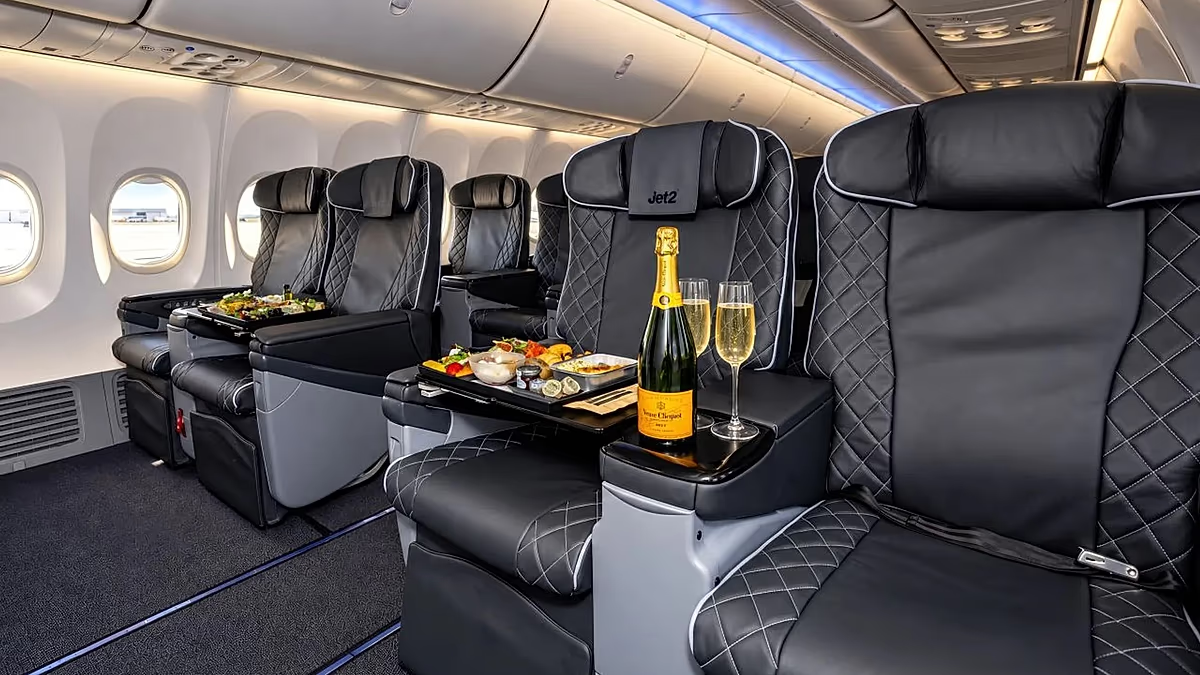
Something is shifting in the world of air travel, and it is not just the price of a ticket. For years, flying was divided into a simple two-part story: cramped economy seats for most, and a mysterious, curtained-off world up front for the fortunate few. But recently, premium travel has gone from being an afterthought to the main event. Airlines across the globe are pouring money into business class cabins, premium economy seats, and even all-luxury aircraft. The latest name to join this high-flying party is Jet2 Charter, the charter arm of the low-cost British airline Jet2. That might sound surprising at first, because Jet2 has built its reputation on affordable, no-frills holidays. But the company has just unveiled a specially configured Boeing 737-800NG that turns the usual budget experience on its head. Instead of the standard 189 seats that you would expect on a plane of this size, this aircraft now carries just 76 business class seats, each offering a generous minimum of 43 inches of legroom. It is a bold move for a carrier known for keeping costs down, and it signals just how seriously the industry is taking the appetite for more comfortable travel.
The key detail here is that Jet2 does not actually offer a business class product on its regular scheduled services. This is something completely new, designed specifically for the charter market. The aircraft is based at Liverpool John Lennon Airport in the United Kingdom, and the airline says the decision came after strong demand from sports teams, music acts, entertainment professionals, and specialist groups who want a more refined way to travel together. Instead of squeezing into standard seats with limited space, these groups can now enjoy a cabin that feels more like a members-only lounge with wings. Trevor Caplis, who heads up charter and airline sales at Jet2, explained the thinking behind the move. He said this was the first time the airline had featured a dedicated business class specification on any of its aircraft, making it an incredibly exciting development for charter customers. According to him, the feedback from passengers who have already flown on the new plane has been exceptional, with the premium feel, space, and comfort really shining through. He also suggested that this luxurious cabin environment, combined with Jet2’s award-winning customer service, looks set to be a huge hit with charter clients over the winter season.
What makes this development feel particularly human is the image it conjures up. Picture a group of touring musicians, exhausted after a series of late-night shows, climbing aboard a plane where they can actually stretch out and sleep. Imagine a football team, still buzzing after a big match, not having to fold themselves into narrow seats for a long journey home. Or think of a specialist corporate group, perhaps on their way to an important event, with enough room to prepare notes or simply relax before landing. This is not just about luxury for the sake of luxury; it is about respecting the fact that not all travel is the same. A charter flight is often part of a bigger story, a journey with purpose, and the experience in the air matters as much as the destination. The article itself cannot resist a playful aside, noting that we presume the Jess Glynne song is optional ahead of takeoff. It is a small joke, but it captures something important: this is a product designed for adults, for people who want calm and quiet, not a party atmosphere. It is a recognition that premium travel is not just about extra legroom and nicer seats; it is about the feeling of being treated like a real person, with space to breathe, think, and enjoy the flight.
Jet2 is not alone in betting big on premium options, and the competition is heating up at the very top of the market. Earlier this month, British Airways unveiled its new A380 design, and it is a genuine statement of intent. The plane now features 106 business class seats that occupy the entire top deck, making it the world’s biggest business class cabin on a single aircraft. This is not just an incremental improvement; it is a complete reimagining of what a jumbo jet can offer. On top of that, the aircraft also has 12 first class suites, so there is no shortage of options for travelers who want the ultimate in comfort. British Airways is clearly betting that the demand for high-end travel is more than a temporary trend. Emirates is also stepping up its game, and it unveiled what it calls the “world’s first electric premium economy seat with full-height privacy screen” back in September. That combination of electricity and privacy is intriguing, suggesting a future where passengers can control their environment with a touch of a button, cocooning themselves from the noise and chaos of a busy cabin. These are not minor tweaks; they are bold investments in the idea that the flying experience itself can be a destination in its own right.
The trend is not limited to the biggest players either. TAP Air Portugal introduced its “economy prime” option back in June, offering passengers a middle ground between standard economy and business class. This approach recognizes that many travelers want more comfort without paying the full business class fare. Meanwhile, Qatar Airways CEO Hamad Ali Al-Khater has said that the airline is “seriously considering” creating premium economy options of its own. That is a significant statement from one of the world’s most highly regarded carriers, and it suggests that the industry as a whole is moving toward a future where premium seating is not just an add-on but a core part of the product. Airlines seem to have finally understood that modern passengers are no longer willing to accept misery as a normal part of flying. They want choice, flexibility, and above all, a sense of dignity in the air. Whether it is a full business class suite, a premium economy seat with a privacy screen, or a simple “economy prime” option, the direction is clear: the days of treating passengers like cargo are over.
What does all of this mean for the average traveler? It means that the definition of premium is expanding, and the options are becoming more varied than ever. You no longer need to be a celebrity or a corporate executive to enjoy a comfortable flight. You can choose an all-business class flight with a specialist carrier, book a charter plane with a budget airline’s new premium configuration, or simply enjoy an upgraded economy seat that gives you a little more space and privacy. The market is responding to a very human desire: to arrive at your destination feeling as good as you did when you left. For years, airlines treated every inch of space as an opportunity to make money, squeezing in more seats and charging for everything from checked bags to a glass of water. But the rise of premium cabins tells a different story. It shows that airlines are finally recognizing that travelers are not just numbers on a balance sheet; they are people with backs that ache, legs that cramp, and minds that need rest. The challenge for the industry is to find ways to offer this comfort to more people, not just those who can afford the very top fares. The surging popularity of premium class cabins is a hopeful sign, because it proves that when airlines invest in passenger wellbeing, passengers respond. And who knows? Maybe one day, the comfort of a business class seat will not be a luxury, but the standard which all travelers can expect. Until then, at least there are more options than ever to make the journey a little kinder, a little more spacious, and a lot more human.