


Israel’s Most Scrutinized Election: Inside the Battle to Safeguard Democracy
A Nation on Edge: Election Day Operations Under Unprecedented Scrutiny
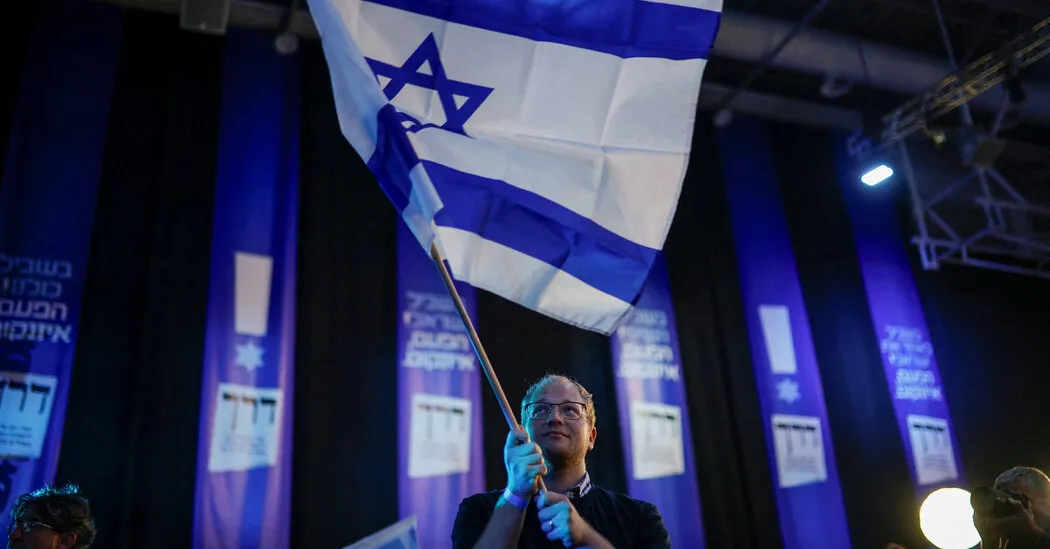
In the tense final hours before Tuesday’s election, Israel finds itself navigating what experts describe as the most fiercely scrutinized vote in its history — a contest unfolding against a backdrop of deep political division, technological threats, and mounting fears that the integrity of the democratic process itself could be called into question. In an office building north of Tel Aviv, dozens of volunteer tech workers and lawyers packed into a makeshift “war room” on the eve of the balloting, preparing to field real-time reports from thousands of ground-level observers stationed at polling sites across the country. Their mission, coordinated by antigovernment protest groups, is not to champion any particular candidate or party, organizers insist, but to ensure every citizen can safely cast a ballot without obstruction or intimidation. The scene captures the extraordinary lengths to which Israeli civil society has mobilized to protect a vote that many believe could shape the nation’s trajectory for years to come.
Guardians of the Ballot: A High-Tech Defense Against Disruption
Inside the Israeli Parliament, the Central Election Committee has mounted what its leadership calls the most comprehensive Election Day operation ever attempted on Israeli soil. Committee employees are fanning out to more than 12,000 polling stations nationwide, each equipped with body cameras designed to document any irregularities in real time and provide a permanent record of the proceedings. The initiative represents a significant leap in transparency measures, according to Dean Livne, the committee’s acting director general, who emphasized in an interview that the full tallies from every polling station will be made public within hours of the polls closing. Even the roughly 600,000 ballots cast remotely — from hospitals, embassies, and military bases — will be counted under the scrutiny of live streaming for nearly 24 hours, a decision Livne said reflects the committee’s commitment to openness. “This election will be the most transparent ever,” he declared.
The monitoring apparatus extends far beyond physical observation. A joint operations desk, run in partnership with Shin Bet, Israel’s domestic security agency, is scanning the web around the clock for disinformation campaigns that could deceive voters or spread chaos on Election Day. The goal is to detect emerging threats and respond to them in real time, neutralizing false narratives before they can gain traction among the public. The digital front has become an increasingly critical battleground, particularly with the growing sophistication and prevalence of AI-generated content that can fabricate convincing videos, manipulate images, and produce realistic-sounding audio in seconds.
Assaf Shapira, a researcher at the Israel Democracy Institute, a nonpartisan think tank, underscored the gravity of the moment. “This election is the most threatened ever,” Shapira said. “The stakes are very high.” His assessment reflects the convergence of multiple, intersecting vulnerabilities: the proliferation of advanced disinformation tools, a police force that critics contend has become increasingly aligned with the far-right minister overseeing it, and a sitting government whose senior officials have repeatedly suggested, without evidence, that the vote itself could be rigged. Each element alone would be concerning; combined, experts say, they form a volatile and potentially explosive mixture.
The Disinformation Dilemma: Combating Threats Seen and Unseen
The concern surrounding AI-generated content represents a particularly novel and vexing challenge. Unlike previous election cycles, where disinformation was largely limited to text-based rumors and doctored images that often required significant technical skill to produce, modern machine-learning tools allow virtually anyone to generate convincing fake content in a matter of minutes. A fabricated audio clip of a political figure endorsing violence, a deepfake video showing fraudulent ballot stuffing, or a counterfeit announcement about polling station closures could spread across social media platforms exponentially before being debunked. The Shin Bet-linked monitoring desk represents an acknowledgment that old-school verification methods may be insufficient against such sophisticated threats.
Yet the most dangerous disinformation, some analysts argue, may not be the kind that originates from external actors or anonymous online trolls. Rather, it could come from the top — from government officials themselves who appear to be laying the groundwork to delegitimize an election result they find unfavorable. Throughout the campaign, members of Prime Minister Benjamin Netanyahu’s Likud party have systematically questioned the impartiality and qualifications of election officials, casting doubt on the very institutions charged with overseeing a fair vote. They have also suggested, without providing evidence, that antigoverment protest groups were plotting to obstruct the voting process through coordinated disruption.
“To challenge the legitimacy of elections, you have to plant the seeds early on,” said Yael Shomer, a political scientist at Tel Aviv University. “And I think we see them planting the seeds.” Shomer’s observation points to a deeply concerning pattern: by seeding doubt well before the results are tabulated, political actors can precondition their supporters to reject an unfavorable outcome as inherently tainted, regardless of the actual evidence. The strategy is not unfamiliar in democratic contexts, but in Israel’s charged political environment, the potential consequences are particularly acute.
Netanyahu himself has made statements that seem to telegraph an expectation of potential defeat, even as he campaigns aggressively for victory. In recent days, he acknowledged that he would stand to lose the election if too few of his supporters turned out to vote — a striking admission that both mobilizes his base and implicitly raises questions about the electoral process itself. Senior government officials have stopped short of explicitly threatening to reject the election result, but the cumulative effect of their rhetoric has been to establish a framework in which an unfavorable outcome can be framed as suspicious or illegitimate.
A Crisis of Confidence: Police, Power, and the Perception of Partiality
Observers and opposition figures have pointed to the Israeli police as a particular flashpoint of concern. The force, traditionally viewed as a professional institution that operates independently of political influence, has come under growing criticism for what many perceive as increasing loyalty to Itamar Ben-Gvir, the far-right national security minister who oversees it. Ben-Gvir, a controversial figure with a history of extremist positions, has been a vocal supporter of aggressive police tactics and has frequently clashed with critics who view his influence as corrosive to the police’s impartiality.
Some fear that on Election Day, officers could look the other way at pro-government violence or attempts to intimidate voters outside polling stations, particularly in areas considered hostile to Netanyahu and Ben-Gvir. The concern is not merely speculative, according to opposition figures, who point to incidents during the campaign where police have been accused of disproportionately targeting anti-government protesters while showing leniency toward supporters of the coalition.
Israel’s police commissioner, Danny Levy, has publicly vowed to defend the integrity of the vote and announced that he would dismiss any officer who expresses political views while on duty. The directive, while seemingly straightforward, has done little to alleviate concerns among those who believe the force has already been compromised by political pressure. Election observers, for their part, agree that the risk of widespread fraud or manipulation of the actual vote count is exceedingly low — a finding that aligns with international assessments of Israeli electoral systems. The machinery of vote counting, they note, is robust, decentralized, and subject to multiple layers of verification. But the perception of partiality, they warn, can be just as damaging as actual misconduct when the goal is to undermine public confidence.
The Arab Vote Under Fire: Communities Prepare for Intimidation
Nowhere are concerns about voter intimidation more acute than in Israel’s Arab communities, which make up roughly 20 percent of the population and have historically voted for parties opposed to Netanyahu’s coalition. Turnout in these communities has often been lower than the national average, and the population has been repeatedly targeted by Netanyahu and his political allies with largely unsubstantiated allegations of widespread voter fraud. The pattern, experts say, has a dual effect: it suppresses turnout by painting legitimate voting as corrupt, and it provides a pretense for intrusive oversight that can further deter participation.
Earlier this month, Bezalel Smotrich, Israel’s far-right finance minister, announced plans to deploy thousands of religious Jewish “observers” to what he described as an effort to “prevent fraud in voting and vote-counting in Arab communities.” The announcement was met with immediate alarm from civil rights groups and Arab leaders, who said the presence of such observers could instigate chaos at polling stations and discourage already-hesitant voters from exercising their rights. Critics have characterized the plan as a form of intimidation dressed up as election integrity, designed to suppress turnout in communities that are overwhelmingly opposed to the current government.
In response, officials in Arab localities have organized their own efforts to protect their communities and combat disinformation. Abed Shahada, who leads a voter-turnout initiative for an organization representing Arab local officials, said teams are being deployed to share verified information with residents, specifically to counter false reports of polling station closures or violence around voting sites that could circulate on social media. The approach, Shahada explained, acknowledges both the elevated threats facing the community and the increased awareness among residents about those threats.
“The threats are greater, but there is also a greater awareness of them,” Shahada said. “We’re trying to have one confront the other.” His words capture the broader dynamic at play across Israel on Election Day — a desperate, determined effort to ensure that the most scrutinized election in the nation’s history is also its most secure.
A Democratic Paradox: The Most Transparent and the Most Anxious Vote
As the votes began to be counted Tuesday evening, the full scope of the challenge facing Israeli democracy came into sharp focus. On one level, the technical machinery of the election appears exceptionally robust: live-streamed counting, ubiquitous body cameras, rapid publication of results, and a networked response system for disinformation threats. By virtually every measurable standard, this should be the most transparent election Israel has ever conducted. Yet the anxiety that hangs over the process is suffocating, a product not of technical fragility but of political and social corrosion that no amount of cameras or live streams can fully repair.
Security officials reported no indication of widespread irregularities as of Tuesday afternoon, and the risk of actual vote fraud remains, in the assessment of independent observers, exceedingly low. The mechanisms of democracy in Israel are sound; the pulse of the nation is not. The question lurking beneath the surface of this election is not whether the votes will be counted correctly, but whether the losers — and, more critically, their supporters — will accept the verdict. The groundwork for a contested result has been thoroughly laid, and even a transparent process can be delegitimized by an audience primed to doubt.
Israel has held elections before, weathered political crises, and emerged intact. But this time, the convergence of polarized public opinion, systemic distrust, and the weaponization of disinformation creates a distinctly precarious climate. For the antigovernment volunteers in the war room north of Tel Aviv, for the election committee employees with their body cameras, and for the Arab community organizers broadcasting accurate information to their neighborhoods, the task is simultaneously simple and monumental: bearing witness. They are doing their best to ensure that, whatever happens once the results are announced, Israelis will know their votes were counted fairly — and that a claim to the contrary is a lie.
The hours ahead will test the resilience of a nation long accustomed to uncertainty but newly vulnerable to the insidious power of false narratives. For now, as the tallies come in and the eyes of the world watch closely, Israel’s guardians of the electoral process wait, hoping that the most threatened election ever will ultimately prove to be the most protected one as well.