


A Fragile Peace in Oleshky: The Story Behind the Ceasefire
Ukraine has formally confirmed that it is honoring a localized ceasefire in the southern Kherson region, a fragile yet potentially significant breakthrough that offers a measure of relief to a town that has suffered under Russian occupation for nearly four years. Dmytro Lubinets, Ukraine’s parliamentary human rights commissioner and head of the country’s negotiating team, made the announcement on Tuesday, stating in a Facebook post that Kyiv was standing by its commitments under the agreement. The ceasefire is centered on the town of Oleshky, located on the eastern bank of the Dnieper River, a community that before the war was home to roughly 24,000 people living ordinary lives with ordinary rhythms. Today, the White House estimates that only between 1,700 and 2,000 residents remain, among them about 50 children who have grown up in a town shadowed by conflict. Those who stayed have endured an existence defined by severe shortages of food, medicine and clean water, while damaged infrastructure and the ever-present threat of more attacks have turned survival itself into a daily ordeal. Behind these statistics lie stories of families weighing whether to stay or go, of elderly residents who cannot easily leave, and of children who have known nothing but war. The ceasefire, modest in scope as it is, is designed to create a narrow window of safety through which humanitarian supplies can flow into Oleshky and civilians who wish to leave can be evacuated. It is not a comprehensive peace, and it does not extend beyond this specific town, but for the people of Oleshky and for the families watching from across the river, it may mean the difference between enduring another brutal winter alone or stepping toward safety with the support of people who have worked to reach them.
The humanitarian operation under the ceasefire is being coordinated jointly by Russian and Ukrainian representatives, who will oversee the delivery of essential supplies and the safe evacuation of residents who wish to leave. Russian military officials have said their forces would halt shelling toward Kherson from 4 a.m. Moscow time on Tuesday to facilitate the operation, and Moscow has pledged to carry out engineering reconnaissance and ensure secure passage for the humanitarian convoy. The operation is expected to unfold over several days, a deliberate pace that reflects the complexity of coordinating movement through contested territory, where roads may be mined and trust is in short supply. The ceasefire was initially announced by the White House on October 23, with Melania Trump’s office saying it would begin on October 29. However, Russian military officials later brought the start date forward, and both sides confirmed the truce was underway on October 27. There are clearly sensitivities on both sides about how this is being perceived, which is perhaps one of the reasons the start dates shifted before ultimately being confirmed. But despite these procedural wrinkles, the central fact is that a coordinated humanitarian effort is now underway in a town that has desperately needed one. The agreement allows for civilians to be evacuated to whichever destination they prefer, whether that means crossing into territory controlled by Ukraine or Russia, a flexibility that reflects the reality of a town where residents hold divided loyalties, complex family connections and different views of what safety looks like. The humanitarian teams will work at the local level, with civilian leaders from both countries visiting residents in their homes to assess their needs. It is a careful, deliberate approach to an extremely sensitive operation, one that acknowledges the fragility of trust on the ground while attempting to answer a simple human question: what do the people of Oleshky need, and how can they get it?
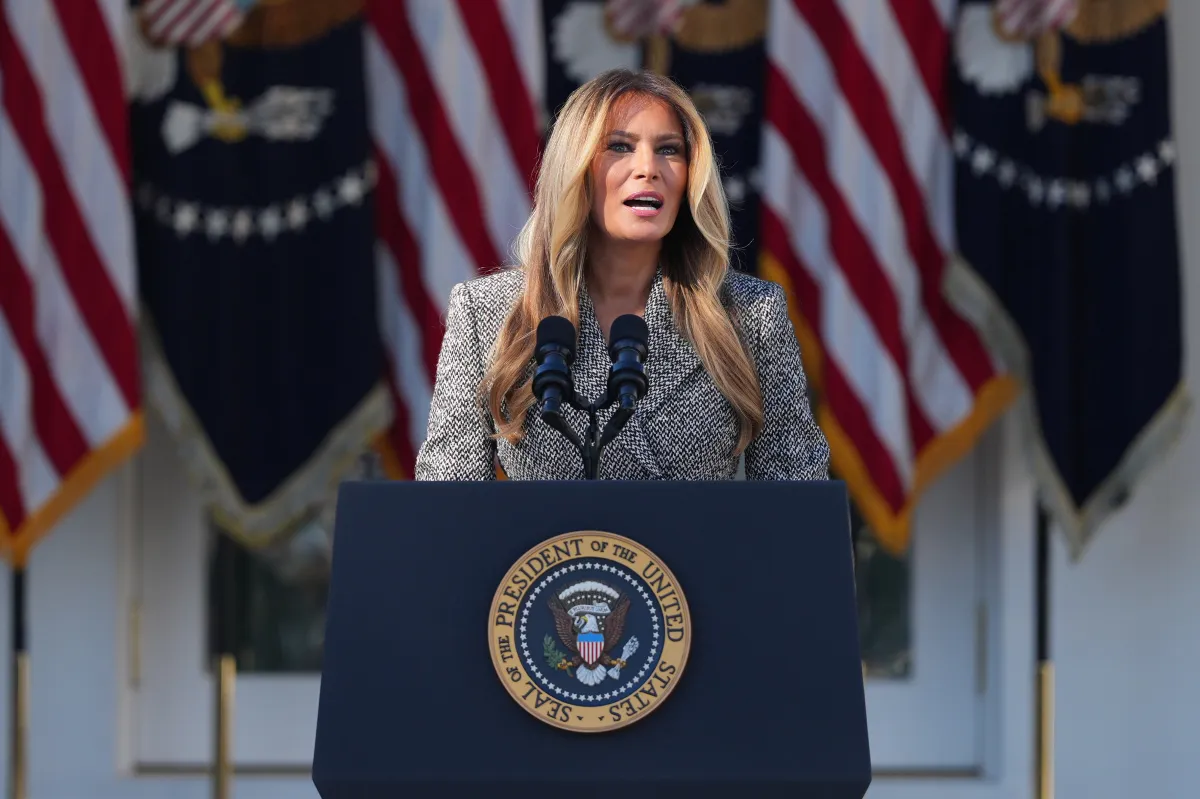
The involvement of first lady Melania Trump adds an unusual and distinctly personal dimension to the story, as she has positioned herself as an intermediary in a negotiation that has drawn the attention of the White House and the Kremlin alike. According to the White House, the humanitarian crisis in Oleshky first came to her attention during the Fostering the Future Together event in New York City in September, held on the margins of the 81st United Nations General Assembly. She and her representative then used a communication channel that had been established with Russian and Ukrainian officials during earlier efforts to reunify 34 children separated from their families. “My representative and I immediately leveraged the communication channel we established with Russia and Ukraine through the previous six reunifications of 34 children,” she said in a White House statement. Melania Trump’s description of conditions in Oleshky is blunt and striking: “The people of Oleshky have limited electricity, live amid mined roads, and endure regular military attacks. It was abundantly clear that without my intervention, the possibility to bring humanitarian aid into the city and to evacuate the elderly would be impossible.” She emphasized that both countries assigned teams to coordinate the operation, including the complex logistics around demining, and that civilian leaders from both countries would visit residents in their homes, assess their needs and coordinate support and transportation for those who wish to evacuate. “Residents who wish to evacuate will receive coordinated support and transportation to their preferred destination. I anticipate some will want to go to Russia, and some to Ukraine,” she said. The White House described her role as an “Exclusive Intermediary” in negotiations with Russian and Ukrainian leadership, a description that reflects the unusual personal diplomacy involved, while the Kremlin has acknowledged her involvement and welcomed the initiative. Melania Trump also secured an American media organization to accompany the teams and document the operation, which she said “will play a significant role in ensuring that the wishes of each family are faithfully respected.”
But while Oleshky experiences its fragile pause, the war continues elsewhere with undiminished intensity. Russian attacks on Tuesday targeted infrastructure in Kyiv, forcing the suspension of traffic on the Southern Bridge and parts of the city’s subway network. A Russian missile attack killed at least one person in the capital and injured 15 others, including students in a dormitory. Kharkiv and Pavlohrad also came under attack, with casualties reported in both cities. Russia’s Defense Ministry said its forces had struck transport infrastructure in Kyiv, a logistics hub in the Kharkiv region and other facilities it described as being used for military purposes, a framing that reflects Moscow’s insistence that it does not deliberately target civilians. Meanwhile, on the other side of the conflict, a drone attack killed one person and injured six in the Russian city of Bryansk, while another drone strike on a bus in Russian-controlled Zaporizhzhia killed one person and injured 30, according to local officials. Both governments deny deliberately targeting civilians, but the daily toll of injuries, deaths and destruction continues to mount on both sides of the line of contact. The localized ceasefire in Oleshky stands as a rare exception, a small pocket of negotiated calm in a conflict that has otherwise defied settlement and produced incalculable suffering. Its significance in the broader war is unclear, but the very fact that two sides could agree on anything at all, even a narrowly defined humanitarian truce, carries both symbolic and practical weight. It demonstrates that communication and coordination remain possible in a war defined by the absence of both, and it underscores the deeply uneven character of this conflict, where some towns can experience a temporary reprieve while others face relentless strikes, where some families are given the chance to evacuate while others continue hiding in basements and shelters. The contrast is stark and uncomfortable, yet it is the reality of a war that has consistently defied predictions and expectations.
The ceasefire also intersects with broader diplomatic efforts to restart negotiations. Ukrainian President Volodymyr Zelenskyy has said that representatives from Ukraine, Russia and the United States are expected to meet for technical-level peace talks in Abu Dhabi in the first half of November. That meeting, if it takes place, would mark a significant step in efforts to bring the conflict toward some form of resolution. There are clearly enormous obstacles in the way, from territorial disputes to questions of security guarantees and war crimes accountability, but the fact that delegations are preparing to sit down together is notable in itself. The localized ceasefire in Oleshky may serve as a template for other humanitarian initiatives, a way to address the immediate and desperate needs of civilian populations while larger political negotiations remain stalled. But it also raises difficult questions about the nature of the conflict and how it is being waged. If it is possible to arrange a ceasefire in Oleshky, why not in other towns and cities? Why can humanitarian supplies reach this town but not others that are facing similarly desperate conditions? The answer lies in the complexity of the war, in the differing strategic goals of the participants, and in the difficulty of translating a successful local initiative into something broader and more permanent. For now, Oleshky remains the exception, and its residents are being asked to trust that everyone involved will honor their commitments. That is, for the first lady and the teams on the ground, the hope that this small operation can demonstrate a different kind of possibility in a war that has offered so little of it. The coming weeks will reveal whether this narrow humanitarian window can open a door to broader dialogue or whether it will remain an isolated gesture in a conflict defined by division.
The start of the ceasefire coincides with renewed international scrutiny of Russia’s conduct in the war. On Monday, the United Nations Independent Commission of Inquiry on Ukraine released findings accusing Russian authorities of war crimes for deliberately attacking civilian targets, as well as crimes against humanity through assaults on Ukraine’s energy infrastructure. The commission said these attacks had deprived civilians of essential energy supplies and caused widespread suffering, particularly during the winter of 2025-2026. Chair Erik Møse warned that with the cold season approaching, “the attacks have intensified once again, raising serious concerns about the threats to civilians’ lives and health.” Russia has rejected the commission’s authority and dismissed its findings as based on falsified data, a predictable response that does not diminish the weight of the allegations. The report also addressed the recruitment of foreign nationals into Russia’s armed forces, adding another layer to the international scrutiny facing Moscow. For Ukraine, the timing is important: as the country heads into another winter, it faces both military pressure and the challenge of protecting civilians in cities and towns far from the negotiating table. The ceasefire in Oleshky, with all its limitations and uncertainties, offers a narrow beam of hope. But it also highlights the broader reality of a conflict where civilians continue to pay the heaviest price. The people of Oleshky have been asked to trust this operation, to believe that humanitarian aid will arrive and evacuation corridors will remain open. The proof will come in the coming days, in whether the promises hold and whether the families of this broken town experience the small mercy of safety. In the meantime, the war grinds on, and the world watches, hoping that this fragile gesture of humanity in Oleshky might, in the end, mean more than a pause in the shelling and perhaps serve as a reminder that even in the darkest moments of conflict, the possibility of compassion remains.