

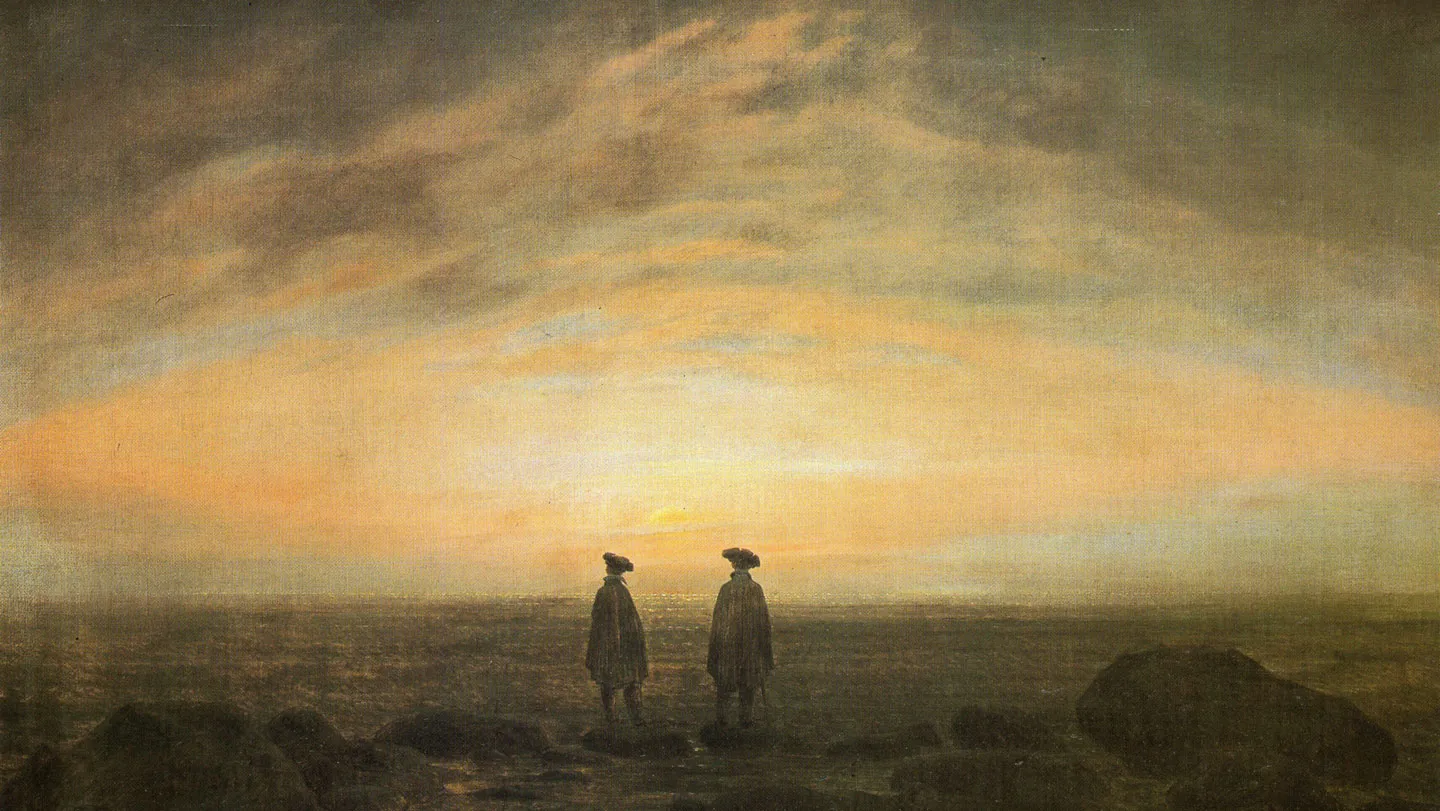
In 1816, Lord Byron opened a poem with a terrifying vision: “The bright sun was extinguish’d … and the icy earth swung blind and blackening in the moonless air.” It reads like pure gothic imagination, a nightmare of a world plunged into darkness and cold. But Byron may have been drawing on something real, something that had happened a year earlier on the other side of the planet. Mount Tambora, a volcano in what is now Indonesia, erupted with almost unimaginable force in April 1815, killing more than 71,000 people in the immediate region. Yet its true devastation did not stop there. The eruption hurled enormous quantities of sulfurous gases into the stratosphere, where they transformed into tiny particles that circled the globe and dimmed the sun. The following year, the Northern Hemisphere experienced a bizarre and punishing chill. In New England, summer frosts and snow killed corn; in China, rice and buckwheat failed; in Ireland, wheat, oats, and potatoes rotted in the fields. Bread prices soared, protests and riots broke out in European towns, and typhus spread through weakened, hungry communities. People called 1816 “the year without a summer” and, in some places, “the year of the beggars.” They did not know why the weather had turned so cruel, or that an island mountain half a world away was the hidden hand behind their suffering. As Cambridge volcanologist Clive Oppenheimer notes, people recorded the climatic impacts of Tambora “without any knowledge that this had anything to do with an eruption.” That ignorance is now giving way to a remarkable scientific detective story, one that suggests volcanoes have been a quiet but powerful force moving behind the scenes of human history for centuries.
Tambora remains the most famous and best-studied eruption in history, but it is far from alone. Over the past two millennia, dozens of large eruptions have rattled the climate system, and researchers are only beginning to understand how deeply those eruptions shaped the lives of people who had no idea what was happening above their heads. In a sweeping review published in the 2026 Annual Review of Earth and Planetary Sciences, Oppenheimer and his colleagues analyzed 38 of the largest eruptions between A.D. 1 and 1900, weaving together geology, climate science, and history. They found that, on average, each of these eruptions cooled the Northern Hemisphere by about half a degree Celsius in the year after it occurred. That may sound modest, but in the fragile agricultural world of the past, half a degree could mean the difference between plenty and famine. The cooling was not always brief. When eruptions struck during periods that were already colder than usual, the recovery took longer, and repeated eruptions could keep a veil of aerosols hanging in the atmosphere for years. Scientists trace these ancient eruptions through ice cores drilled from Greenland and Antarctica, where layers of volcanic sulfur sit frozen in time. To match those layers with actual years and seasons, they turn to tree rings, which act as a natural diary of summer growing conditions. In cold years, trees lay down less wood, and a chemical technique can make those struggling rings turn blue. When Cambridge paleoclimatologist Ulf Büntgen and his team saw two blue rings in a row around 1345, they were stunned. “And that is very rare. We never saw that two years in a year,” he said. Those cold, blue rings turned out to be a clue to one of the most traumatic episodes in European history: the Black Death.
The connection between volcanic cold and the plague is not a simple story of cause and effect, but it is a fascinating glimpse into how closely human fate can be tied to the earth’s restless interior. Around 1345, cool summers caused poor grain harvests in the Mediterranean. Shipping records from Italian city-states show that merchants, scrambling to find enough food, imported grain from the Caucasus region. In those shipments, it seems, came rats and fleas carrying the bubonic plague. The disease then swept across Europe, killing tens of millions of people. The cold years alone did not cause the pandemic, but they set in motion a chain of events that made the catastrophe worse and possibly brought it to Europe’s shores. This kind of detective work is at the heart of the new research. By combining tree ring data, historical documents, and ice core records, scientists can now identify specific cold spells that followed particular eruptions and then trace how food shortages, disease, and migration rippled through societies. The pattern is striking. Out of seventeen large famines in Europe between 1300 and 1800, eleven came on the heels of major volcanic eruptions. When Oppenheimer and his colleagues surveyed the studies that have linked eruptions to social outcomes, they found that the most common responses were crop failures, famines, outbreaks of disease, political instability, and mass migration. None of these outcomes was inevitable. Volcanic cooling did not act alone; it struck vulnerable societies at vulnerable moments. But the sheer repetition of the pattern across centuries suggests that eruptions have repeatedly tested human communities in ways that are only now coming into focus.
One of the most important lessons from this research is that the human impact of a volcanic eruption depends not only on how cold it gets, but on how prepared and flexible a society is. Heli Huhtamaa, a climate and environmental historian at the University of Bern, has spent years studying the effects of eruptions on Ostrobothnia, a region in what is now Finland. During the seventeenth century, the area was hit by cooling from three different sets of eruptions. One would expect the worst eruption, the one in 1695, to cause the most suffering. It did bring the coldest temperatures of all three events, and people starved. But here is the surprising part: only about seven percent of peasants lost their farms, compared with twenty percent during earlier eruptions. The reason was not that the weather was milder or the harvests more abundant. It was that the crown stepped in and offered tax relief. The government’s motive was not humanitarian concern; it wanted to protect the tax base and avoid losing revenue for years to come. Still, the effect was real. Huhtamaa’s research shows that a relatively small policy decision could buffer people against what might otherwise have been a catastrophe. “When there is a climatic shock, it doesn’t matter if it’s 0.5 or 1.5 degrees cooler,” she says, “because what really matters is the societal vulnerability.” That insight is crucial for understanding the past, and it is even more crucial for the future. In a warming world, societies will face more climatic shocks, from heat waves and droughts to floods and storms. Volcanoes are not a perfect analogy for global warming, but they offer a natural experiment in how humans respond to sudden changes in the climate system. Huhtamaa calls eruptions a “hammer blow to the climate system,” a sudden jolt that reveals cracks in the structures of food, economy, and government. If historians and climate scientists can study how different societies absorbed those blows, they may be able to identify the conditions that make people more resilient.
For a long time, historians were wary of using climate to explain human events. The discipline tended to focus on human agency, on kings, wars, treaties, and ideas, and explanations that invoked the weather often sounded lazy or even deterministic. Huhtamaa says that many historians dismissed climate explanations as too simple, as if blaming the cold for a famine somehow excused the political failures that made the famine deadly. But the new research is not about replacing human agency with volcanoes. It is about understanding the constraints within which human choices are made. A poor harvest caused by volcanic cooling does not automatically produce a revolt or a plague or a mass migration; it depends on how governments respond, whether markets are flexible, whether people can move, whether they have reserves of food and trust. The same shock can have very different outcomes in different places, depending on the social and political context. This is why the new wave of research is so interdisciplinary. It brings together paleoclimatologists who study ice cores and tree rings, historians who pore over tax records and shipping manifests, ecologists who understand crop diseases, and economists who study food prices and trade networks. It is a kind of forensic history, piecing together the hidden connections between the earth’s deep interior and the everyday lives of ordinary people. And it matters for the present. A recent report from the United Nations’ Intergovernmental Panel on Climate Change noted that not enough research has been done on how societies actually respond to climate stress. The lessons from Tambora and the many eruptions before it may help fill that gap. By examining how communities coped with volcanic cooling, or failed to cope with it, researchers can begin to identify the kinds of institutions, policies, and social bonds that make people less likely to starve, flee, or fight when the climate turns hostile.
The influence of eruptions runs even deeper than riots and famines; it reaches into the realm of religion and belief. In Iceland, one of the most remarkable texts of medieval literature, the poem Vǫluspá, contains lines that sound almost like a report of a volcanic catastrophe: “The sun starts to turn black, land sinks into the sea; the bright stars scatter from the sky. Steam spurts up with what nourishes life, flame flies high against heaven itself.” Researchers suspect that the poem was inspired by the eruption of Eldgjá, a vast volcanic fissure in Iceland that erupted in A.D. 939. Oppenheimer describes the verses as “like an eyewitness description of a phenomenal lava flood.” The poem goes on to describe a fiery end for the old Norse gods, who are replaced by a single deity. Some scholars now believe that this terrifying event, and the poem’s interpretation of it as a sign of divine displeasure, helped prepare Icelanders to accept Christianity around the year 1000. If that is true, then a volcano did not just alter the weather and the crops; it helped change the spiritual landscape of a nation. The effects of these eruptions across the ages are often subtler than the apocalyptic visions of poets, but they are no less real. They are written into the blue rings of ancient trees, the frozen layers of polar ice, the tax records of Finnish peasants, the shipping logs of Italian merchants, and the fearful verses of a medieval seer. We live on a planet whose crust is alive, and every so often it reminds us of that fact in ways that change not only the sky and the harvest, but the course of human history itself.