



Picture the scene just after dawn on the far western edge of Sydney: a long white Air New Zealand jet descending through the soft morning sky over Badgerys Creek, its landing lights cutting through the last of the dusk, touching down on a runway that, until very recently, was just a promise scratched into farmland. That touchdown, flight NZ165 from Auckland, made history. On 26 October, Western Sydney International (Nancy-Bird Walton) Airport officially welcomed its first international passengers, exactly one day after the airport had thrown open its doors to domestic travel with a Jetstar flight. For Australia, this was a genuinely enormous moment—the country’s first major new international airport in half a century. Not since the days of bell-bottoms and vinyl records has a gateway like this opened on Australian soil. And this one isn’t tucked away in the middle of nowhere; it sits about sixty kilometres west of the Sydney CBD, close enough to be part of the city’s life, but far enough to have room to breathe. The first international arrival wasn’t a grand ceremonial flypast or a polished red-carpet event, but it carried all the weight of a country stepping into a new era. There were smiles, cameras, the usual airport hubbub, but underneath all of it was a sense of disbelief, almost—after all the planning, the politics, the setbacks and the waiting, the planes were finally landing. And not just during polite daylight hours, either. This airport is open around the clock. That one simple detail might not sound revolutionary, but for anyone who has ever dashed to catch a red-eye at Sydney’s old Kingsford Smith Airport, it’s a quiet game-changer.
That curfew at Kingsford Smith, the one that silences the runway between 11 pm and 6 am, has shaped the rhythms of Australian travel for decades. It’s why so many flights leave at ridiculous hours or arrive later than they should, why pilots and passengers have to play a daily game of beat the clock. Western Sydney International simply doesn’t have that problem. The airport is built for a world where travel doesn’t punch a time clock. For airlines, that means they can schedule long-haul departures when the rest of the world is awake, rather than forcing everything into a narrow window. For passengers, it means more options, less stress, and fewer 4 am alarms to catch a flight that has to leave early just because the runway at the old airport is about to go quiet. Simon Hickey, the CEO of Western Sydney International, put it in terms that are hard to ignore. He called the airport “the most transformational piece of infrastructure our nation has seen since the Sydney Harbour Bridge.” That’s a bold claim, but standing at the base of the control tower, watching aircraft move through the night, it doesn’t feel like marketing. It feels like a line that will be quoted in history books. Hickey also pointed to something that should make every traveller sit up a little straighter: within just over a year, passengers at WSI will have access to more than 250 destinations around the globe. Let that sink in. From a brand-new airport in the western suburbs of Sydney, you will soon be able to reach a quarter of the world’s cities. That’s not a slow, cautious beginning. That’s a statement of intent, a declaration that this airport is not just a regional convenience but a genuine international player.
Of course, no airport this significant gets built without a long, winding political story, and Western Sydney International has one of those in spades. The idea of an airport at Badgerys Creek has been kicked around for decades, so long that it almost became a punchline. But on the morning of the opening, Australian Prime Minister Anthony Albanese stood on the new tarmac and called it a milestone, one that had been “decades in the making.” That phrase carries a lot of weight. It’s a reminder that big things take time, that infrastructure is about patience as much as concrete and steel. Albanese wasn’t just talking about planes, though. He talked about what this airport means for the region around it, one of the fastest-growing parts of Australia. “This isn’t just about a new runway or terminal,” he said. “This is about jobs, investment and delivering for one of Australia’s fastest-growing regions.” That’s the part that often gets lost in all the excitement about flight schedules and shiny lounges. Airports are job creators, community shapers, economic engines. This one, built on land that once housed cattle and market gardens, will drive employment and opportunity for thousands of people who have long felt disconnected from the centre of Sydney. And then there is the name on the building, one that carries a story of its own. The airport is named after Nancy Bird Walton, Australia’s first female commercial pilot. She was a woman who broke barriers when aviation was largely a man’s game, who showed that the sky belonged to anyone with the courage and skill to fly. Naming a twenty-first-century gateway after her is a beautiful kind of poetry—a reminder that progress isn’t just about technology, but about people who push the boundaries of what seems possible.
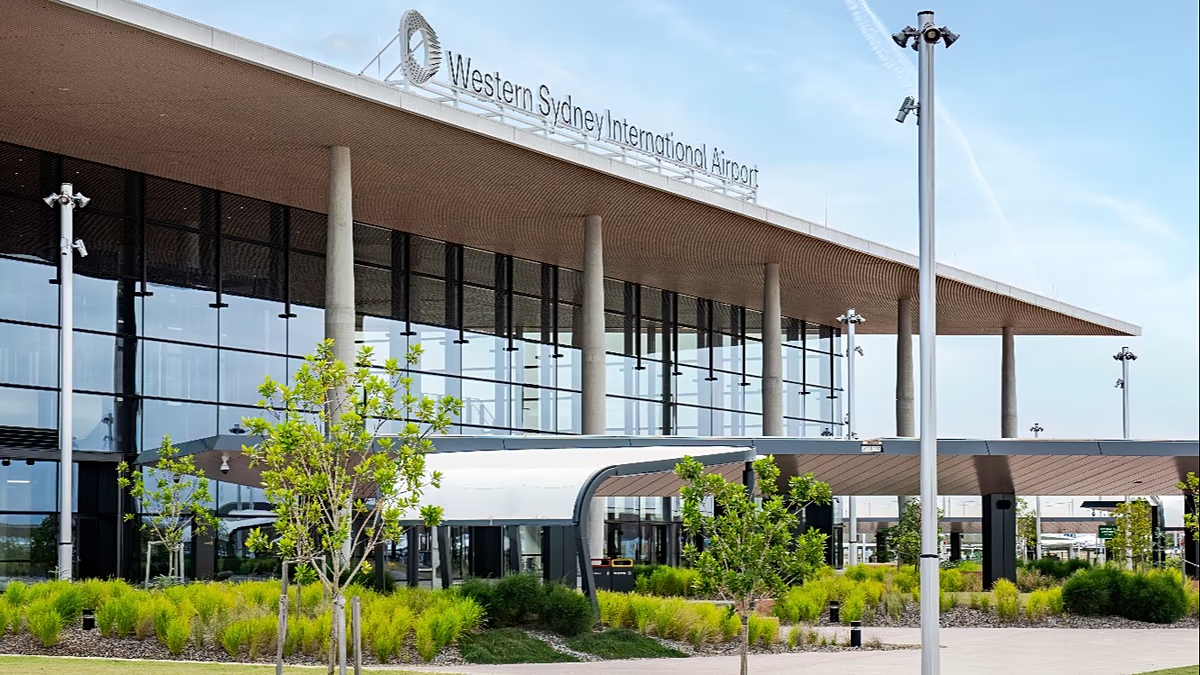
Step inside the terminal, and the first thing you notice is how calm everything feels. There is one terminal handling both domestic and international passengers, which is almost unheard of in an airport this size. That design choice isn’t just about convenience; it’s about creating a smoother experience, stripping away the confusing maze of separate buildings and long transfers. Automated check-in kiosks and baggage technology do a lot of the heavy lifting, reducing the chances of long, frustrating queues. For a frequent flyer, that’s practically a luxury. For a nervous traveller, it’s a quiet relief. The airport initially has capacity for ten million passengers a year, which is already a solid start, but the vision stretches much further. If things go according to plan, WSI could eventually become Australia’s primary gateway, with space to handle more than eighty million passengers annually. That’s a jaw-dropping number, comparable to the busiest airports on the planet. It means this airport is not just a supplement to Sydney’s existing hub; it’s a future giant, built to grow as the city grows. Getting there is simpler than you might think. There are public buses, taxis, rideshares and rental cars, and for those driving themselves, the M12 motorway connects directly to the airport with no tolls. No tolls. In a city where driving anywhere can feel like a series of small financial transactions, that’s a welcome touch. You can glide in, park, and be at your gate without the angry pocketbook moment. The airport is designed to be accessible, not just physically but in spirit—a place that doesn’t make you feel like you’re fighting the system from the moment you arrive.
Now let’s talk about where you can actually go. The international schedule is already filling up like a high-school yearbook with fresh ink. Singapore Airlines will launch daily services from Singapore on 23 November, which is perfect timing for anyone dreaming of Sunday roasts in Little India or a quick getaway to the Lion City. Then in January 2027, Vietjet will connect Western Sydney to Ho Chi Minh City, opening up Vietnam’s energy and street food to a whole new wave of Australian travellers. Fiji Airways joins in March, with flights to Nadi that will have you sipping cocktails by the pool in paradise before you’ve even finished reading your book. Qatar Airways will connect Doha and WSI from 15 December 2027, which means the world’s most connected hub will link directly to Sydney’s newest runway. On the domestic side, Jetstar is wasting no time. Their network covers the Gold Coast, Melbourne and Brisbane, with daily services to the Gold Coast, up to fourteen return flights a week to Melbourne and three to Brisbane. That’s a hefty dose of Queensland and Victorian connection for anyone who needs a beach change or a city break. And Qantas, Australia’s flag carrier, will make its move on 28 March 2027, operating four weekly flights on both its Melbourne and Brisbane routes through its QantasLink regional arm. The airline is still being careful, testing the waters, but even that cautious entry is a sign that WSI has become part of the mainstream conversation. It’s not just a side project anymore; it’s a real aviation destination, with carriers from Asia, the Pacific and the Middle East all lining up to be part of its story.
So what does all this mean for the ordinary traveller, the person who just wants to get from home to a holiday without too much hassle? It means choice, and choice is the great gift of modern aviation. You will no longer be forced to route everything through the old, curfew-bound airport. You will have a genuine option, a modern, streamlined, twenty-four-hour gateway that treats you like a person rather than a problem to be solved. It means the western suburbs of Sydney, long treated as a distant afterthought, now have a landmark to be proud of. It means job opportunities for a new generation, a reason for young people to stay and build their lives in the region rather than migrating toward the city centre. And it means, on a deeper level, that Australia is once again looking outward, building bridges to Asia and beyond from a place that has the space and the freedom to grow. Airports are strange things, you know. They are concrete and glass and kilometres of tarmac, but they are also stories. They are the empty slots on a departure board, the excited whispers in a departure lounge, the hugs at arrivals. They are the places where goodbyes are said and hellos are embraced. Western Sydney International is brand new, but it already feels like it has a heart. It’s named after a woman who refused to accept the limits others placed on her, and it opens at a time when the world is eager to move again, to explore, to connect. The first passengers to walk through its doors are the pioneers of this new age. But they won’t be the last. Over the coming years, millions will pass through, each with their own story, their own reasons for flying, their own sense of excitement or nervousness or relief. And all of them will be stepping into a future that began with a single landing in the early hours of an October morning, when a city’s newest runway quietly became a gateway to the world.