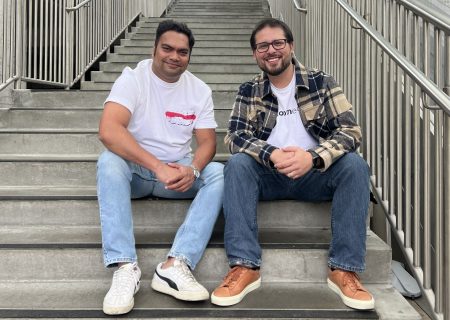





There is no such thing as a quiet week in the Pacific Northwest technology world, and the seven days leading up to October 25, 2026 were a perfect reminder of that. The stories that GeekWire readers flocked to this week were not just about product launches or funding rounds; they were about the human side of an industry constantly in motion. There was a startup born from the frustration of two Amazon veterans, an academic institution wrestling with its own success, an old Microsoft tradition quietly coming to an end, and a scientific breakthrough that felt genuinely hopeful. Together, these stories painted a picture of a region that is still building, still arguing, and still dreaming. Perhaps the most emotionally resonant story of the week was Rosie, a company founded by two former Amazon employees that offers monthly memberships for families to book vetted caregivers for childcare and household work. In an age when so much of tech is abstract and distant, Rosie is refreshingly concrete: it is about helping real families get dinner made, kids picked up, and laundry handled. The company announced that it had reached seven-figure annual recurring revenue within just eight months of launching, a sign that the demand for practical, trustworthy family support is enormous. It is easy to forget, while scrolling through stories about semiconductors and satellites, that the deepest pain points in modern life are often the ordinary ones. Rosie’s early traction suggests that people are willing to pay for reliability and peace of mind, especially when it comes to the people who care for their children and their homes. The fact that the founders came from Amazon, a company not usually associated with caregiving, only made the story more interesting. It is a reminder that great startup ideas often come from lived experience, and that the skills learned in the corridors of Big Tech can be redirected toward something deeply humane. For anyone who has ever scrambled to find a babysitter at the last minute, or felt guilty about asking a friend to help with an elderly parent, Rosie’s success story was an encouraging sign that the future of care might be just a few clicks away.
In a very different corner of the region, the University of Washington was making news for a decision that could shape the next generation of computer science education. A task force recommended splitting the Paul G. Allen School of Computer Science & Engineering from the College of Engineering, a structural change that sounds like bureaucratic housekeeping but actually reflects a much deeper truth: computer science has outgrown its old home. The Allen School has long been one of the most competitive and highly regarded programs of its kind in the country, drawing students from around the world and producing researchers who go on to work at the biggest names in tech. But success creates pressure. The task force’s recommendation is essentially an acknowledgment that the school’s needs, culture, and ambitions no longer fit neatly under the umbrella of a traditional engineering college. For faculty, students, and alumni, the proposal raises both excitement and anxiety. Splitting off could give the Allen School more autonomy, more direct control over its budget, and a clearer identity as a leader in computer science, a field that now touches everything from medicine to art to climate science. But it could also create friction, competition for resources, and administrative complexity. The university’s leaders will make the final call in the spring of 2027, which means the debate is just beginning. What makes this story so compelling is that it is not really about buildings or org charts. It is about how institutions adapt when the world around them changes faster than their own structures. Computer science is no longer a niche discipline for engineers; it is a foundational literacy for the twenty-first century. The Allen School’s struggle to find a new home mirrors the struggle that many universities, and many governments, are facing as they try to make room for the future without abandoning the traditions of the past. For the students walking across the UW campus on a rainy October afternoon, the outcome of this decision will shape not only where they study, but how the next generation of technologists is taught to think about its place in the world.
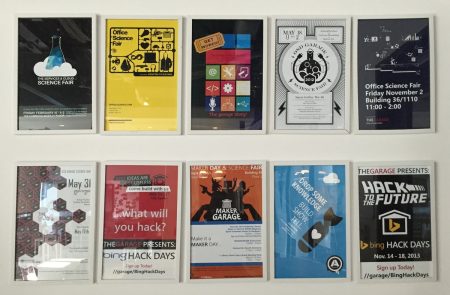
Meanwhile, Microsoft was at the center of several major stories that captured both the end of an era and the dawn of a new one. The most poignant of these was the news that the company is winding down The Garage, the seventeen-year-old program that gave employees maker spaces, hackathon energy, and a place to scratch their creative itches. The Garage was never just a room with 3D printers and whiteboards; it was a statement of faith in the idea that innovation can come from anyone, anywhere, and that a corporate giant can still make room for play. For more than a decade and a half, it hosted the Global Hackathon, a beloved ritual where employees could step away from their day jobs and build something weird, wonderful, and sometimes genuinely useful. Now Microsoft is pulling back, with some Garage spaces reportedly restricted to employees as early as Friday. The company says the hackathon team is “reimagining” the event, which is the kind of phrase that can mean anything from reinvention to retirement. But for many employees, the news felt like the loss of a little piece of Microsoft’s soul. At the same time, Microsoft’s board and governance news pointed toward the future. The company nominated John Collison, co-founder and president of Stripe, to its board of directors, a signal that payments, fintech, and the entrepreneurial energy of the startup world will have a seat at the highest table. The annual proxy statement also revealed that Disney Chief Financial Officer Hugh Johnston, who chaired the board’s audit committee, would not seek re-election, joining LinkedIn co-founder Reid Hoffman in leaving the board in December. That is a significant reshuffling of the corporate guard, bringing in fresh blood while thanking some of the most recognizable names in tech and media for their service. And on the product side, Microsoft introduced new features in Microsoft 365 E7 and a tool called Project Perception that will assess the risk posed by AI agents. The new capabilities can block an agent from making changes, require human intervention, or even shut the agent down entirely. It is a powerful acknowledgment that as AI becomes more autonomous, the ability to control it becomes just as important as its intelligence. The news from Redmond this week was thus a mix of nostalgia and pragmatism, shedding old skins and building new safety nets for a world where machines will increasingly act on our behalf.
The week also served up a reminder that the tech industry has a much messier side, one involving legal battles, ethical compromises, and uncomfortable truths about growth. After six years of litigation, two former Amazon real estate managers resolved their fight with the company, acknowledging that they had received personal payments tied to data center deals they had handled. They apologized for violating Amazon’s ethical standards, a phrase that carries enormous weight in a company that prides itself on its leadership principles and its culture of accountability. The case is not entirely closed, however: Amazon’s legal action against the developer accused of paying the kickbacks is continuing. This is the kind of story that rarely makes the front page but matters deeply because it speaks to the perennial tension between aggressive growth and honest behavior. Real estate, especially data center real estate, has become one of the most valuable and competitive asset classes in the tech economy. When millions of dollars change hands in a matter of months, the temptation to cut corners can be immense. That two former executives now stand as cautionary figures is a signal to the entire industry that the line between deal-making and corruption is not always clear, but crossing it has real consequences. The people news around the region also reflected the churn of executive talent. Kymeta, the satellite communications company, added a former deputy director of the CIA to its executive team, a move that highlights the increasingly close relationship between private space technology and national security. Alaska Airlines named its first-ever chief information technology officer, a sign of how deeply digital transformation has reached into every corner of the economy, even the friendly skies. And Microsoft saw three departures from its ranks, along with the return of a former leader, a familiar rhythm of coming and going that keeps the industry young and restless. Another story that captured the mood of the moment involved layoffs at a tech company, which did not disclose the total number of affected employees but confirmed that cuts spanned multiple departments both in the United States and internationally. In an industry that has spent the past few years lurching between boom and bust, this kind of news is both unsettling and familiar. It is a reminder that behind every headline about artificial intelligence and record stock prices, there are real people packing up their desks, updating their resumes, and figuring out what comes next.
One of the most thought-provoking pieces in this week’s GeekWire roundup was not about a new product or a corporate shakeup. It was an essay about the future of Seattle itself. Seattle’s prosperity, the piece argued, is not guaranteed. As the region confronts economic uncertainty, and as the next wave of tech growth shifts decisively toward artificial intelligence, there is an urgent need to look at the past as a mirror. The essay pointed to Cleveland as a cautionary tale. Cleveland was once a bustling industrial powerhouse, a city that seemed to have all the ingredients for lasting greatness: good jobs, solid infrastructure, a strong middle class. But it let the world change around it, and over time the prosperity faded. The lesson for Seattle is not that cities are destined to rise and fall, but that they must fight for their future every single day. The city’s success depends on attracting people, retaining talent, and creating room for the next generation of business builders. It depends on making sure that the people who make the region’s magic happen, whether they are software engineers, teachers, nurses, or baristas, can actually afford to live there. It depends on staying curious, welcoming, and open to new ideas even when the old ideas have worked well. This is a particularly important message for the tech community, which can easily become complacent during periods of growth. The moment the tech economy feels invincible is often the moment it starts to crack. The rise of AI represents both an opportunity and a threat. It could make Seattle wealthier, smarter, and more productive, or it could widen inequality, displace workers, and drain the human energy that makes a city feel alive. The choice will not be made by algorithms alone; it will be made by people, by civic leaders, by voters, and by the random acts of kindness and courage that no computer can replicate. Cleveland’s story is a warning, but it is also an invitation: do not take anything for granted. Keep building, keep including, keep dreaming, but also keep your eyes open and your feet on the ground. The future of Seattle is not written, and that is both terrifying and wonderful.
Finally, amid all the news about layoffs, boardroom changes, and institutional restructuring, there was a story that offered a genuinely bright vision of what technology can do when it is pointed at the deepest problems of life. The University of Washington’s Institute for Protein Design, in partnership with Nvidia, released their first jointly developed artificial intelligence model for creating proteins with specific jobs. This is not a toy or a productivity booster; it is a fundamental advance in the ability of science to edit the building blocks of biology. Proteins are the machines that keep us alive, and the ability to design them from scratch means that scientists can potentially create new medicines, new materials, new ways to break down plastics, new tools for fighting disease, and even new ways to capture carbon. The release of the model came after a computing grant from the foundation of Nvidia CEO Jensen Huang, a gift that the institute’s director, Nobel laureate David Baker, described as “transformational” for the work being done there. It is hard to overstate how significant this is. For years, protein design was a slow, painstaking process that involved enormous amounts of trial and error. Now, with the help of AI, researchers can imagine a protein with a certain function and have a computer help them build it. The implications are staggering. A future where custom-designed proteins can target cancer cells with surgical precision, or repair damaged tissue, or digest environmental pollutants is no longer science fiction. It is happening now, in Seattle, at the intersection of a great public university and one of the most successful private companies in the world. This is the best of what the tech industry can be: not just optimizing ads or moving money around, but pushing the boundaries of human knowledge and using the power of computation to heal the world. It is also a reminder that the stories that matter most are often not the ones with the loudest headlines. A quiet laboratory in Seattle is changing the future of biology, and the rest of the week’s chaos will eventually be forgotten. But the work of creating proteins that will save lives will endure. And so, at the end of a busy week of news, readers were left with a powerful sense of contradiction: the same human impulses that create ethical scandals and layoffs are also capable of producing wonder, beauty, and hope. The secret is to keep paying attention, keep asking hard questions, and keep supporting the people who are building a better world, one line of code, one protein, and one city at a time. If you would like to stay connected to these stories every week, the best way is to subscribe to the GeekWire Weekly email newsletter, which delivers all of this insight and more straight to your inbox each Sunday morning.