


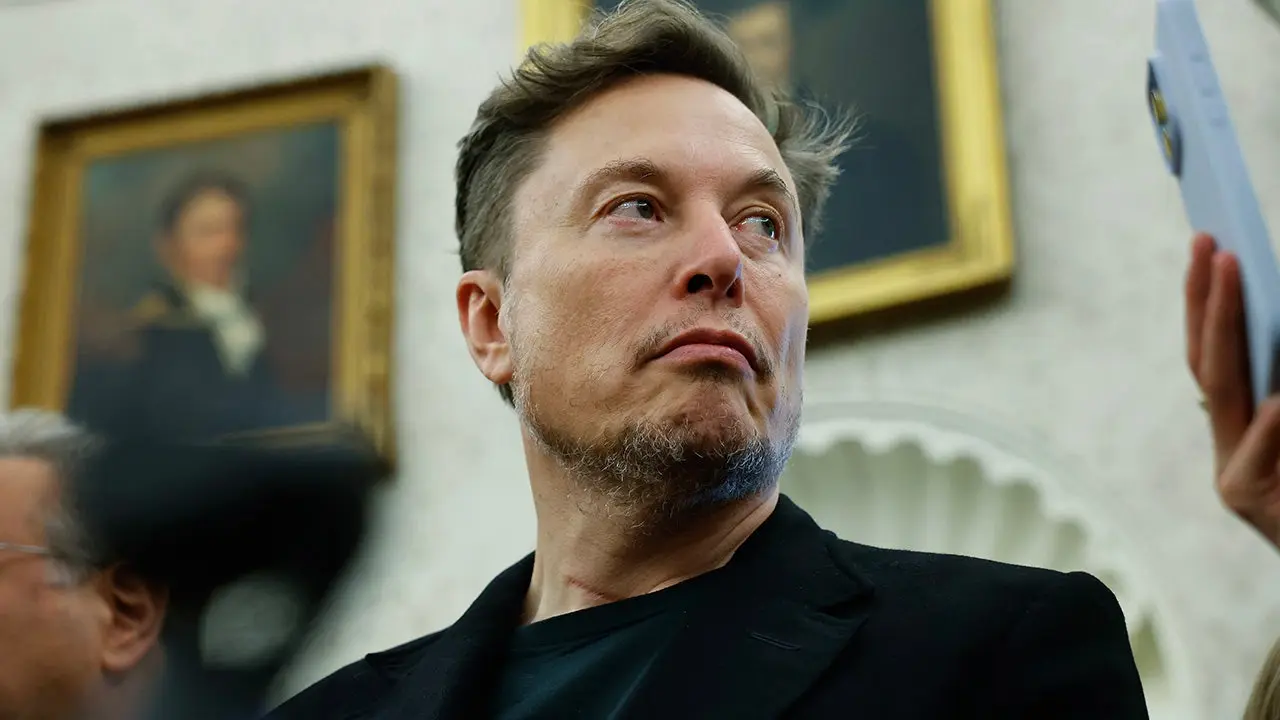
In a weekend social media blitz, Elon Musk mounted a forceful defense of SpaceX’s role in the Ukraine war, pushing back against Ukrainian officials and military observers who were alarmed by a week-long slowdown in Starlink service that disrupted battlefield operations. The episode has become yet another flashpoint in the charged relationship between the tech billionaire, the Pentagon, and Kyiv, raising uncomfortable questions about the dependence of a modern military on a private company’s commercial satellite network. Musk’s remarks, posted on his platform X, were blunt and unapologetic. He insisted that Starlink was never intended to be used as an offensive weapon, and he accused Ukrainian forces of breaching the service’s terms of use by deploying it to guide drone strikes against Russian targets. “Using Starlink, a civilian commercial service, for offensive drone strikes to kill people has never been allowed, nor should it be,” he wrote. He said the “loophole” had been closed the previous week, a reference to the service restrictions that had slowed Ukrainian connections to a crawl. For a country fighting for its survival, the perception that its most critical communications tool was being switched off or throttled from afar was deeply unsettling — and Musk’s defiant tone did little to soothe those fears.
Musk went further than simply defending the policy; he explicitly drew a line between the commercial Starlink system and Starshield, a separate, more secure satellite service controlled by the U.S. government. “What they decide to do is up to them,” he said, signaling that any future military offensive use would have to go through official channels rather than through his private company. This distinction is at the heart of the controversy. From the earliest months of the war, Starlink terminals were rushed into Ukraine to maintain communications after Russian attacks destroyed conventional infrastructure. It was a humanitarian and strategic lifeline, celebrated as a symbol of private-sector innovation enabling a democracy to resist aggression. But as the war dragged on, Ukrainian forces adapted the technology for combat, using the low-latency connection to steer aerial drones toward Russian tanks, artillery, and supply convoys. For Musk, that crossed a red line. He framed the restriction not as an abandonment of Ukraine, but as a necessary clarification of what a civilian network should be used for. To his critics, however, it looked like a powerful actor unilaterally deciding when and how an ally could defend itself. The tension captures a broader modern dilemma: when a private company controls infrastructure that has become essential to national security, corporate discretion can feel uncomfortably like foreign policy veto power.
Throughout his posts, Musk also issued a stark warning about the stakes, though he insisted it was not a threat. “Starlink remains critical to the defense of Ukraine, as it is the only system that cannot be jammed or blown up, at least for now,” he wrote. He went on to say that if Starlink were turned off entirely, the Ukrainian front line would collapse immediately, adding, “This is NOT a threat, it is simply a statement of fact.” The remark cut both ways: it underscored just how indispensable his network has become, while also reminding everyone of the enormous leverage he holds. Musk then doubled down on his belief that SpaceX has done more than any other private company to help Ukraine. “SpaceX has done more to defend Ukraine than any private company on Earth BY FAR,” he claimed. Yet any gratitude was quickly overshadowed by a venomous conclusion aimed at his critics. “That said, I have nothing but UTTER CONTEMPT for the virtue-signaling evil warmongers who push for endless slaughter and offer no realistic solution to the conflict. May you burn in hell. End of story.” The language was vintage Musk — passionate, polarizing, and unvarnished — and it turned a policy debate into a moral crusade. For those in Ukraine, the message was jarring: here was a man who had helped save them, now denouncing those who wanted to keep fighting rather than pursue a negotiated exit.
The speed restrictions that triggered this firestorm began with little warning. A source familiar with the situation told Fox News Digital that Ukrainian forces discovered the change accidentally after their communications suddenly degraded overnight. There had been no advance notice, despite the fact that Ukraine’s military relied on Starlink under a contracted arrangement sponsored by the U.S. government, one that was supposed to run through May 15, 2027. When Ukrainian operators contacted SpaceX customer support, they were told that Starshield service would be restricted on any platform moving at speeds of 100 miles per hour or higher. Since drones typically fly much faster than that, the constraint immediately crippled offensive operations that depended on real-time video feeds and command-and-control data. The timing fueled suspicions of deliberate coercion, especially because the slowdown came amid ramped-up diplomacy between Washington, Moscow, and Kyiv. Earlier in the week, Musk had pointed the finger at the U.S. military, writing that any limits on speed or usage are “decided by the US military and ultimately POTUS.” That post raised the possibility that the decision had been made not by SpaceX alone, but by American officials seeking to pressure Ukraine into peace talks. President Donald Trump acknowledged that he had spoken to Musk about the issue but declined to provide details. Defense Secretary Pete Hegseth and Secretary of State Marco Rubio, however, both denied that the U.S. government had ordered the slowdown, leaving the chain of command murky and the episode shrouded in confusion.
Within days, the situation appeared to de-escalate. Ukraine’s Ministry of Defense announced on Saturday that broader access to Starlink had been restored, with connections remaining stable at speeds of up to 250 miles per hour. That was enough to reinstate drone operations, at least at the tactical level, but it did not dissolve the lingering distrust. Ukrainian officials and military supporters had earlier accused both Trump and Musk of being responsible for the throttling, and even after service was restored, the unanswered questions remained: Who actually made the decision? Why was it reversed? And what reassurance is there that it won’t happen again at a critical moment? For a country that has survived more than three years of full-scale invasion, the fragile dependence on a satellite constellation owned by an unpredictable billionaire is an unnerving vulnerability. Ukrainian commanders have spent much of the war improvising with battlefield means, but Starlink has been the digital backbone of their logistics, intelligence, and drone warfare. To have that backbone suddenly flexed — whether by Musk, the Pentagon, or some combination of the two — reminded Kyiv that its military resilience is only as strong as its allies’ willingness to keep the signal flowing. The episode also revived an uncomfortable debate in Washington about the wisdom of privatizing wartime critical infrastructure.
Amid the turbulence, there were signs that diplomatic winds were shifting. Russia agreed on Wednesday to resume three-way negotiations with Washington and Kyiv the following month, and Ukrainian President Volodymyr Zelenskyy told “Fox & Friends” that he would be open to ending the war by freezing the fighting along the current front lines. That is a remarkable statement from a leader who has long insisted on restoring full territorial integrity, and it suggests that the battlefield stalemate, combined with mounting losses and economic strain, is pushing all sides toward an uneasy compromise. The Starlink restriction, whatever its true origin, may have been a not-so-subtle reminder that Ukraine’s Western patrons have their own timeline and their own limits. Fox News Digital reached out to the White House, SpaceX, and the War and State departments for comment, but the episode has already left its mark. It humanized a conflict that is often reduced to maps and missile counts: a nation’s military leaders waking up to discover that their communications have been throttled, a billionaire arguing furiously that he is both indispensable judge and unsung savior, and a war-torn country forced to navigate the shifting priorities of its wealthy allies. The restoration of service was a relief, but the lesson of the week was deeper. In an era where private companies own the digital roads of modern warfare, even the most powerful military can find itself at the mercy of a corporate decision made in a boardroom or from a billionaire’s phone. For Ukraine, that is not just an inconvenience — it is a fundamental vulnerability that no amount of Western weaponry can fully erase.