



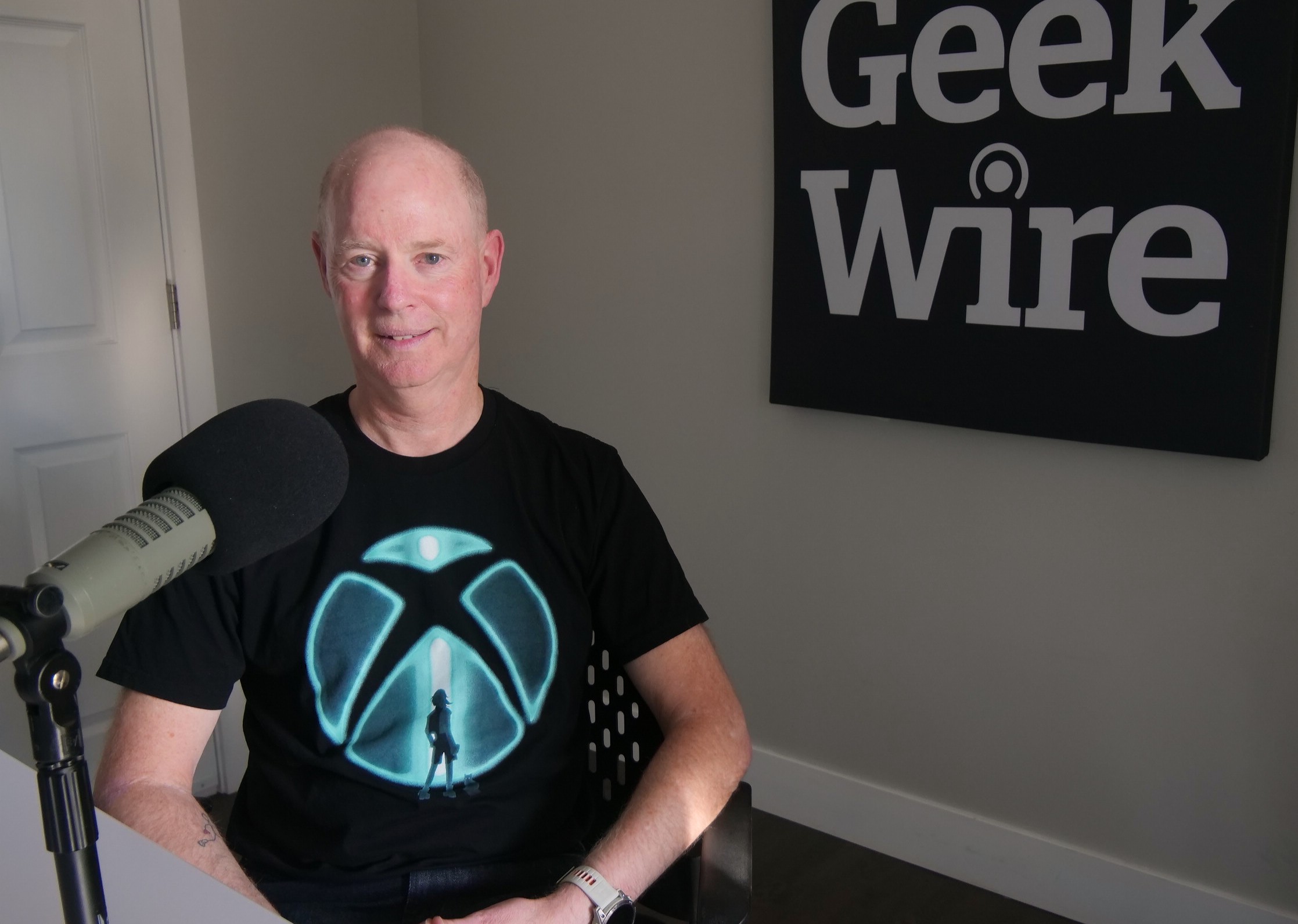
For nearly three decades, Frank X. Shaw has been the invisible hand shaping Microsoft’s public image—a role that by its very nature keeps its occupant out of the spotlight. While the company’s CEOs and product launches grabbed headlines, Shaw worked behind the scenes, serving all three of Microsoft’s leaders and steering the narrative through its most turbulent chapters, from the antitrust battles of the 1990s to the current AI revolution. Now, as he prepares to leave the company at the end of the year, he sat down with GeekWire for an exit interview that felt less like a corporate farewell and more like a reflective conversation with a veteran who has seen it all. Joined by longtime Microsoft reporter Mary Jo Foley, Shaw opened up about the lessons he’s learned, the mistakes he’s made, and how the world of communications—and the company itself—has transformed under his watch. His parting words offer a rare glimpse into the human side of a job that is often reduced to spin and strategy.
One of the most fascinating threads of the conversation was Shaw’s candid assessment of the three very different personalities who have led Microsoft during his tenure. “Steve was outwardly intense. Satya is quietly intense, and Bill is cuttingly intense,” he said, distilling their shared drive into a single sentence. Gates’s intensity was sharp, almost surgical—he could dissect an argument with a few precise words. Ballmer’s was loud and physical, the energy of a sales force embodied in one man. Nadella’s is calm but unwavering, a stillness that suggests a deep reservoir of conviction. Shaw acknowledged that Ballmer was the hardest to explain to the public, because the caricature of a shouting salesman hid a thoughtful, detail-obsessed leader who often played the boisterous role because the company’s massive sales organization needed a rallying point. Behind closed doors, Ballmer pored over numbers and strategy, but the public only saw the bouncing, towel-waving CEO. Shaw also reflected on how hindsight flattens complexity. The board’s choice of Nadella as CEO is now seen as an obvious masterstroke, but at the time it was a deeply contested decision with multiple viable candidates. “When you get a decision right, it always looks easy afterwards,” he observed. “If you get it wrong, you were just an idiot all along.” That line captures the unfairness of leadership: success rewrites history, failure exposes every doubt.
Shaw offered equally honest reflections on the times he stayed silent when he should have spoken up. The most striking example was the Microsoft Kin, a short-lived smartphone that launched in 2010 and was pulled from the market within weeks. Shaw admitted that he knew the device would fail—it was late, the data plan made it too expensive, and even the engineers he consulted had misgivings. But when Steve Ballmer went around the table asking executives whether to proceed, Shaw held back, uncertain whether a communications executive had the standing to weigh in on a product decision. In hindsight, he sees the moment differently. Had he framed the issue as a brand risk—the Kin’s failure would damage Microsoft’s reputation with the very younger audience it was trying to reach—that would have given him legitimate footing. He doubts his intervention would have changed the outcome, but he says he would have felt better about it, knowing he had said his piece. The Kin wasn’t the only time he underestimated a story’s potential impact. He pointed to Vanity Fair’s 2012 “lost decade” article, a critical look at Microsoft’s missteps. At the time, the story didn’t seem to gain much immediate traction, but Shaw now recognizes that it shaped how reporters described Microsoft for years afterward. He had been warned by the writer, Kurt Eichenwald, that without access to Gates and Ballmer, he’d write a hit piece—and he did. Shaw admitted he should have escalated the issue to the magazine’s leadership sooner, and that he underestimated how a narrative, once seeded, can outlive the facts it’s built on.
That idea of narratives versus facts became a central theme of the conversation. Facts can be contested, but narratives are sticky, Shaw said. A company can only change a damaging narrative by changing its own behavior. In the 2000s, every article about Microsoft seemed to open with the phrase “convicted monopolist,” a label that clung to the company long after the legal case had faded. It was only through deliberate changes—like dismantling the infamous stack-ranking system that had poisoned internal culture—that Microsoft slowly shed that image and moved past the “lost decade” narrative. Shaw also shared a lesson about what actually makes a good story, a lesson he learned from a shouting match with a Wall Street Journal reporter named Rob Guth. The argument got so heated that Shaw pulled his car over in Madison Park to continue it. Guth told him he was bad at his job because he thought the job was to get positive press. What Shaw should want, Guth argued, were interesting stories that revealed something real about the company, even if some of those stories weren’t flattering. Shaw initially dismissed the idea, but after reflection, he realized Guth was exactly right. A story about a product built perfectly that everyone loves is boring. “That’s like the plane landed safely,” Shaw said. “Nobody cares.” The coverage worth hoping for illuminates some part of the company in a memorable way, and that always comes with tension. That philosophy guided his willingness to take risks with reporters, like allowing The New Yorker access for a long profile on Microsoft’s partnership with OpenAI. The piece featured CTO Kevin Scott and was published right after Sam Altman’s brief ouster from OpenAI, making it a wild card. But Shaw said the result captured the company at a revealing moment, making the risk worthwhile.
Shaw also touched on the finer points of crisis management and corporate voice. He described his approach to corrections: only bother with factual errors that are “damaging,” not merely “irritating.” He recalled a Bloomberg story that described an executive as having “wooed” customers. The executive hated that word and demanded a change, so Shaw dutifully made the call to the reporter, Dina Bass, asking her to run it by her editors. She pointed out that the executive hadn’t actually been quoted using the word, so there was no factual error. The editors agreed, and the word stayed. Shaw’s point was that not every annoyance deserves a fight—save your energy for what matters. A larger part of his job, he said, was ensuring that a company as sprawling as Microsoft made sense to the outside world. He recalled a Seattle Times reporter who received 26 pitches from Microsoft in a single week and asked which ones the company actually cared about. That experience shaped his conviction that sending pitches indiscriminately was a mistake. Microsoft needed to decide on three or four key messages and focus all its energy there. As for the trend of employees talking publicly on LinkedIn, X, and Reddit, Shaw welcomed it. He saw it as a natural evolution of what Microsoft did with Channel 9 and MSDN blogs years ago. A Microsoft engineer answering a question in a Reddit thread about Excel doesn’t need babysitting by the communications team. But he also noted that there are moments when the world needs to know that Microsoft has something important to say. That kind of breakthrough moment takes real effort and can’t happen every week or even every month—so the company has to pick those moments and do them right.
When the conversation turned to AI and the media, Shaw’s pragmatism came through. AI could help spokespeople prepare, but he joked that asking it what Mary Jo Foley would ask in an interview would produce “generic Mary Jo questions,” because the best interviewers deliberately avoid the obvious. He emphasized the importance of understanding each reporter’s style. Some, like Steven Levy, can lull you into a false sense of comfort with friendly chit-chat before hitting you with a sharp series of questions. Others always sound negative during the interview but write perfectly fair stories, so an executive who reads too much into the tone risks getting thrown off their game. When asked to name the toughest reporter he’d dealt with, Shaw pushed back on the label. Good reporters aren’t “tough,” he said—they’re tricky because their job is to uncover things and surprise you with what they know. What makes a situation difficult isn’t the reporter but the presence of genuine conflict and tension in the story itself. On AI’s broader impact, Shaw saw the industry at a transitional moment. For a while, every new model release made everyone stop and look. He hoped the attention would soon shift from the models themselves to whether AI is actually useful. That shift, he argued, is where Microsoft has historically been strongest. He offered a memorable analogy: AI model companies want to drop a bigger, more powerful engine into businesses, but that often results in grinding gears. Microsoft, he said, is the clutch—the infrastructure that lets companies absorb the power and get moving without the shock of a sudden demand to go 110 miles per hour. It’s a humble role, but an essential one.
As the interview wound down, Shaw reflected on the nature of trust in journalism. “People trust what they hear because they trust the people,” he said. Deep knowledge of a beat becomes more valuable as the world becomes more transactional, even as the business model behind journalism becomes less sustainable. That’s a sobering reality, but Shaw seemed at peace with it. As for his own future, he planned to take time off and wasn’t making any big decisions. People had suggested consulting, another communications job, or corporate board seats, but he didn’t want to rush into anything. Then Mary Jo, ever the pragmatist, suggested he take over PR for OpenAI. “Because man, they need somebody to help,” she said. Shaw’s dry response: “That would be such a low-stress job.” The line drew a laugh, but it also captured something about his career—the constant pressure, the endless judgment, the invisible work of making a giant company feel coherent. After nearly three decades, Frank X. Shaw is walking away from the spotlight he never sought, leaving behind a legacy of thoughtful, human communication in an industry that often forgets it’s filled with people. His exit interview was less a summary of achievements than a masterclass in humility, candor, and the quiet art of telling the truth inside a corporation.