
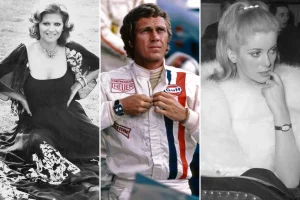


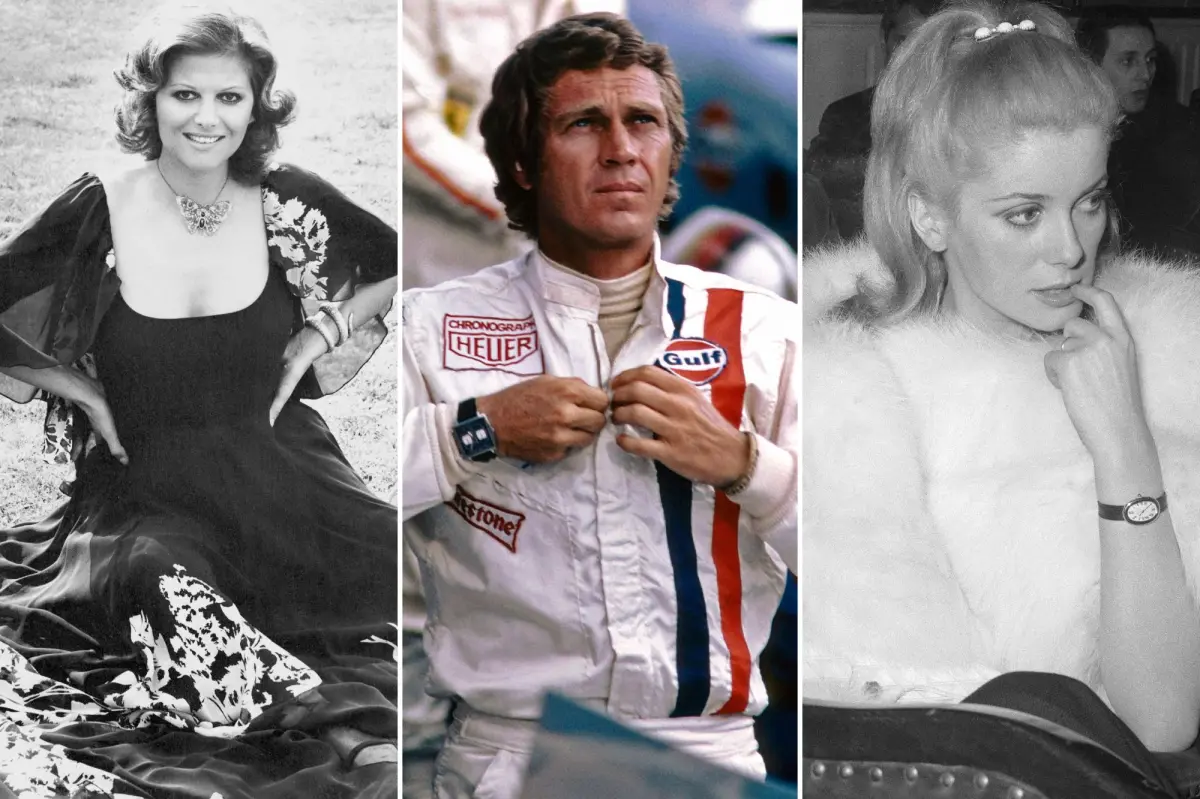
Some things never lose their magic. There is a reason we still call them icons—the movie stars who could hold an entire audience hostage with a single raised eyebrow, a pause, a breath, a glance. And there is a reason we still covet the objects they wore, the watches that caught the light as they reached for a cigarette or opened a car door. A great timepiece is never just a tool for telling time; it is a talisman, a character cue, a silent narrator. When a legendary actor and a legendary watch share a frame, something alchemical happens: the object becomes part of the story, and the story becomes part of our cultural memory. Over the years, certain stars have done more than simply wear beautiful accessories—they have essentially loaned their charisma to prestige brands, making them feel eternal, desirable, and deeply human. These watches are not museum pieces; they are memory boxes. They remind us of specific films, specific performances, and specific moments when a person on screen somehow became larger than life, while still feeling like someone we wished we knew. In the hands of these five larger-than-life stars, the brands they wore became even more glamorous, and the watches themselves became characters in their own right—small, ticking witnesses to genius, style, and the strange alchemy of fame.
Faye Dunaway understood this better than almost anyone. When she stepped into the role of Diana Christensen, the ruthless, chain-smoking television executive in Sidney Lumet’s 1976 masterpiece “Network,” she did not simply put on a costume. She built a whole world around her character, a world of sharp suits, big sunglasses, and one very particular accessory: a two-tone Lady-Datejust Rolex. It was not an accident. Dunaway was so enamored with that watch that she made it part of her character’s wardrobe, a deliberate choice that said everything about Diana’s ambition, her control, her need to be precise and unflappable in a man’s world. The gold-and-steel bracelet, the fluted bezel, the quiet confidence of the Rolex name—it all worked together to create a woman who could command a boardroom and an audience with equal ease. When Dunaway won the Oscar for that role, she was not just being rewarded for her acting; she was being celebrated for the way she embodied a particular kind of modern femininity, one that was unapologetically ambitious and exquisitely dressed. That Lady-Datejust became a symbol of everything her character was: polished, powerful, and a little bit dangerous. And because she wore it so naturally, so effortlessly, she made Rolex feel less like a luxury brand and more like a secret weapon for women who were ready to change the rules. It is the kind of detail audiences may not consciously notice, but they feel it. They feel the weight of it, the shine, the decision. In that way, Faye Dunaway did something far more profound than simply endorse a product—she wove the watch into the very fabric of her character’s soul, and in doing so, she made it immortal.
Marlon Brando, the great rebel of American cinema, had a very different relationship with his watches, but it was no less iconic. Though he was often thought of as a Rolex man when he was off-screen, one particular photograph from the set of the 1964 comedy “Bedtime Story” tells a more intimate story. During a break in filming in Malibu, Brando posed for the camera, proudly showing off an Omega Seamaster 300 from his personal collection. There is something so casually magnetic about that image. Brando is not dressed for a red carpet; he is relaxed, slightly mischievous, comfortable in his own skin. The watch on his wrist is not there to impress anyone; it is simply there because it belonged to him, because he wore it as naturally as he wore his own contradictions. The Seamaster 300 was rugged, utilitarian, made for divers and adventurers—not for movie stars. But on Brando, it became something else entirely. It became a marker of his refusal to be defined by Hollywood’s expectations. He was the man who could play Stanley Kowalski and don a sailor’s cap and still make you feel the raw power of his soul. He was also the man who could wear a technical diving watch with a beat-up T-shirt and somehow look like the coolest person on the planet. That is the Brando effect. He did not need flashy diamonds or precious metals to make a statement. He simply wore what he loved, and his immense charisma did the rest. The Omega Seamaster 300, with its clean lines, black dial, and sturdy presence, became a quiet testament to his authenticity. In an industry built on artifice, Brando was always searching for something real, and the watch on his wrist during that lazy Malibu break feels like a small piece of proof that even legends need things that are solid, functional, and true.
Catherine Deneuve, the cool, blond muse of European cinema, brought an entirely different kind of grace to her timepieces. In the 1960s, she was often photographed wearing a Cartier Baignoire—a soft, oval-shaped watch that looked more like a piece of jewelry than a timekeeping device. The watch was a gift from her then-husband, the fashion photographer David Bailey, and it carried with it all the romance and glamour of that swinging era. Deneuve wore the Baignoire to a 1965 screening of “The Umbrellas of Cherbourg,” where she was already a symbol of French New Wave elegance, and she also wore it in front of the camera in Roman Polanski’s “Repulsion” and in the legendary 1967 drama “Belle de Jour.” What made the Baignoire so perfect for Deneuve was its refusal to shout. It was delicate, refined, almost demure—but on her wrist, it radiated an enormous amount of quiet power. She did not need to accent her beauty with oversized jewels; the simple, graceful curve of the Cartier was enough. It was a lesson in the art of understatement. While other stars were gravitating toward bolder, flashier accessories, Deneuve understood that true allure often comes from what you leave out. The Baignoire looked like it had always belonged there, as if it had somehow been designed specifically for the gentle architecture of her wrist. In “Repulsion,” the watch adds to the eerie, unsettling perfection of her appearance; in “Belle de Jour,” it becomes part of a fantasized world of luxury and suppressed desire. Through it all, Catherine Deneuve made Cartier feel less like a brand and more like a secret language of sophistication. She taught us that elegance is not about being noticed; it is about being remembered. And we remember her, wrist and all, as one of the most effortlessly chic women cinema has ever produced.
Then there is Steve McQueen, the undisputed King of Cool, who turned the TAG Heuer Monaco into a cultural artifact the moment he wore it in 1971’s “Le Mans.” McQueen was not just playing a race-car driver; he was living the part, performing his own stunts, spending countless hours on the track, and becoming so immersed in the world of motorsport that the line between actor and character blurred. The Monaco, with its bold red, white, and blue square case, was a perfect match for his stoic, gutsy on-screen persona. It was loud without being noisy, sporty without being casual, and utterly distinctive—just like McQueen himself. At a time when many actors might have chosen a more traditional, understated watch for a dramatic role, McQueen chose something that looked like it had been built for speed and danger. The Monaco was not a gentleman’s dress watch; it was a tool for men who lived life at the edge of control. And McQueen wore it with such natural authority that he made it seem like the only logical choice for anyone who had ever dreamed of pushing a car to its limits. The watch became so closely associated with him that it now feels impossible to separate the two. When we see that rectangular face, we think of Le Mans, of roaring engines, of the smell of gasoline and the tension before a race. We think of a man who did not need to say much because his presence was enough. That is the magic of Steve McQueen. He did not simply endorse the Monaco; he inhabited it. He gave it a soul. And in doing so, he transformed a brand into a symbol of rebellious, adrenaline-fueled cool that still inspires collectors and enthusiasts today. It is a reminder that sometimes the most powerful statements are the ones made not with words, but with the objects we choose to carry through our lives.
Finally, there is Claudia Cardinale, whose six-decade career embodied the sun-drenched splendor of Italian cinema. With her radiant smile, expressive eyes, and unmistakable presence, Cardinale was the living definition of la dolce vita. She famously collected Bulgari jewelry, and one of her most beloved pieces was the Serpenti watch—a sinuous, seductive creation in 18-karat yellow gold, with enamel scales and pear-shaped sapphire eyes that seemed to glow with their own inner light. The watch was more than an accessory; it was a companion, a symbol of her journey through a world of directors, icons, and glamorous evenings. Cardinale wore it throughout the 1960s and 1970s, and it appeared in photographs that captured her at the height of her beauty. It was a piece that seemed to have been designed for her, echoing the graceful curves of her neck, the warmth of her skin, the boldness of her personality. When the legendary muse of Federico Fellini died in September 2025, the world mourned a woman who had given so much to cinema. Nine months later, Christie’s auctioned off her beloved Bulgari Serpenti watch, and the winning bid reached nearly $228,000—a testament to the enduring power of both Cardinale and the jewelry she loved. But the value of that watch was never really about the gold or the sapphires. It was about the memories it carried: the film festivals, the dinners, the glances, the laughter. It was about a time when cinema felt larger than life and the women who illuminated the screen seemed like goddesses descended from the Mediterranean sky. Cardinale taught us that jewelry is not just decoration; it is autobiography. Every mark on that Serpenti, every glint of light on its enamel scales, tells a story of a life lived beautifully. And now, thanks to these unforgettable stars, their watches continue to tell those stories—on screens, in archives, and in rooms like London Jewelers on Northern Boulevard in Manhasset, where the same spirit of glamour and devotion to craft lives on for anyone lucky enough to find themselves in the presence of a true icon.