


Alabama walked into this season wearing the kind of confidence that comes from a program built on championships, a roster stuffed with four- and five-star talent, and the comforting rhythm of a schedule that allowed them to ease into battle. The Crimson Tide opened with five straight wins over East Carolina, Kentucky, Florida State, South Carolina, and Mississippi State, and none of them were close. In fact, every single one was a double-digit blowout, and two of those victories came in hostile SEC road environments, where the noise is amplified and the pressure has a way of cracking lesser teams. For a while, it felt like the old machine was back: Alabama’s defense was smothering, the offense was humming, and the national conversation was already starting to wonder if yet another College Football Playoff run was inevitable. The players believed it. The fans believed it. Even the skeptics were beginning to soften. Then October arrived, and with it, the kind of harsh reality that no amount of preseason hype can prepare you for. Alabama lost at home to Georgia, 20–17, on Oct. 10, a game that felt as much like a statement from Kirby Smart as a setback for the Tide. They followed that up with an even more painful performance one week later, falling 26–10 to Tennessee at Neyland Stadium in a game where the Vols looked like the more aggressive, more coherent, more desperate team from the opening whistle. Suddenly, what began as a dream season has become a tightrope walk. Alabama enters Saturday’s homecoming game against Texas A&M at 5–2 overall and 3–2 in SEC play, no longer the hunter but the hunted, no longer celebrated as inevitable but scrutinized as vulnerable.
For Alabama fans, Saturday’s homecoming game was supposed to be a fun afternoon under the November sun in Tuscaloosa, a moment to welcome back alumni, cheer for the Tide, and watch another SEC opponent get steamrolled. Instead, it has become something far heavier: a game with massive College Football Playoff seeding implications, and for many, a game that feels like the season’s last real lifeline before everything collapses into disappointment. Losing a home conference game is never easy, but doing it in front of a homecoming crowd, against an always-talented Texas A&M team, at a moment when the program is already reeling from back-to-back defeats, would be devastating. It wouldn’t just be another loss in the standings; it would be a statement that Alabama can no longer take wins for granted in this new era of college football. The playoff committee is watching. The pundits are watching. And perhaps most importantly, the players in the locker room are watching themselves, trying to figure out if this team has the mental toughness to climb out of a hole or if they’ll let the season slip through their fingers. For many fans, the anxiety is visceral. They remember the years when Alabama used October and November to crush all doubt. They also know the current reality: the margin for error is razor-thin, and another blemish would all but eliminate any hope of playing for a national championship. Homecoming, usually a celebration, has become a test of character, a referendum on whether the Tide can still summon the magic that has defined the program for more than a decade.
The pressure only grew when Friday’s SEC availability report delivered a gut punch of its own. Three key Alabama players were downgraded to doubtful for the Texas A&M game: cornerback Zabien Brown, running back EJ Crowell, and starting center Racin Delgatty. For a team already trying to find its footing, losing three pivotal contributors at once is the kind of news that makes coaches pace a little faster in the hallway and causes fans to refresh their phones all the way up until kickoff. Brown and Crowell suffered lower-body injuries during last week’s loss to Tennessee, while Delgatty has been dealing with a knee injury that dates back to the Georgia game. There is still a chance, however slim, that one or more of them could suit up, but doubtful is the kind of word that carries weight in modern college football. It suggests that the medical staff is not confident, that the odds are stacked against them, and that Alabama should prepare to play without three players who were expected to be significant parts of the game plan. The timing makes it even worse. Texas A&M has the kind of athletic ability that can punish a team missing key pieces. Road games against LSU and Vanderbilt loom just around the corner. And at home, on a day when the Tide are supposed to rediscover themselves, uncertainty has instead taken center stage. The sideline will have a different look Saturday, and the players who are healthy will have to rise to meet a moment that suddenly feels much bigger than one game.
Of the three, Zabien Brown might be the toughest loss to swallow. The junior cornerback and team captain came into the season with high expectations, having earned preseason All-American recognition before ever playing a snap of this season. He is one of Alabama’s best defensive players, the kind of lockdown corner who changes how defensive coordinators call a game because he can take away an entire side of the field. His statistics through seven games—19 tackles, four pass breakups, and one fumble recovery—don’t fully capture the impact he has on the defense. He is the quiet anchor, the leader who helps the secondary communicate, the player younger teammates look to when the stadium gets loud and the game gets chaotic. Without him, Alabama will lean on cornerbacks Carmelo O’Neal and Dijon Lee Jr. to step into expanded roles, and both will be tested early and often by an Aggies passing attack that will try to exploit the void. But replacing a captain is never just about coverage. It’s about trust. It’s about presence. It’s about having someone who has been through the battles and can steady a group when things start to spiral. Brown’s absence will be felt in the huddle, in the locker room, and in those critical third-down moments when the game hangs in the balance. The Tide have defensive depth, and there is hope that the guys behind him will answer the bell, but there is no pretending that losing a player like Brown does not hurt.
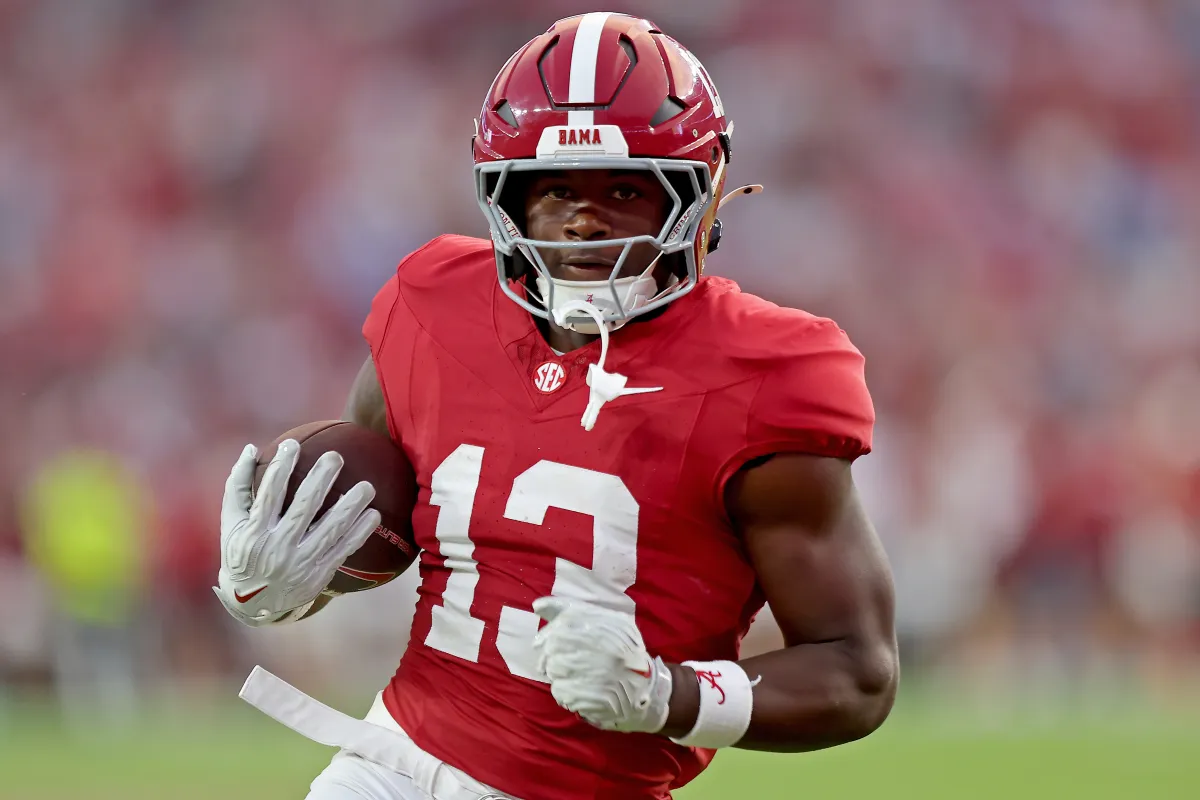
The loss of EJ Crowell might be an even bigger emotional blow in the offensive huddle, because he has been something this Alabama offense has desperately needed: an explosive playmaker. The freshman running back has been a revelation in his first season, rushing for 216 yards and four touchdowns on just 32 carries, an absurd 6.8 yards per carry that makes him one of the most dangerous ball carriers on the roster. In a season where the offense has at times struggled to find rhythm, Crowell has been the kind of player who can turn a simple handoff into an 80-yard highlight, who can change the math on first down, and who keeps opposing defensive coordinators up at night. Without him, Trae’Shawn Brown and Daniel Hill will need to shoulder more of the workload, and while they have talent, they lack Crowell’s unique combination of burst, vision, and big-play ability that has made him a fan favorite and a constant threat. And then there is Racin Delgatty, a senior transfer from Cal Poly who earned the trust of the coaching staff so quickly that he started Alabama’s first six games at center. Delgatty has been more than just a reliable blocker; he is the anchor of the offensive line, the man responsible for making protection calls, snapping the ball accurately, and setting the tone in the trenches. He was added to the midseason watch list for the Rimington Trophy, given annually to the nation’s best center, a recognition that speaks to how well he has played at the highest level. If he cannot go, Casey Poe or Mal Waldrep Jr. will take over at center, but the ripple effects go beyond one position. A new center means a new voice, new chemistry with the quarterback, and an adjustment period for the entire offensive line at the worst possible time.
And yet, despite all the mounting bad news, Alabama still has a path back to the College Football Playoff. It may be narrow, it may require perfection, but it exists. The Tide must first regroup and beat Texas A&M, because another loss would drop them to 5–3 overall and 3–3 in SEC play, and with the SEC’s gauntlet ahead, that would put them in an almost impossible position. What follows is a brutal stretch that starts with a road trip to No. 18 LSU, moves on to a tricky game at Vanderbilt, where no road win is ever comfortable, then comes back home to face Chattanooga in what should be a breather before the season finale against rival Auburn in Tuscaloosa. It is the kind of schedule that can forge a team’s identity or break its spirit, and for Alabama, there is no middle ground anymore. Every game matters. Every snap matters. Every substitution matters. The players who step in for Brown, Crowell, and Delgatty Saturday will be asked to do more than just fill a position; they will be asked to carry the hopes of a program that refuses to accept mediocrity. This is the part of the season when legends are made, when a backup can become a hero, when a team finds strength in adversity and surprises even itself. Alabama has been here before, in different ways, and through different players. The next few weeks will reveal whether this year’s group has that same resilience. Saturday at home, in front of a homecoming crowd that will be louder than ever, the answer begins. Football is a game of uncertainty, injuries, heartbreak, and redemption, and the Crimson Tide are about to be tested in all of those categories at once. But if this program has taught us anything, it’s that the fight is far from over. It starts Saturday, with the home crowd behind them, and the season hanging in the balance.