


It was a Friday arrest that might have come straight out of a spy novel, except the details are far more intimate and, in their own way, more unsettling. Ian A. Brinksman, a 42-year-old Washington, D.C. resident and a U.S. government contractor holding a top-secret security clearance, was taken into custody after federal investigators accused him of unlawfully transmitting classified national defense information to a journalist who published it on Substack. The Department of Justice announced the arrest late Friday, painting a picture of a man who allegedly crossed a line from trusted insider to leaker—not for ideology or money, but reportedly for a romantic partner. According to the criminal complaint, Brinksman had been working with sensitive compartmented information, one of the highest levels of classification in the U.S. government, and had access to some of the nation’s most closely guarded secrets. The charge, unlawfully transmitting national defense information, carries serious consequences and underscores the government’s determination to protect its secrets. But beneath the legal language and official statements lies a human story of trust betrayed, judgment eroded by emotion, and the quiet unraveling of a career built on the promise of discretion.
Brinksman’s professional trajectory was, on its surface, a familiar one. He began working for a U.S. government agency in 2020, then transitioned in September 2022 to a contractor supporting the same agency as a systems integration developer. As part of his role, he was granted access to Sensitive Compartmented Information, a classification designation reserved for intelligence and operational data that must be handled under strict controls. People with such clearances undergo extensive background checks, training, and oversight; they are expected to serve as gatekeepers of information that, if exposed, could jeopardize intelligence sources, ongoing operations, and the safety of officers in the field. Yet, according to the DOJ, Brinksman allowed his personal life to bleed into his professional obligations in a manner that allegedly led him to share protected materials with someone outside the government. The person at the center of the investigation was not a foreign agent or a sophisticated spy, but rather an individual he was romantically involved with: a journalist who ran an independent Substack publication focused on reporting about Congress, war, and political economy. What may have begun as a shared interest in policy and current events reportedly evolved into something far more dangerous.
The affidavit unsealed by the DOJ lays out a pattern of behavior that investigators say revealed Brinksman’s intent. At some point, the journalist—identified only as “Individual 1” in court documents—published an article that she described as based on classified assessments from the government agency where Brinksman worked. In a fundraising post, she allegedly wrote that she had seen reporting based on classified documents and believed the public “deserves to know about” what she had learned. Her social media presence was equally telling: one post included the phrase, “I also accept leaks,” a detail that investigators highlighted as evidence that the journalist was openly open to receiving unauthorized disclosures. But perhaps the most damning piece of context came from an email Brinksman allegedly sent to a friend in November 2025. In that message, he said he was helping a journalist he was dating launch an independent publication focused on foreign policy. That single line, innocuous on its face, would later become a key thread in the government’s case, connecting Brinksman’s personal relationship to his access to classified material. Investigators believe he did not merely stumble into a leak or accidentally leave a document lying around; rather, they allege, he deliberately used his position to obtain secrets and then handed them over to someone he knew intended to publish them.
Over the course of this year, the relationship between Brinksman and the journalist became intensely intertwined with his work. Phone records revealed more than 800 calls or attempted calls between the two in 2026 alone—a staggering number that suggests near-constant communication. The affidavit also describes a specific instance in March 2026, when Brinksman and the journalist reportedly collaborated on edits to an article about geopolitical issues in the Middle East. Investigators were careful to note that they had not identified classified information in that particular piece, but the fact that the two were working together on such sensitive topics was enough to raise serious concerns. The pattern, as federal prosecutors describe it, is not one of a source accidentally sharing too much with a reporter in a moment of candor. Instead, it is a portrait of a government contractor who allegedly stepped far outside his duties, using his security clearance as a gateway to deliver state secrets to a romantic partner who had made no secret of her willingness to publish them. For investigators, the sheer volume of communication and the collaborative nature of the journalism effort painted a clear picture: this was not journalism in the traditional sense, but an unauthorized pipeline from classified spaces to public view.
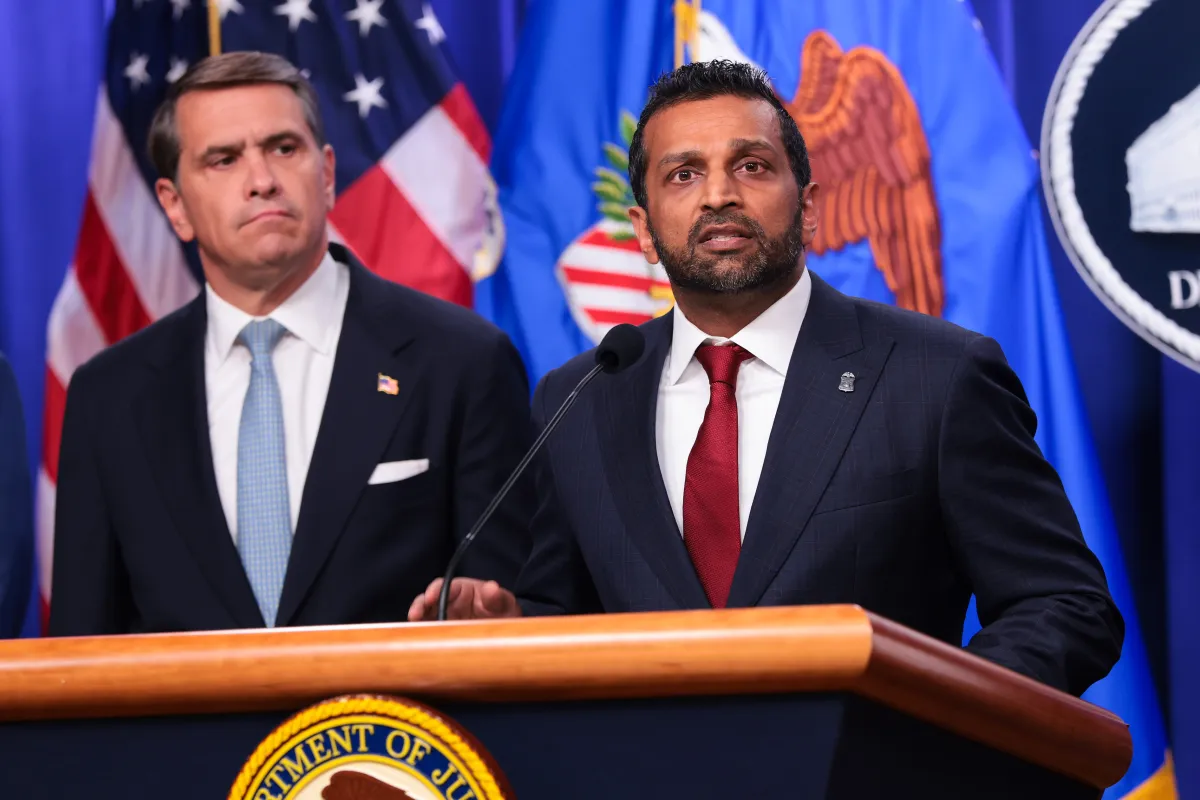
The government’s response was swift and unmistakably stern. Attorney General Todd Blanche framed the case as a betrayal of the fundamental rules governing classified information, stating that Brinksman had “exempted himself from a federal law governing the protection of classified information.” Assistant Attorney General for National Security John A. Eisenberg went further, describing Brinksman as someone who had “reached far outside his own duties to obtain some of our Nation’s most closely held secrets and handed them to a romantic partner he knew intended to publish them.” FBI Director Kash Patel emphasized that protecting classified information is a counterintelligence priority, and CIA Director John Ratcliffe confirmed that the arrest followed a referral from the agency itself. Ratcliffe’s statement was particularly stark, warning that unauthorized release of classified material poses grave risks to national security, intelligence sources, ongoing operations, and officers serving in dangerous environments. These are not idle cautions: leaks of sensitive intelligence can have cascading consequences, potentially compromising methods, exposing identities, and leading foreign adversaries to alter their behavior in ways that make future intelligence gathering far more difficult. The fact that the CIA was directly involved in referring the case suggests that the information at issue was considered valuable and sensitive enough to warrant the highest levels of concern.
As the case moves forward, it raises larger questions about the pressures faced by individuals with security clearances and the vulnerabilities that romantic relationships can create. The FBI’s Chicago Field Office is leading the investigation, with assistance from Washington Field Office and prosecutors from the Justice Department’s National Security Division and the U.S. Attorney’s Office for the Eastern District of Virginia. Those details point to the seriousness with which the federal government treats this kind of breach, and they signal that more charges could follow. Yet the story also carries an undeniable human tragedy: the slow, quiet erosion of judgment that can occur when professional boundaries blur with personal desire. Brinksman was not a career spy or an ideologue. He was a contractor with access to secrets, caught between duty and affection, and he now faces a legal reckoning that could define the rest of his life. For the journalist, the consequences remain to be seen. But for those who serve in classified spaces, the case is a powerful reminder that the greatest threat to secrecy is often not an external enemy, but the all-too-human urge to trust the wrong person. In the end, the arrest is more than a law enforcement action—it is a cautionary tale about the weight of secrets and the fragility of the people who guard them.