



At 14, most kids are navigating the awkward, uncertain terrain of high school—locker combinations, cafeteria cliques, and the strange new world of dating and driver’s permits. Michael Sweeney, however, is not most kids. He is a homeschooled teenager from the Bethlehem Central School District in upstate New York, and he has already outpaced every high school course available to him. He is taking Calculus III and Physics II at a local community college, where he has been enrolled full-time for two years. His intellectual appetite is voracious, and his dream is specific and determined: he wants to study mechanical engineering at Arizona State University. But when Michael asked his school district for permission to graduate early and finally step into his future, the answer was a cold, bureaucratic “no.” His age—not his ability—became the immovable obstacle. He will turn 15 in December, and under New York’s compulsory education laws, he cannot legally leave the K–12 system until he is 16. So despite already functioning at a level far beyond high school, Michael is being told he must wait until the 2027–2028 school year to receive a diploma. It is a story that turns the familiar narrative of gifted kids being “held back” into a stark reality: a brilliant young person, eager to fly, with his wings clipped by paperwork and policy.
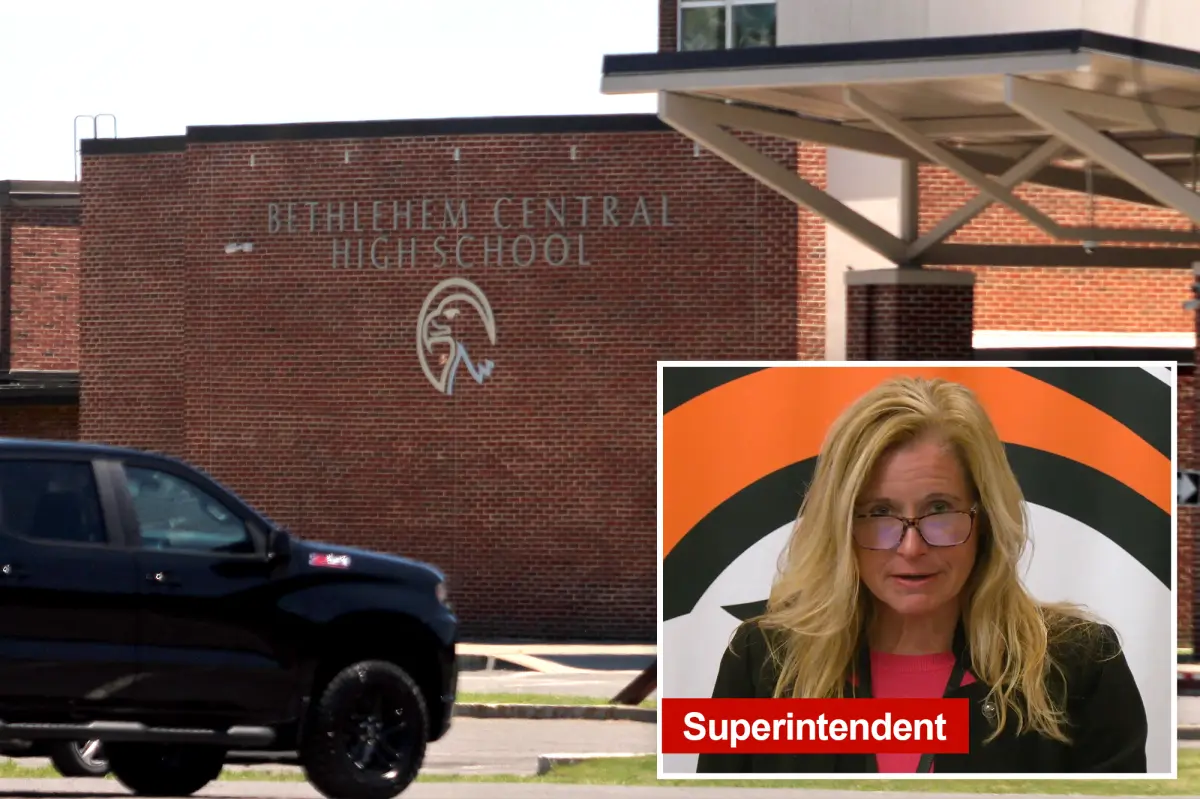
Michael’s academic record is nothing short of extraordinary. During what was supposed to be his eighth-grade year, he accumulated 26 college credits while simultaneously completing high school credits to satisfy the requirements for ninth through eleventh grade. His mother, Nicole Sweeney, described the situation simply: “He’s moving on to 12th grade,” she told the Times Union. “He’s testing out of every high school category at this point.” To prove that he is not being left behind—a common concern for homeschooled students—Michael took the California Achievement Test, a standardized exam often used by homeschool families to measure grade-level equivalency. His score was 13.5, which places him at the level of a college sophomore. In other words, this is not a child who is simply a little ahead of his peers. He is a young man whose cognitive abilities have already surpassed the highest rungs of high school academics. Yet the school district’s response to his family’s repeated requests for early graduation has been consistent denial. The reasoning offered is a maze of regulations and credit requirements. The district claims his homeschool plan does not meet the “requirements needed for the credits,” and Superintendent Jody Monroe wrote in a rejection letter that, without a compliant homeschool program, Michael must enroll in school—either at Bethlehem Central or at a private school. The district did not accept his individualized home instruction plan (IHIP) last year because it stated that Michael was only taking college courses, not the credits needed to cover the requirements for grades eight through eleven.
The absurdity of the situation is difficult to overstate. Here is a teenager who has effectively exhausted every academic challenge available to him, who is solving problems that would make most adults wince, and who is being told he must essentially repeat high school—possibly in person—because his learning journey doesn’t fit neatly into the boxes created by a system designed for a different kind of student. New York State’s compulsory education law requires everyone between the ages of 6 and 16 to attend full-time instruction. That means Michael, who will turn 15 in December, would have to wait until the 2027–2028 school year to graduate, even though he has already proven he is ready for college-level work. The district’s position is that his homeschooling course load doesn’t match the requirements for someone his age. But what does that even mean for a child who is wildly ahead of his age peers? Should a student like Michael be forced to slow down, to mark time, to pretend he is less capable than he is? The family’s argument is not that Michael should skip school entirely; it is that he should be allowed to move forward at the pace his abilities demand. He has done everything asked of him and more. He has not only excelled academically but has also sought out real-world opportunities, such as applying for his hometown’s tree advisory committee, where he became the youngest applicant ever to interview for a position, earning government credit in the process. He is not hiding from responsibility; he is actively seeking it.
The emotional toll of this fight is impossible to measure. Michael’s mother has become his fiercest advocate, but she is also exhausted. Every request for approval has been met with denial, and every denial feels like another year of her son’s life being put on hold. The family has hired a lawyer and scheduled a meeting in front of the school board, where they planned to contest the district’s decision. But that meeting was pushed back a month—delayed to allow lawyers to work out a solution in private. Behind the legal maneuvering, there is a teenager who fears he will have to stop taking college classes altogether. That is not an idle worry. If he is forced to enroll in a traditional high school schedule, his college coursework would have to be sacrificed. He cannot keep attending community college classes while sitting through classes that he has already mastered. For a young person who has found his purpose and his passion, the prospect of being forced to slow down is not just frustrating; it is profoundly demoralizing. “Michael’s reached his point where he needs to start taking 300-level courses,” his mother explained. “You can’t transfer in 300-level courses, so he needs to enroll in ASU full time to continue his degree path.” The message from the school district, however well-intentioned in their reading of the law, seems to be that a teenage boy must wait until he is legally old enough to make his own choices—even if those choices are already clearly within his reach.
This is more than one family’s battle with a school district. It is a story about how our systems, designed to protect children, can sometimes become their cages. The law that forces children to stay in school until 16 exists for a good reason: to ensure that all young people receive a basic education. But legal protections meant for vulnerable students are being applied with a blunt instrument to a student who is anything but vulnerable academically. Michael Sweeney is not falling behind; he is racing ahead. And instead of celebrating his achievements, the adults responsible for his education are telling him to wait his turn. It is hard not to think about how many other gifted children have been similarly discouraged, forced to conform to a pace that denies their potential because the system cannot adapt to the exceptional. The irony is that Michael’s dream is not rebellious or radical. He wants to study mechanical engineering, a field that requires discipline, creativity, and an extraordinary amount of mathematical skill—all of which he has already demonstrated. Arizona State University is not just a fantasy; it is the next logical step. But unless the school district changes its position, Michael will be stuck in a holding pattern, watching his momentum evaporate while the world tells him he is too young to know what he wants. His mother’s words are a quiet plea: “You can’t transfer in 300-level courses.” There is no version of this story where repeating high school makes him a better engineer.
In a strange twist, Michael’s story is bookended by another remarkable young person from Long Island. Joe Petraro-Hyppolite, a 13-year-old prodigy, was accepted into New York University’s master’s program in sports medicine, an incredible achievement made even more inspiring by the fact that he overcame both cancer and Tourette’s syndrome along the way. “My IQ is 168,” Joe told CBS. “Whenever I tell people, it’s like, ‘Oh, Young Sheldon, Doogie Howser.’” Joe’s journey is a testament to the power of resilience and the importance of recognizing brilliance, no matter how young the person who possesses it. But his story also highlights a troubling inconsistency: why is it that some gifted children are met with encouragement and flexibility, while others—like Michael—are met with resistance and red tape? Perhaps the difference is found in timing, or in the involvement of different institutions. But to Michael and his family, it can feel arbitrary. The real lesson in both stories is that exceptional children are not miniature adults, but they are also not ordinary students. They need advocates, not obstacles. They need flexibility, not force. They need educators who see their potential and ask, “How can we help you get there?” rather than “What rule does this violate?” As lawyers and school officials continue to negotiate behind closed doors, one hopes they remember that Michael Sweeney is not a case number. He is a 14-year-old boy who just wants to go to college, who has earned that right a thousand times over, and who deserves a system that supports him instead of standing in his way.