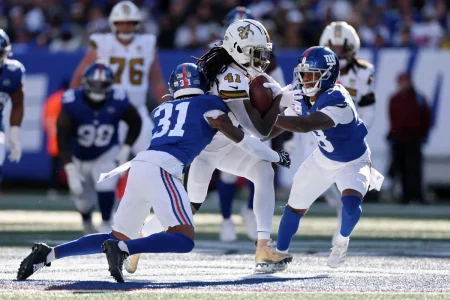



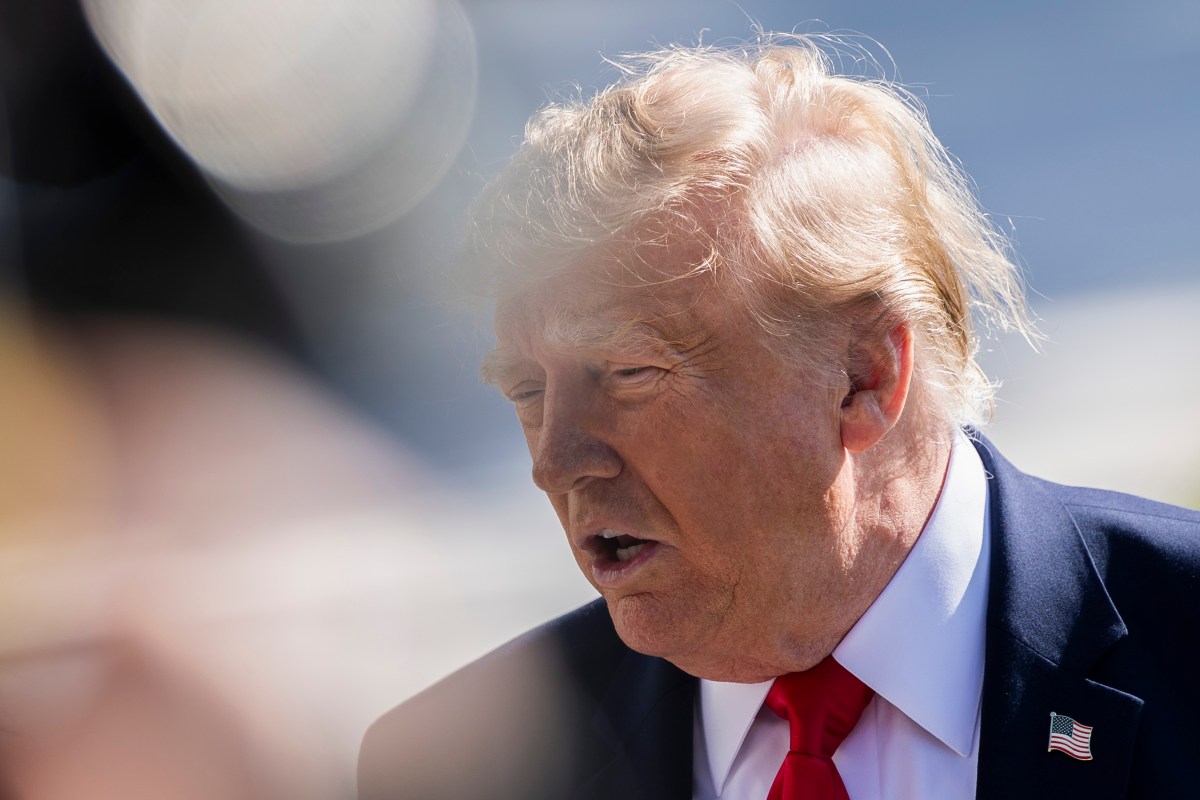
In the shadow of a weekend that France had been dreading, the National Football League found itself at the center of an uneasy intersection between sports, politics, and social unrest. President Trump raised alarms on Friday about the league’s decision to play its first regular-season game in Paris, suggesting that the NFL “could have probably postponed” the matchup between the Pittsburgh Steelers and the New Orleans Saints. The game, scheduled for Sunday at the Stade de France just outside Paris in Saint-Denis, was meant to be a celebration of the league’s global reach. Instead, it arrives as France faces yet another wave of protests and violence, and the weight of that reality is impossible to ignore. Speaking to reporters, Trump did not hide his worry, predicting that “tomorrow is going to be a bad day in France” and warning that the country is “really in trouble.” He then tied his concerns to a familiar political argument, saying that “when you go left” and “allow unlimited numbers of people into your country from very unfriendly countries,” such unrest is the result. For Trump, the Paris game had become not a sporting milestone but a troubling omen, one that he framed as a cautionary tale for America as well. Yet for all the political sound and fury, the question that lingered was simpler and more pressing: Would a football game, with all its pageantry and millions of television viewers, be safe in a city bracing for chaos?
The NFL’s answer, at least publicly, has been a firm and reassuring yes. Despite the unrest, the league has insisted that the game will go on as planned, with kickoff set for 2:30 p.m. local time. Peter O’Reilly, the NFL’s executive vice president, said Tuesday that “there was never a point that the game was in danger of not being played at Stade de France,” a statement intended to calm the nerves of players, coaches, and fans alike. But the league also acknowledged that this is not a normal game. Security will be significantly heightened, with NFL officials coordinating closely with Parisian authorities, French national police, and even the U.S. State Department. Cathy Lanier, the NFL’s senior vice president of security, has been on the ground in France, a sign that the league is taking no chances. “There’s nothing more important from our standpoint than the teams’ security, the fans’ security, everybody involved with this game,” O’Reilly said, adding that the league’s planning is “very vigilant” and happening on an “hour-by-hour basis.” He also pushed back against the idea that hosting the game might strain French resources during a volatile weekend, saying, “We feel confident that we wouldn’t be depleting resources in a negative way around this game.” For league officials, the decision is not just about logistics; it is about maintaining a global brand while acknowledging the real-world environment outside the stadium gates. The NFL has worked for years to expand its international footprint, and canceling this historic game would have been a major setback. But the human stakes are just as high, and the league’s carefully worded assurances reflect a deep awareness that sports, for all its joy, cannot pretend that the world is calm when it is not.
The U.S. State Department has added another layer of caution to the equation. On Thursday, it issued a security alert urging Americans in France to “exercise caution and be aware of their surroundings,” to avoid demonstrations, and to stay away from “areas with large crowds or significant police activity.” The warning noted that protests scheduled for Saturday and Sunday could escalate or change direction with little notice, making even seemingly safe areas unpredictable. France was already under a Level 2 travel advisory, which advises Americans to “exercise increased caution due to terrorism and unrest.” Now, with curfews in effect in parts of the country, including some neighborhoods in Paris, the situation feels even more fragile. Multiple protest groups have filed plans to gather, and the tension is not abstract. France’s main student union has called for demonstrations on Saturday, while the Yellow Vest movement, which first exploded onto the national scene years ago, has planned a march through central Paris. For American fans traveling to see the Steelers and Saints, the travel warning is a stark reminder that the City of Light can quickly become a city of protest. For the players themselves, the atmosphere around the stadium may feel a world away from the usual pregame rituals, with barricades and police lines replacing the familiar bustle of tailgating and camaraderie. The State Department’s message was not a prohibition, but it was an unmistakable signal that this is not an ordinary weekend in France, and that even a football game, with all its distractions and spectacle, cannot fully escape the gravity of what is happening outside.
The protests that now overshadow the NFL’s Paris debut are not a single event but the culmination of weeks of simmering anger. France has seen a wave of demonstrations fueled by rising living costs, deteriorating school conditions, and a widespread sense that public services are failing ordinary people. What began as expressions of frustration has, in some cases, descended into outright chaos. Last Saturday alone, at least 550,000 people took to the streets across the country, according to Interior Minister Laurent Nuñez. The scale was staggering, and so was the violence. Authorities reported roughly 1,800 arrests and more than 500 police officers and firefighters injured. Cars were set ablaze, trash cans became makeshift firebombs, and shop windows were smashed in cities across France. In Limoges, the historic City Hall was badly damaged by fire, a scene that felt less like a protest than an assault on the institutions of the Republic itself. President Emmanuel Macron has responded with a defiant defense of order, blaming some of the violence on what he called “political and seditious acts by ultra-left groups whose aim is to bring down the Republic.” He has promised to take action against what he deems “illegitimate” protests, while allowing demonstrations organized by trade unions to proceed. The distinction, however, is not always clear on the ground, and the anger that drives the streets is not easily separated into neat categories of legitimate and illegitimate. For many ordinary French citizens, the protests are a desperate cry for help, a way of saying that life has become too expensive and too hard. For the authorities, they are a security nightmare. And for the NFL, they are an unpredictable variable that no amount of planning can entirely control.
Trump’s response to the unrest has been characteristically blunt, and he has used the crisis in France as a political weapon on the eve of the midterm elections. On Friday, he repeated his belief that the violence is a direct consequence of left-wing governance and unchecked immigration, linking his concerns about the Paris game to his broader critique of what he sees as weakness at the border. Last weekend, he wrote on Truth Social, “France is burning! The immigration of people from an entirely different world, people with hatred in their hearts, has shattered that once great country. Close your Borders and take control, before it is too late!” Vice President JD Vance has gone even further, suggesting that “Western liberals imported the third world into France” and warning Americans to learn from what he calls the consequences of liberal immigration policies. This framing is a sharp departure from the reality on the ground, where the protests were sparked not by immigration but by economic pain and social grievances, including the cost of living and conditions in schools. French officials themselves have attributed much of the violence to far-left radical groups, but they have been careful to distinguish those extremists from the broader movement of people who are simply fed up. Trump, however, has little use for nuance. For him, France is a cautionary tale, and he has invoked its troubles repeatedly while campaigning, arguing that the same policies could devastate the United States if Democrats prevail. It is a powerful narrative, one that taps into deep anxieties about national identity and security. But it also flattens the complexity of what is happening in France, reducing a multifaceted social crisis to a simple slogan. The people marching in the streets are not all immigrants or radicals; they are teachers, nurses, pensioners, and parents, many of whom feel abandoned by their government and ignored by the political class.
In the end, the NFL’s decision to play on Sunday is more than a logistical triumph or a corporate risk; it is a human story set against a backdrop of uncertainty. For the players, the game is the culmination of years of dedication, a chance to compete on an international stage and share the sport with a new audience. For the fans who have traveled across the Atlantic, it is a once-in-a-lifetime experience, the kind of memory that lasts forever. But for the people of France, the weekend is something else entirely. It is a moment of reckoning, a time when the country’s divisions are laid bare for the world to see. The images of burning cars and marauding crowds will likely remain in the minds of viewers long after the final whistle, and the joyous spectacle of American football may seem jarring against the smoke-filled streets of Paris. Yet there is also something defiant about holding the game. Sports have always had a way of asserting normalcy in the face of chaos, of reminding people that life can still go on even when the world feels unstable. The NFL has worked hard to ensure that the game is safe, coordinating with French and American authorities and adjusting its plans on the fly. Whether that will be enough remains to be seen. But one thing is certain: when the Steelers and Saints take the field at the Stade de France, they will be playing in a city that is holding its breath. The outcome of the game may be decided in the final minutes, but the outcome of the weekend will be determined by something far larger than football. As the sun sets over Paris, and the floodlights flicker to life over the stadium, the world will be watching, not just for the sport, but for the soul of a country in turmoil.