



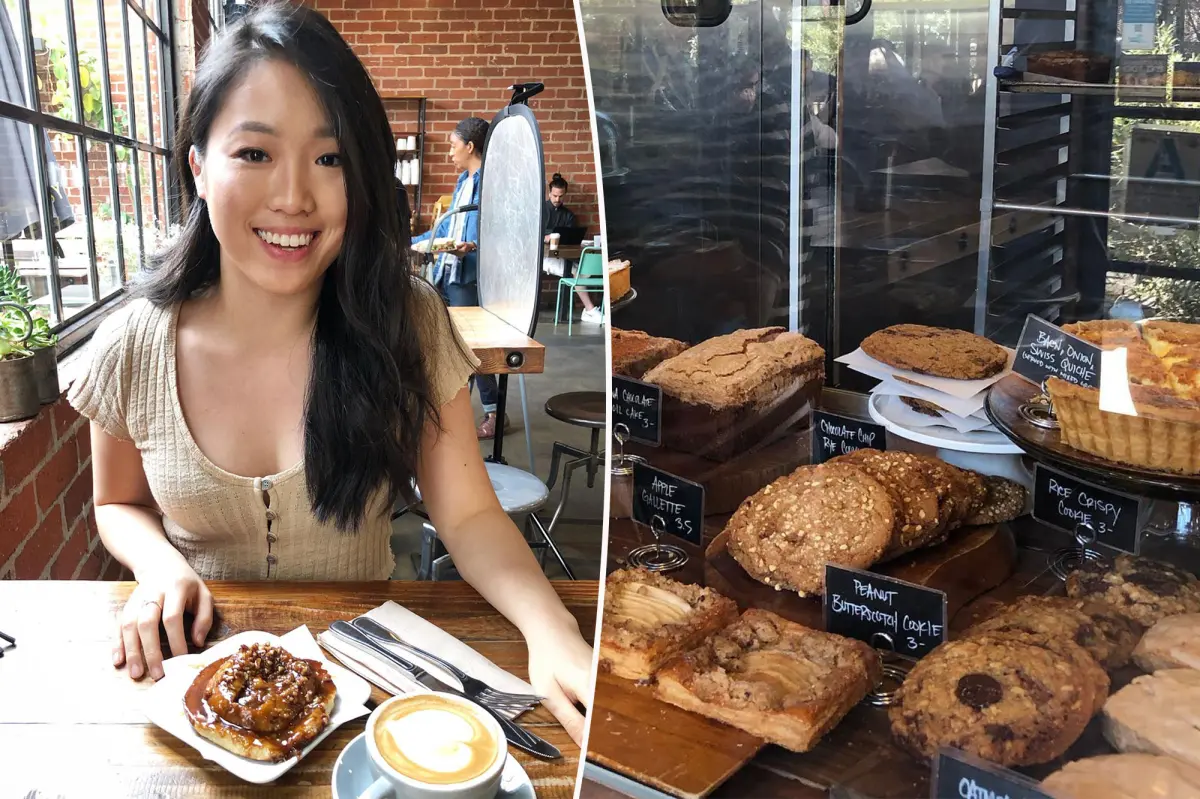
Los Angeles has grown accustomed to the anguished sound of a restaurant’s final farewell, but that doesn’t make the news any easier to hear. This week, the city’s brunch crowd felt the pang of another loss as The Sycamore Kitchen, a beloved La Brea Avenue staple for fifteen years, announced it would be closing its doors. The restaurant had become something of a local institution, admired for knockout pastries, generously stacked sandwiches, and the kind of unhurried breakfast meetings where Hollywood deals and neighborhood gossip shared the same coffee-stained table. The announcement came on social media with the quiet finality of a phrase that regulars never imagined they’d read: “After 15 incredible years it’s time for us to say goodbye.” The brief statement offered no reason for the sudden shuttering, no accounting of the struggles behind the scenes, only a note that the final day would arrive sometime that very week. For a city already reeling from an endless string of beloved restaurant closings, this one stung with a particular sharpness. The Sycamore Kitchen didn’t feel like a place on the brink. It felt permanent, the way certain restaurants do when they’ve woven themselves into the daily texture of a neighborhood. Fifteen years is a lifetime in restaurant years, and to survive that long in Los Angeles—a city that worships the new, discards the old, and makes economic survival brutally difficult for independent kitchens—was no accident. It was a triumph of consistency, warmth, and exactly the kind of cooking that makes people want to come back again and again. That such a place could vanish with barely a week’s notice is a reminder that no beloved restaurant is ever truly safe, no matter how many full tables or glowing memories it has accumulated.
When The Sycamore Kitchen first opened its doors in 2012, the stretch of La Brea near Fairfax was still waiting to become the destination it is today. It was a sleepy commercial strip, the kind of place you drove through rather than drove to. But the restaurant changed that almost immediately, helping to transform the neighborhood with its airy California sensibility, its warmly worn wooden tables, and a pastry case so alluring that people planned their mornings around it. From the start, it was clear that this was not just another cafe. It was a place that understood the art of hospitality, where the coffee came strong, the baked goods arrived at golden and crackling perfection, and the menu offered the kind of straightforward, high-quality food that doesn’t need gimmicks to be memorable. The turkey sandwich became a quiet legend, the BLT was celebrated by the late, great Jonathan Gold, and the potato chips—shoestring, salty, nearly impossible to stop eating—developed a cult following of their own. The restaurant also carved out a distinct social role. It was casual enough for a solo visitor with a novel, yet polished enough to serve as the backdrop for a power breakfast between executives who might be deciding the fate of a film or a television show. That combination of accessibility and clout is rare in Los Angeles, and it made The Sycamore Kitchen a favorite of both the neighborhood and the industry. Over the years, it became one of those reassuring places you could always count on: a source of comfort on a gray morning, a reliable spot to meet a friend, a room that felt like it had been there long before you discovered it and would somehow remain after you left. The fact that it stayed open for fifteen years—through changing trends, a pandemic, and the relentless economics of the modern restaurant industry—felt like a small miracle. And now, with the doors about to close, that miracle is ending.
The announcement hit the community like a sudden loss in the family, and the comments on Instagram and Reddit quickly became a public memorial. “Truly devastating! One of my favorite spots in LA for many many years,” one heartbroken customer wrote. “I’ll never find a Cobb salad like the one from Sycamore Kitchen.” Another commenter revealed just how much the restaurant had shaped their daily life: “Literally moved to this neighborhood so I could walk to this place for lunch every weekend. This is heart breaking.” On Reddit, a similarly devoted regular wrote, “I moved to my neighborhood partially because I saw we’d be walking distance to sycamore kitchen. We go there weekly!” These are not casual complaints about losing a convenient lunch option. They are expressions of grief for a space that held real meaning in people’s lives. To move to a neighborhood because of a restaurant is to declare that the place matters to you—not only for its menu, but for the feeling it gives you, the rhythm it brings to your week, the sense of identity that comes from being a regular. The restaurant’s sudden closure also surprised neighbors because there had been no warning signs, no sad farewell post, no gradual winding down. The Sycamore Kitchen remained a lively, humming, full space until the very end. For those who had watched it help rescue a formerly desolate commercial strip, the loss felt particularly cruel. “I’m devastated by this news,” another person wrote. “What a special café and such a cornerstone of our La Brea neighborhood. Thank you for everything you’ve given this community over the years.” The word “cornerstone” is not hyperbole here. Restaurants like this one do the invisible work of making a neighborhood feel like a home. They give people a place to gather, to celebrate, to console, to simply exist in the company of others. Losing one is losing a piece of the community’s connective tissue, and no amount of new development can replace it.
Longtime patrons spent the days after the announcement swapping memories, and their recollections painted a portrait of a restaurant that had quietly embedded itself in Los Angeles’s culinary history. There were stories of favorite tables and familiar faces, of birthdays marked with a slice of cake and condolences shared over coffee, of mornings when the only sensible thing was to sit by the window with a latte and let the world slow down. Someone remembered seeing Jonathan Gold there, a bittersweet reminder of a time when the city’s most celebrated food critic would sit among ordinary diners, savoring the turkey sandwich, the BLT, the crispy chips, the bakery case that never disappointed. Gold’s seal of approval mattered, but so did the everyday approval of the customers who came by after school drop-off or between meetings. The Sycamore Kitchen was never a place that needed to shout. It didn’t chase trends or chase the spotlight. It simply did what great restaurants do: it made people feel welcome, and it made sure the food was worth coming back for. That kind of quiet excellence is harder to sustain than it looks. It requires a team that works as a unit, cooks who care about the details, servers who remember the difference between a regular and a newcomer, and bakers who are willing to start before dawn to fill the pastry case with something beautiful. The result was a restaurant that felt both effortlessly chic and deeply human. It was the kind of place where you could take a date you wanted to impress, or a toddler you were trying to feed, and neither felt out of place. In a city that so often prizes novelty above all else, The Sycamore Kitchen proved that there is real power in consistency. The memories being shared now are not just about what was on the plate, but about the people on the other side of the counter and the patrons who made the room feel full. That is the legacy of a neighborhood restaurant, and it is not something that can be measured in stars or reviews.
While customers grieve, the people who worked at The Sycamore Kitchen are facing a far more immediate and uncertain reality. For many employees, this was not just a job but a home away from home, a place they had been part of for more than a decade. The abrupt closure leaves them without paychecks, without shifts, and without the familiar rhythm that structured their lives. A GoFundMe campaign launched on Tuesday hopes to raise $11,000 to provide some relief to staff members who were caught off guard by the decision. Organizers of the fundraiser described the restaurant as more than a workplace, noting that “for some team members, it has been home for over a decade.” They attributed the shutdown to the difficult economic climate and the hardships of running a business—a phrase that has become all too familiar in an industry that has spent the last few years staggering from crisis to crisis. Costs of ingredients have climbed, commercial rents have stayed stubbornly high, labor is harder to find and more expensive to keep, and diners have become more cautious about what they spend. The pandemic changed habits permanently, and the city has lost a crushing number of independent restaurants in the years since. The Sycamore Kitchen could not escape those pressures, even though it appeared to have everything going for it: a loyal following, strong reviews, a packed room, and a location that had been transformed in part by its own success. But a thriving dining room is not always enough to cover the bills, and the gap between how successful a restaurant feels and how successful it actually is has grown wider than ever. The $11,000 goal is a small number compared to the scale of the task ahead, but it represents something important: a community recognizing that the people behind the counter are the true heart of any restaurant. As guests say their goodbyes, the staff deserves not just sympathy, but support. They are the ones who showed up every day to make the magic happen, and now they are left to figure out what comes next.
There is a particular ache in walking into a beloved restaurant for the last time, and the final days of The Sycamore Kitchen are sure to be filled with customers trying to hold onto something that will soon exist only in memory. The espresso machine will hiss for the last time, the pastry case will empty, and the room that once buzzed with conversation will grow quiet. Tables that were once the site of first dates, job interviews, family celebrations, and solitary morning quiet will be packed up, along with the stories they witnessed. The owners have left a crack in the door, saying they are “looking forward to what’s next,” and perhaps that means new projects, new ways of bringing people together. But for now, the grief outweighs the anticipation. In a city that is endlessly in flux, The Sycamore Kitchen was a point of stability, a place that made the neighborhood feel smaller and friendlier and better. It was a reminder that a restaurant can be more than a business—it can be a gathering place, an anchor, a refuge. As the doors close, the community is left with gratitude for everything that was built here: the meals, the relationships, the small moments of grace that happened between the first pour of coffee and the last bite of pastry. We can only hope that the people who made it special will carry that spirit forward, and that Los Angeles will find a way to preserve the places that make it a city worth living in. Until then, all we can do is say thank you. To the cooks, the bakers, the servers, the baristas, the regulars who filled the room with their laughter—thank you. The Sycamore Kitchen mattered, and that is something no closure can take away.