


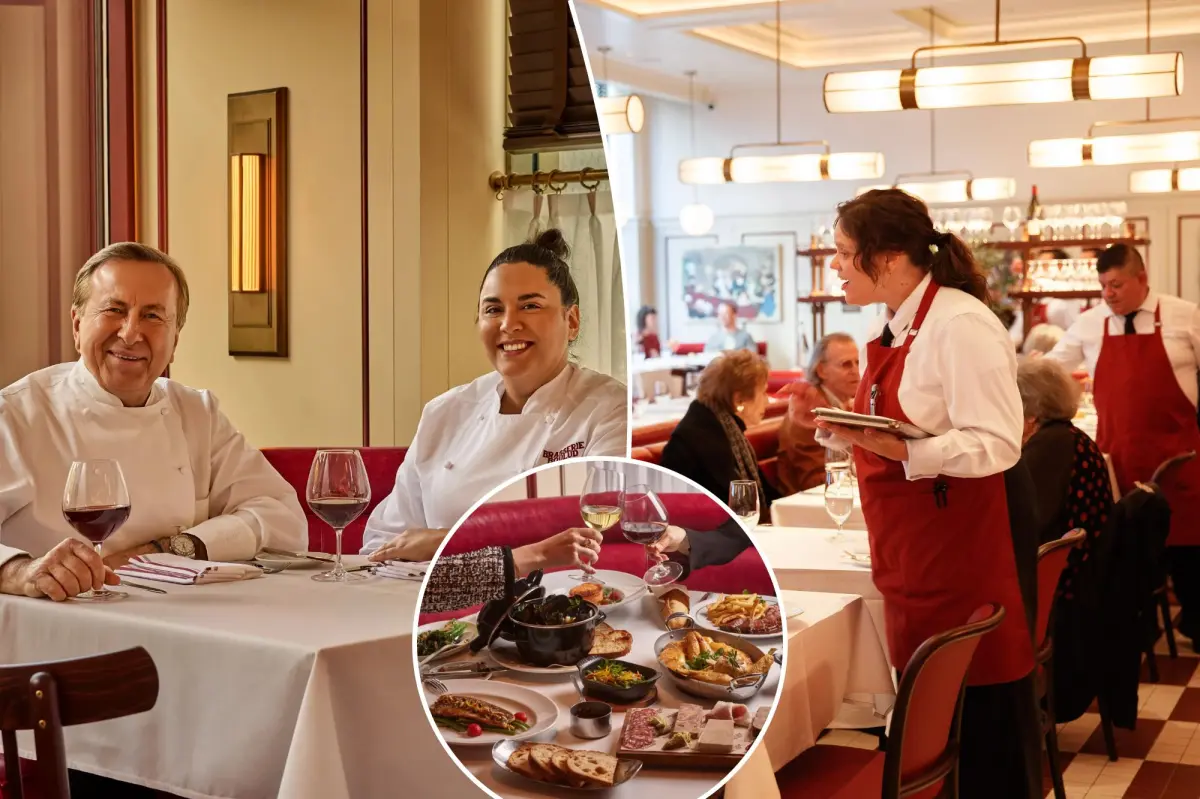
The curtain rose late on Brasserie Boulud, but the moment the doors finally swung open, it was clear the wait had been worth every nerve-racking week. Across from Lincoln Center, at 1900 Broadway, Daniel Boulud’s new 225-seat brasserie now occupies the spot where his beloved Bar Boulud and Boulud Sud once stood. Those two restaurants closed in June 2025, and what followed was a far more complicated process than anyone expected. Construction dragged on for months, and for a long time, the famous restaurant row facing the Lincoln Center plaza was a maze of scaffolding, permits, and unanswered questions. But Boulud himself made it clear that this was never meant to be a simple facelift. “This was a creation, not a renovation,” he said. The team had to tear down and rebuild much of the interior, carefully shrinking the grab-and-go Epicerie that had sat between the two old eateries and relocating it to the side. They wrestled with a tortuous permit process involving a bewildering array of city agencies. The delays tested everyone’s patience. Yet the finished result is a stunning restoration of one of New York’s most storied dining blocks, joining Cafe Fiorello and The Smith in a row of restaurants that now feels alive again. There is a palpable sense of occasion when you walk in: the buzz of conversation, the gleam of brass and mirrors, the warm welcome of a place that knows exactly what it wants to be. It feels less like a reopening and more like a triumphant debut, the kind of room that makes you want to linger long after the plates have been cleared.
The menu is a joyful embarrassment of old-school French riches, and perhaps its greatest strength is its refusal to chase trends. While lesser chefs try to impress with weird deconstructions and pretentious flourishes, Boulud and his executive chef, Christina D’Angelo, a twenty-year Dinex Group veteran, are content to make classics taste the way they were always meant to taste. There is no culinary trickery, no unnecessary smoke or foam. Instead, the kitchen relies on patience, precise technique, and a deep respect for ingredients to create layers of flavor that make familiar dishes feel brand new. The great news for the Metropolitan Opera crowd, Philharmonic subscribers, and ordinary Upper West Siders alike is that you can order dishes like escargots persillade and coq au vin without a trace of shame. As any proper brasserie should, the menu covers every appetite: robust cuts of meat, fresh seafood, caviar and smoked fish, a towering shellfish plateau, pâté and mousse made by charcutier Arthur Dehaine, pasta, steak frites, and soon a rotation of seasonal monthly specials. Early standouts include a plump boudin blanc, a richly sauced pork and veal sausage with plenty of garlic, made in-house by Dehaine and priced at a surprisingly gentle $25. Alongside it, the Moroccan-inspired Merguez sausage, lamb and beef spiced with harissa and served with chickpea spinach, carries a pleasant whiff of the old Boulud Sud for anyone who misses that restaurant’s Mediterranean personality. Both dishes arrive looking simple, but one bite reveals the care behind them. This is cooking that does not shout for attention. It simply comforts, pleases, and reminds you why classic French brasserie food has endured for generations.
There are more quiet fireworks scattered across the menu. The sensuous lobster soufflé, at $35, is a luxurious composition: sweet lobster meat ringed by a creamy lobster mousse made with shrimp, pike, and warm spices, all tied together with a tomato-and-white-wine sauce l’Americaine that seems made for cold evenings ahead. It is the kind of dish that demands you slow down, because every spoonful brings something new to notice. D’Angelo brings equal sparkle to duck breast à l’orange, a $37 old warhorse that has been revived with a vibrant mosaic of orange, honey, oregano, and pink peppercorn. The meat is tender, the glaze crisp, and the combination somehow feels both nostalgic and fresh. Not everything we tried soared: the flatiron steak was a disappointment, the one savory miss among dozens of dishes, and the kitchen has already pulled it from the menu, a sign that Boulud’s standards remain exacting. Save room for dessert, because pastry chef Katalina Diaz’s tarte tatin is a genuine thrill. Honeycrisp apples are pan-roasted until they reach sweet-tooth heaven, then glazed with sugary maple syrup and Calvados, all wrapped in house-made puff pastry that shatters beautifully. It comes to the table warm, fragrant, and utterly irresistible. This is the kind of dessert that makes you want to cancel whatever plans you had afterward and order another glass of cider or coffee. In an era when so many restaurants offer fussy, overcomplicated sweets, the tarte tatin is a reminder that great pastry is about balance and the honest flavor of good ingredients.
For all its elegance, Brasserie Boulud is remarkably easy on the wallet, which feels almost radical in a year of relentless inflation. The juicy, oozy burger classique, topped with cheddar cheese, lettuce, tomato, and cornichon mayo, costs $25. For comparison, the burger royale at The Smith, just down the block and always jammed with a rowdier crowd, is $26. That price difference says a lot about Boulud’s confidence and his desire to welcome the neighborhood, not just the diamond-bedecked opera crowd. The clientele so far is a slightly glamorous mix of affluent Manhattanites, devoted Boulud fans, culture-vultures heading to performances across the plaza, real estate power players, and locals who take their dining seriously. They tend to be dressed better than the pasta-gulpers squeezing into Fiorello’s next door. The stylish set heads for Bar Viv, a moody, forty-seat no-reservations lounge adjacent to the main dining room. The space is named for the late Vivian Milstein, a major financial supporter of Lincoln Center and the mother of Philip Milstein, the building’s owner. Boulud describes Bar Viv with a knowing chuckle: “It’s an adult bar, no children, no dogs.” That simple promise has already made it a favorite for anyone craving a civilized drink before or after a show, a place where the conversation is as intoxicating as the cocktails.
The look of Brasserie Boulud comes from the everywhere-at-once Rockwell Group, and it is a masterclass in flow. You enter and are drawn past a long, twenty-five-seat zinc-topped oval bar that anchors the room like a glittering ship’s prow. Beyond it lies a sea of leather booths, curved banquettes, and angled mirrors that catch the light from glowing chandeliers. The effect is at once intimate and theatrical, a perfect backdrop for romantic dinners, celebratory toasts, or simply lingering over a glass of Burgundy. The restaurant is still finding its sea legs after only two weeks, which is hardly surprising for such a large and complex operation. Lunch service will not begin until November, and outdoor seating will not appear until spring. Boulud is also open to other adjustments based on sales, including the possibility of adding a prix-fixe option to a menu that is currently all à la carte. The hours are under review as well. Brasserie Boulud is closed on Mondays, and last orders are currently taken until 11 p.m. on weeknights and 11:30 on Saturdays. These details are still settling, but the uncertainty does not feel troublesome. It feels like a new production being tuned during previews, with a cast and crew that clearly know their craft.
What matters most is that Brasserie Boulud has already brought the magic back to the Lincoln Center dining scene. There is something deeply reassuring about watching a master like Daniel Boulud commit to this neighborhood and build something so generous, so polished, and so rooted in genuine hospitality. The room is beautiful, the food is honest and delicious, and the price tags are humane. You can come in jeans after a rehearsal, or in a gown after a gala, and you will be welcomed with the same warmth. The months of construction noise and sidewalk barriers are already fading from memory. What remains is the sound of corks popping, the smell of roasting duck and garlicky escargots, the low golden light reflecting off zinc and mirrors, and the happy murmur of people who have found a place they never want to leave. For those of us who love this corner of New York, the reopening feels like a promise kept. The curtain may have risen late, but once it did, the performance was everything we had been waiting for and more. Encore, maestro.