



Paragraph 1: The Breaking Point with Streaming Bills
Let’s be honest: there comes a moment in every cord-cutter’s life when the monthly streaming bill starts to feel less like a bargain and more like a second mortgage. You sign up for one service to watch a single show, then another for a sports game, then a third because your cousin won’t stop talking about that documentary. Before you know it, you’re paying more than you ever did for cable, and yet somehow you still can’t find anything to watch. The frustration is real, and it’s spreading. People are tired of the endless price hikes, the confusing tier structures, the ads that sneak into “premium” plans, and the quiet removal of beloved titles. So what’s the antidote? For a growing number of weary watchers, it’s not another streaming bundle. It’s something far older, far simpler, and far cheaper: a TV antenna. That’s right, the same clunky piece of hardware your grandparents had on the roof is making a serious comeback. And it’s not just for grandpas in rural areas. Young renters, suburban families, and tech-savvy cord-cutters are all discovering that a simple antenna can unlock dozens of free channels with a one-time purchase. It feels almost too good to be true in an era where every entertainment option seems to come with a monthly subscription attached. But according to enthusiasts like Tyler Kleinle, who runs the popular YouTube channel “Antenna Man,” the humble antenna is one of the most underrated tools in the modern TV landscape. He’s spent years testing antennas, installing them, and helping people cut the cord completely. And his message is simple: stop sleeping on antennas. They’re cheap, reliable, and once you set them up, you never have to think about a bill again.
Paragraph 2: The Basics of Antenna TV and What You Need to Know
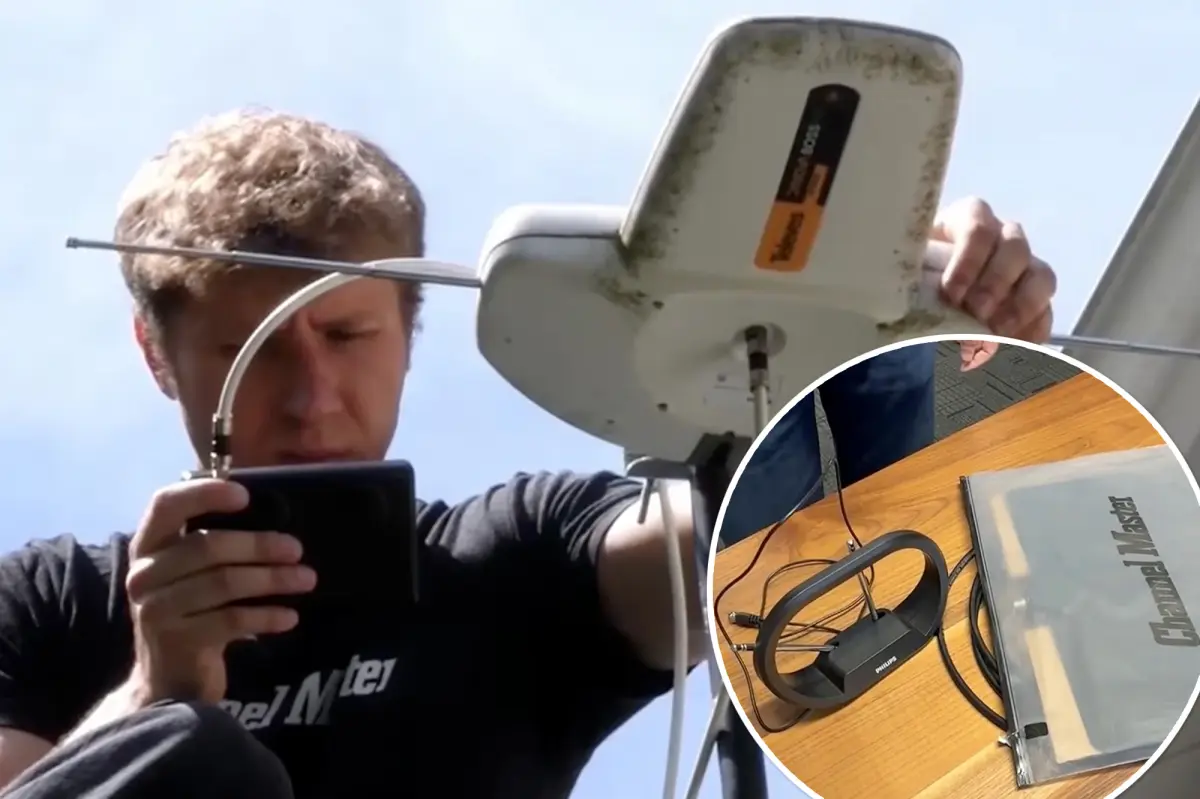
If you’ve never used an antenna as an adult, the whole concept might feel a little mysterious. But the mechanics are actually pretty straightforward. Broadcast towers in your area send out over-the-air signals, and an antenna picks them up and translates them into free, high-definition television. No internet required, no data caps, no monthly fee. The big question is what kind of antenna you need, and that depends largely on where you live. Tyler Kleinle explains that if you’re within about 30 miles of the broadcast towers, a simple indoor antenna should be more than enough to pull in a solid lineup of channels. You can hang it on a wall, stick it near a window, or even hide it behind your TV. If you’re farther out, or if you live in a hilly area with lots of interference, you might need to step up to an outdoor antenna mounted on your roof or in your attic. That sounds intimidating, but it’s not as complicated as it used to be. Modern outdoor antennas are sleeker and more compact than the massive metal contraptions of the 1980s. Kleinle also stresses that size and design matter more than you might think. He warns against buying those tiny, paper-thin “antenna” stickers that claim to pull in hundreds of channels from nowhere. In his experience, you need something that actually looks like an antenna and has enough surface area to capture the signal properly. It doesn’t have to be huge, but it shouldn’t be a joke either. He recommends sticking with established brands like RCA, Antennas Direct, ClearStream, Channel Master, Winegard, and Phillips. These companies have been in the game for decades and know how to build a product that actually works. If you’re looking for a budget-friendly starting point, the Phillips indoor antenna costs around $15, while the Channel Master FLATenna is a solid $35 option that you can hang discreetly on a wall. For the price of one month of a single streaming service, you can own a piece of equipment that will deliver free TV for years.
Paragraph 3: The Cost Comparison That Makes You Rethink Everything
Let’s talk numbers, because that’s where the antenna really shines. The average person might subscribe to two or three streaming services, and those costs are climbing faster than ever. In August, Peacock raised its ad-free plan from $10.99 to $12.99 per month. Apple TV+ went from $12.99 to $14.99. Netflix, the king of streaming, has been especially aggressive with its price increases. Back in March, its standard plan with ads went up to $8.99, the ad-free standard version jumped to $19.99, and the premium tier now costs a whopping $26.99 per month. Do the math on a year of premium Netflix alone, and you’re looking at over $300 just for one service. Add in a few others, and you could easily spend $600 to $1,000 per year on content that you don’t even fully own. Meanwhile, a $15 antenna gives you access to dozens of channels, including all the major broadcast networks, with no recurring fees, no contracts, and no fine print. Even if you buy the most expensive outdoor antenna on the market, you’ll likely recoup your investment within a few months compared to what you were paying for streaming. And unlike streaming services, which can raise prices at any time, your antenna doesn’t care about inflation or corporate earnings reports. It just sits there, quietly pulling in free television. Kleinle points out that once you spend that initial amount, you get free channels for life. There’s no buffering, no reduced picture quality during peak hours, and no sudden channel blackouts, which are becoming more common as streaming services fight over carriage rights. That kind of stability is rare in the modern entertainment world, and it’s incredibly comforting.
Paragraph 4: The Hidden Benefits Beyond Just Saving Money
The financial savings are the obvious draw, but the benefits of antenna TV go much deeper. For one thing, the picture quality is often better than what you get through streaming. Over-the-air broadcasts are typically uncompressed, which means you’re seeing the signal exactly as it was transmitted. That can translate into sharper images and more vibrant colors, especially on big screens. And because you’re not relying on your internet connection, you never have to deal with the dreaded buffering wheel or the sudden quality drop when someone else in the house starts gaming or downloading files. There’s also a certain peace of mind that comes with antenna TV during emergencies. When severe weather hits, internet connections can go down, but broadcast signals often remain available, giving you access to local news, weather alerts, and emergency information when you need it most. That’s something no streaming service can reliably offer. Another huge advantage is that you get access to local programming and major networks that are often missing from streaming platforms. You can watch your local news, community events, and live sports, including football season, without paying extra for a sports package or a live TV streaming service. Kleinle emphasizes that on local channels, you can pick up most of the major networks, so you won’t have to miss a single game. For sports fans, that alone is worth the price of an antenna. And let’s not forget the simplicity. There’s no login to remember, no password to reset, no account to cancel. You just turn on the TV and watch. It’s a refreshingly analog experience in a world that’s become overwhelmingly digital.
Paragraph 5: Practical Tips for Making the Switch Without Losing Your Mind
If you’re ready to give antenna TV a try, there are a few things you can do to make the experience as smooth as possible. First, do a little research on what channels are available in your area. Websites like AntennaWeb or the FCC’s DTV reception maps can show you which broadcast towers are nearby and what kind of antenna you’ll need. This will save you from buying the wrong equipment and feeling disappointed. Second, don’t be afraid to experiment with placement. Indoor antennas can be finicky, and something as simple as moving it from behind your TV to near a window can make a huge difference in the number of channels you receive. If you’re not getting enough channels, try a different wall, a higher shelf, or an attic installation before giving up. Third, remember that you don’t have to choose between antenna and streaming. The smartest setup is often a hybrid approach. Use your antenna for live TV, local news, and sports, then keep one or two streaming services for the shows and movies that aren’t available over the air. This way, you’re not sacrificing your favorite content, but you’re also not paying for a dozen services when you only watch a handful. You might even find that once you have the antenna, you’re less tempted to subscribe to every new streaming platform that launches. The antenna gives you a baseline of free entertainment, so you can be more selective about what you actually pay for. And if you’re someone who loves technology, there are even DVR options that let you record over-the-air broadcasts, so you can watch your favorite shows later without needing a cloud subscription. It’s the best of both worlds.
Paragraph 6: A Quiet Revolution in How We Watch TV
There’s something almost poetic about this shift back to antennas. It’s a reminder that not every innovation has to be a subscription, and that sometimes the best solutions are the ones that have been around all along. The streaming industry exploded because it promised convenience, choice, and freedom from cable. But in the years since, it has slowly morphed into something that looks a lot like the old cable model, with rising prices, confusing bundles, and content scattered across a dozen different platforms. People are tired of that. They’re tired of feeling nickel-and-dimed, tired of chasing their favorite shows from one service to another, and tired of paying for more than they actually watch. The antenna represents a return to simplicity, to ownership, and to the idea that television can be free. It’s not a rejection of modern technology; it’s a smarter way of using it. By combining a humble antenna with a carefully chosen streaming service or two, you can have a TV setup that’s affordable, reliable, and tailored to your actual interests. Tyler Kleinle and other antenna advocates aren’t just saving people money; they’re helping them reclaim a sense of control over their entertainment. And in a world where everything feels like a subscription, that’s a powerful thing. So if you’re tired of watching your bank account shrink every month for the privilege of watching TV, maybe it’s time to give the antenna a shot. It might look old-fashioned, but it’s secretly one of the smartest moves you can make. You’ll get free channels, better picture quality, and the quiet satisfaction of knowing that your TV bill is finally, truly, under control.