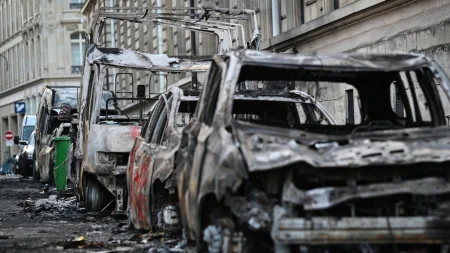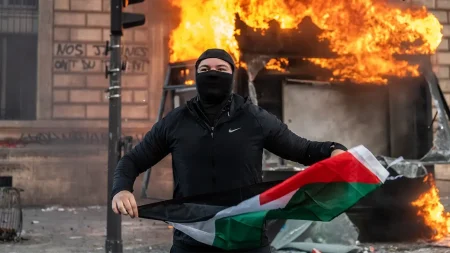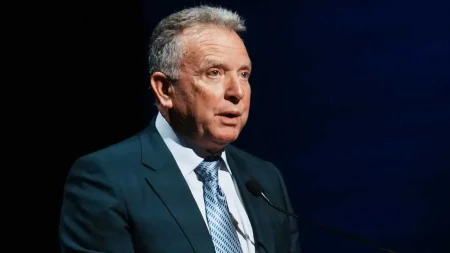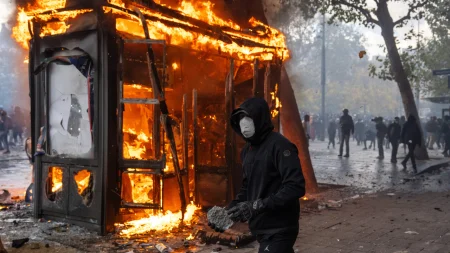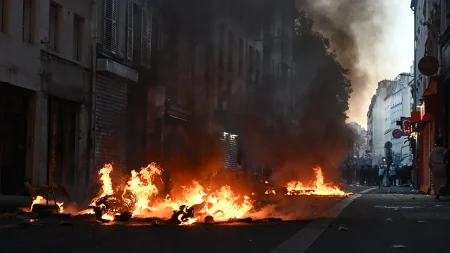



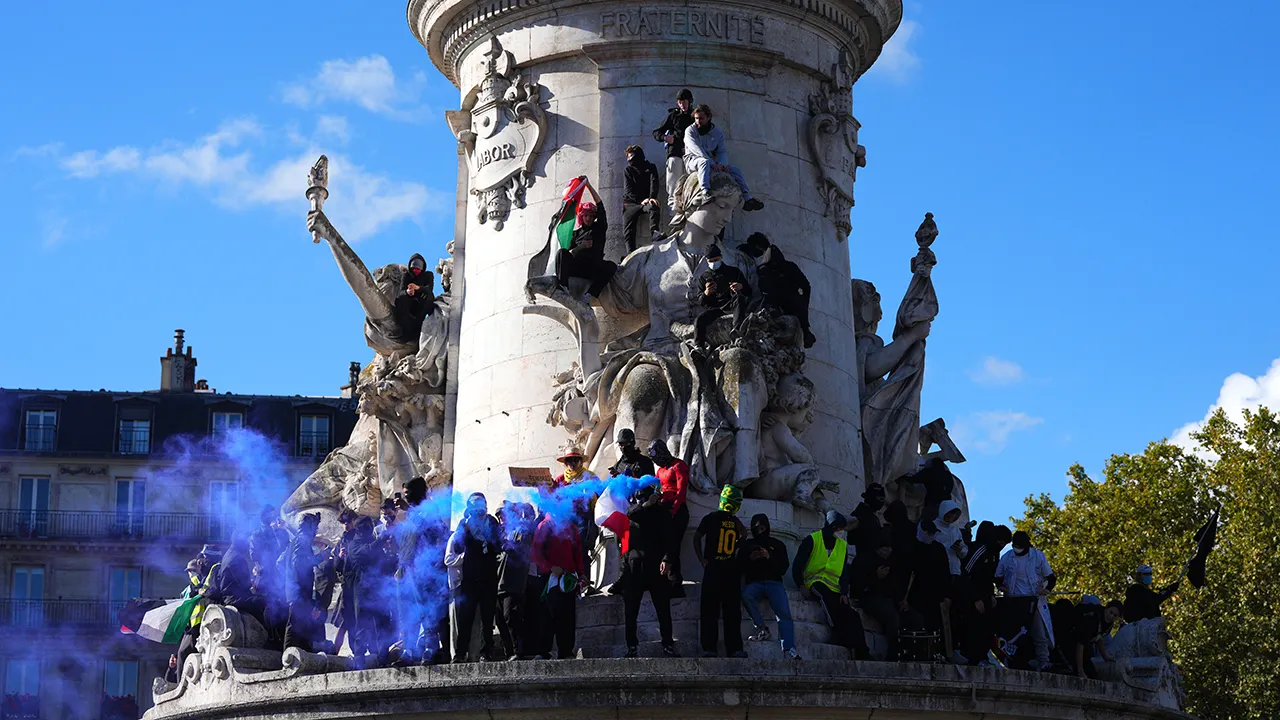
For days, France has watched itself burn in a haze of smoke, broken glass, and anger. What began as a demonstration against the cost of living, strained public services, and a sense of futility felt by many young people quickly exploded into something far darker—riots, looting, arson, and open clashes with police. The images were jarring even for a country familiar with protest: masked figures torching cars, smashing storefronts, attacking public buildings, and turning central squares into battlefields. In the middle of this chaos, one of France’s most respected conservative newspapers, Le Figaro, published a scathing editorial that did not simply blame the rioters. It pointed the finger squarely at the country’s political leadership, especially President Emmanuel Macron, arguing that years of weak governance, moral confusion, and institutional decay had left France dangerously exposed to lawlessness. The article, written by Vincent Trémolet de Villers, was less a commentary on the riots than an indictment of an entire political era. It accused the French state of losing control over its own streets, its own courts, and its own borders—and then lecturing the very people who were being attacked for not showing enough compassion. For many readers, the editorial gave voice to a frustration that had been simmering for years: the sense that the people in power had lost touch with the reality of everyday safety, social cohesion, and national identity.
The heart of Le Figaro’s critique was a blistering attack on the justice system, which the author described as being “lenient toward criminals but unrelenting toward decent citizens.” That phrase struck a nerve because it captured a feeling shared by many ordinary French citizens who had watched repeat offenders cycle through the courts without consequence, while law-abiding people were increasingly burdened by bureaucracy, insecurity, and fear. Trémolet de Villers also singled out far-left militias, accusing them of destroying property, setting fires, and even killing with impunity. These groups, he argued, seemed to enjoy a strange privilege—protected from serious legal consequences by a political culture that hesitated to confront them. The editorial also took aim at immigration policy, describing an “uncontrolled immigration” in which a portion of newcomers “rebels against the country that took them in.” This was not a nuanced discussion of migration economics or integration programs. It was a raw, emotional reckoning with a society that felt stretched to its breaking point. The author’s language was deliberately provocative, but it reflected a deep unease that had been building in French public life for years. For those who had voted for Le Figaro’s worldview, this was not a moment for careful balance; it was a moment for truth-telling. The article insisted that France was not simply dealing with a security crisis, but with a crisis of authority and legitimacy—a government that no longer had the will or the moral clarity to defend its own civilization.
No figure came under harsher fire than Macron himself. The editorial reminded readers of Macron’s past statements in which he urged police officers to show more “empathy” toward the public. In ordinary times, that might have sounded like a reasonable call for humane policing. But in the context of officers being pelted with cobblestones, bolts, and mortar fireworks, it seemed almost absurd to the newspaper’s author. He called Macron’s reprimands “an indelible stain,” suggesting that the president had betrayed the men and women who put their lives on the line to keep order. The critique went deeper than any single remark, however. Trémolet de Villers argued that the unrest was the natural outcome of what he called a “technocratic monarchy”—a system run by an insulated political class, intoxicated by its own self-importance, that had methodically dismantled all the moral, security, cultural, and economic safeguards that allow a society to remain standing. This was a broad and devastating charge. It was not just about policing or immigration. It was about the erosion of everything that held France together: respect for authority, pride in national culture, trust in institutions, and the simple belief that hard work and honesty would be rewarded. The editorial painted a portrait of a nation hollowed out from within, where the forces of order were exhausted and demoralized while the forces of disorder were emboldened. It was a grim diagnosis, and it placed responsibility not on the faceless rioters, but on the political leaders who, in the author’s view, had abandoned their most basic duty.
The violence that sparked this reckoning was staggering in scale. According to reports, roughly 550,000 people took part in the Saturday demonstrations, while organizers put the number at 800,000. At least 2,400 people were arrested nationwide, including 855 in the Paris region alone. More than 500 police officers, gendarmes, and firefighters were injured as they tried to protect buildings, businesses, and civilians from the mobs. Hundreds of businesses were looted, many historic buildings were damaged, and in some places, like Limoges, a town hall was described as “largely lost” after flames tore through it. The unrest continued into Sunday, with police using tear gas around the Place de la République in Paris as tensions remained at a boiling point. Against this backdrop, Macron addressed the nation in televised remarks. He condemned the violence in strong terms and vowed that those responsible would be held accountable. “Nothing will excuse their actions. We all tonight feel angry. We feel shame as well,” he said. “Those people who looted need to pay for their crimes.” But he also tried to acknowledge the deeper frustrations of young people, saying they had expressed genuine anguish about the future, about their careers, and about the role they might play in society. He claimed that for the past ten years he had been fighting for them. Yet his words rang hollow to many who watched him on screen, because they remembered where he had been just two nights earlier.
Indeed, one of the most damaging images of the entire crisis was not a burning car or a looted store; it was Macron himself, smiling at a Celine Dion concert in Paris on Friday night, just as the first fires were being lit and the first clashes were beginning. He was accompanied by his wife, Brigitte, and the sight of the president enjoying a glamorous musical performance while French neighborhoods burned became a symbol of everything Le Figaro and other critics had been saying about his detachment from reality. To his opponents, it was the perfect metaphor for the “technocratic monarchy” they despised: a leader who governed from above, surrounded by privilege, seemingly indifferent to the suffering and anger of ordinary people. The coincidence of timing was devastating. One could argue that presidents deserve a night off, or that the concert had been planned for months, but the emotional weight of that moment was impossible to shake. It suggested that Macron did not grasp the severity of the situation, or worse, that he simply did not care enough to cancel his plans and stand before the nation. The fact that he could deliver a somber address about shame and accountability on Sunday night, having been photographed at a pop concert only hours before, only deepened the sense of betrayal felt by many citizens. Le Figaro’s editorial did not even need to mention the concert to make its point; the image was already seared into the public consciousness.
In the end, Le Figaro’s furious response to the riots was more than just a polemic. It was a warning that France’s political establishment had run out of time and excuses. The editorial insisted that if far-left agitators, criminals, and looters could overturn the country in a matter of hours, it was because the structures that should have protected society had long ago been dismantled. Whether one agrees with that diagnosis or not, the questions it raises are impossible to ignore: What does it mean for a government to lose the trust of its people? How can a nation maintain order when its leaders seem more concerned with their own image than with the safety of their citizens? And what happens when young people feel so abandoned that they see violence as their only language? These are not easy questions, and Macron’s speech did not answer them. He promised order and accountability, but the deeper wounds—the ones that Le Figaro tried to expose—are not healed by tear gas or arrests. The article called on France to rediscover the moral, cultural, and economic foundations that once made it strong. It called on leaders to stop being managers and start being guardians again. Whether that message will be heard, or whether France will continue on its uncertain path, remains to be seen. But one thing is sure: the riots were not just a political crisis. They were a cry from a nation that no longer recognizes itself, and a challenge to every French leader to decide what kind of country they want to leave behind.