

Paragraph 1:
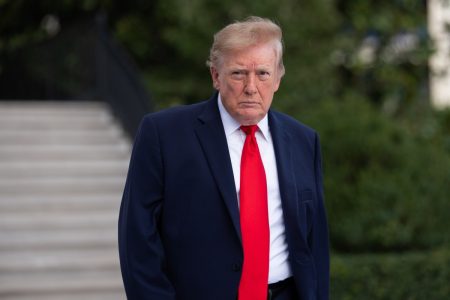
At the heart of a bitter and enormously expensive legal battle, former President Donald Trump has agreed to sit for a deposition in his $10 billion defamation lawsuit against the BBC—but only on his own terms. According to a new court filing in the U.S. District Court for the Southern District of Florida, Trump’s legal team confirmed that he will be available for questioning for a window running from January 11 through January 22. Yet the same filing asks the court to bar video recording of his testimony, a request that is likely to intensify the already heated dispute over how transparent the process should be. Trump’s attorneys were careful to frame the offer as a good-faith step, insisting that the president is not dodging his obligations. “President Trump is not avoiding his deposition in this action,” they wrote in the filing. They suggested the deposition take place at a location chosen in consultation with the U.S. Secret Service, with attendance limited to Trump, the lawyers involved, a court reporter, and essential Secret Service personnel. That request for a tightly controlled environment is understandable given the security risks that surround any former and future president, but it also reflects the broader struggle between Trump’s need to manage his schedule and the BBC’s demand for answers. The deposition is a pivotal moment in a case rooted in allegations that the broadcaster manipulated footage of Trump’s January 6, 2021, speech in a way that made it seem as though he directly encouraged violence. For the BBC, this testimony is essential; for Trump, it is an unwelcome intrusion into his time and personal narrative. The court now has to decide how the deposition will be conducted, and that decision will shape not only this case but also the precedent for how prominent political figures can be questioned in civil litigation.
Paragraph 2:
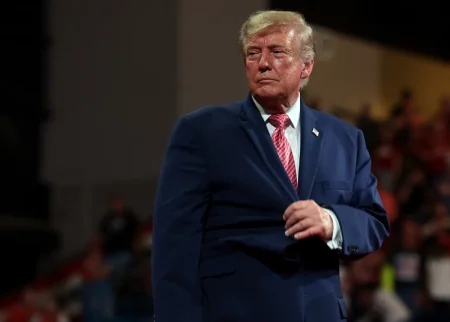
The immediate conflict over the deposition dates has a long and messy backstory. The BBC originally tried to question Trump back in October, but on October 16—the day he was scheduled to appear—his legal team cried off, citing “matters of national importance.” In a crowded world of crises, they pointed to the conflict in Iran, unrest across the Middle East, the war between Russia and Ukraine, and a range of other security and economic concerns that demanded the president’s attention. On that same October day, however, Trump appeared at a campaign rally in Dalton, Georgia. That coincidence did not go unnoticed. The BBC pounced on it, arguing that the rally undermined the official explanation for the postponement. The broadcaster also noted that Trump had attended a fundraising event at Mar-a-Lago, adding to the impression that the delay was about political convenience rather than presidential duty. Trump’s lawyers did not directly answer those accusations in the latest filing. Instead, they stressed that the demands of the presidency are real and that their team had kept the BBC informed throughout the scheduling process. They charged that the broadcaster had cut off productive negotiations by rushing to court before giving Trump’s side a reasonable chance to respond to the proposed January dates. The factual dispute is straightforward: one side sees a pattern of delay and excuse-making; the other sees a busy leader whose responsibilities cannot be squeezed into an ordinary litigation calendar. But the optics are difficult for Trump. When the scheduled deposition fell on the same day as a political rally, it became easy for the BBC to frame his absence as a choice rather than a necessity. That moment now stands as a symbolic flashpoint in a case where public perception may matter as much as legal argument.
Paragraph 3:
For the BBC, the fight over the deposition is not merely procedural—it is central to its ability to mount a defense. In filings submitted to the court, BBC attorney Charles D. Tobin argued that the broadcaster had been trying to arrange a deposition since July, only to meet a series of shifting excuses and missing dates. The broadcaster’s legal team repeatedly asked for a firm appointment and got nothing until, after much prodding, the parties settled on October 16. When that fell apart, the BBC says it was told that Trump had no availability before the discovery deadline of December 18 and that he would not be free until the second or third week of January. That proposed delay was unacceptable, Tobin wrote, because it would leave the BBC with no opportunity to question the central figure in the case during the discovery phase. “Those delays have flouted the cooperative spirit of discovery and precluded the BBC from obtaining the evidence necessary to robustly litigate its defense,” Tobin argued. In essence, the BBC is saying that a lawsuit cannot fairly proceed when the person who filed it refuses to sit for questioning until after the period for gathering evidence has effectively ended. The broadcaster is not asking for special treatment; it is asking for ordinary civil procedure. When Trump chose to file a $10 billion lawsuit, the BBC contends, he accepted the obligations that come with being a plaintiff—including the obligation to answer questions under oath. The BBC has also asked the court to intervene and compel Trump to appear, and it has pointed out that the broadcaster’s access to other evidence is limited without his testimony. From the BBC’s perspective, the deposition is not a formality but the very mechanism by which it can test Trump’s claims, understand his state of mind, and prepare a meaningful defense. Without it, the case becomes a one-sided exercise in accusation.
Paragraph 4:
The court, for its part, has grown impatient. U.S. Magistrate Judge Enjoliqué A. Lett has already warned that continued failures to comply with discovery procedures could lead to sanctions. In a pointed order issued around the same time the October deposition was scheduled to take place, Judge Lett noted that she had previously admonished Trump over his lack of participation in the discovery process—apparently to no avail. The judge observed that the BBC had filed five separate requests concerning discovery disputes, all of which she attributed to Trump’s disregard for the court’s established procedures. That is a striking rebuke, especially coming from a judge who is expected to remain impartial and patient. The order did not directly compel Trump to sit for a deposition, but it set in motion a process to determine whether court intervention was necessary. Now, with Trump’s attorneys offering a January date, the question is whether the judge will accept that as a solution or impose conditions to ensure that the deposition actually occurs. Trump’s request to prohibit video recording is likely to be a central issue. In many civil cases, video depositions are routine, and a party that wants to block recording often has to provide compelling reasons. Trump’s team has not yet fully explained why video should be barred, other than to imply that the deposition is an official matter involving presidential security and dignity. The BBC will almost certainly push back, arguing that transparency is important and that there is no reason to treat Trump differently from any other witness. Judge Lett will have to balance these competing interests, and her ruling could set a precedent for how future courts handle high-profile depositions of current or former presidents. The subtext is that both sides are playing a longer game: the BBC wants to avoid being outmaneuvered by delay, while Trump’s team wants to avoid creating a public spectacle that could be edited, leaked, or used against their client.
Paragraph 5:
Trump’s legal strategy leans heavily on the unique status of the presidency. His lawyers invoke Supreme Court precedents, including the landmark 1997 case Clinton v. Jones, in which the Court held that a sitting president is not categorically immune from civil litigation over conduct unrelated to his official duties. That case, however, also recognized that presidential responsibilities should be taken into account when determining the timing and scope of discovery. Trump’s team leans into that second half of the decision, arguing that the president’s schedule and security needs require special accommodation. They also cite Cheney v. U.S. District Court, a 2004 ruling that emphasized the danger of civil discovery intruding on the executive branch’s responsibilities and confidentiality interests. Taken together, these precedents support an argument that Trump, even as a plaintiff, should not be forced to conform to the ordinary calendar of civil litigation. The BBC has rejected that view, insisting that Trump is the one who chose to enter the courtroom and must therefore follow its rules. The broadcaster points out that presidents, including Bill Clinton, have been required to give depositions in civil cases, and that the disruption to presidential duties can be minimized through careful scheduling. The tension is real: no court wants to be seen as disrespecting the highest office in the land, but no court wants to create a system in which a powerful figure can file a massive lawsuit and then hide behind the trappings of office to avoid accountability. Trump’s lawyers frame their position as one of respect for the presidency; the BBC frames its position as one of basic fairness. The judge’s eventual ruling will determine which vision prevails, but the larger public conversation is likely to be less nuanced. For many observers, the sight of Trump attending rallies while citing presidential burdens will be hard to reconcile, no matter what the legal precedents say.
Paragraph 6:
Behind all of this procedural maneuvering lies the substance of the lawsuit itself. Trump is suing the BBC for $10 billion—$5 billion for alleged defamation and another $5 billion for alleged unfair trade practices—over the broadcaster’s editing of his January 6, 2021, speech in the Panorama documentary titled “Trump: A Second Chance?” The lawsuit claims that the BBC spliced together separate portions of his speech in a way that made it sound as though he had delivered one continuous statement urging supporters to storm the U.S. Capitol. In reality, Trump had said at one point that he would walk with supporters to the Capitol, and later, in a separate passage, he used the phrase “fight like hell.” The documentary assembled these fragments to create an impression of direct incitement, an edit that Trump argues was both false and damaging. The controversy reached far beyond the courtroom. A memo by a former BBC adviser, Michael Prescott, raised serious concerns about the documentary’s impartiality and editing choices. In the aftermath, BBC Director General Tim Davie and BBC News CEO Deborah Turness resigned, and BBC chair Samir Shah issued an apology, acknowledging that the edit gave the appearance of a direct call for violent action. Despite that apology, the BBC has firmly denied that the documentary defamed Trump and has moved to have the lawsuit dismissed. Now, with the deposition looming, the case is entering a more personal phase. Trump will have to sit across from BBC lawyers and answer questions under oath about his words, his intentions, and the damage he claims to have suffered. It is a moment that neither side is approaching lightly. For Trump, it is an opportunity to press his narrative of media bias and political persecution; for the BBC, it is a chance to defend its journalism and expose the weakness of a case it considers legally fragile. The court, meanwhile, must ensure that the process is fair, orderly, and free from the kind of chaos that has marked so many of the former president’s legal battles. Whether the deposition happens quietly or with cameras rolling, it will be a defining moment in the collision between media power, presidential ambition, and the search for truth.