


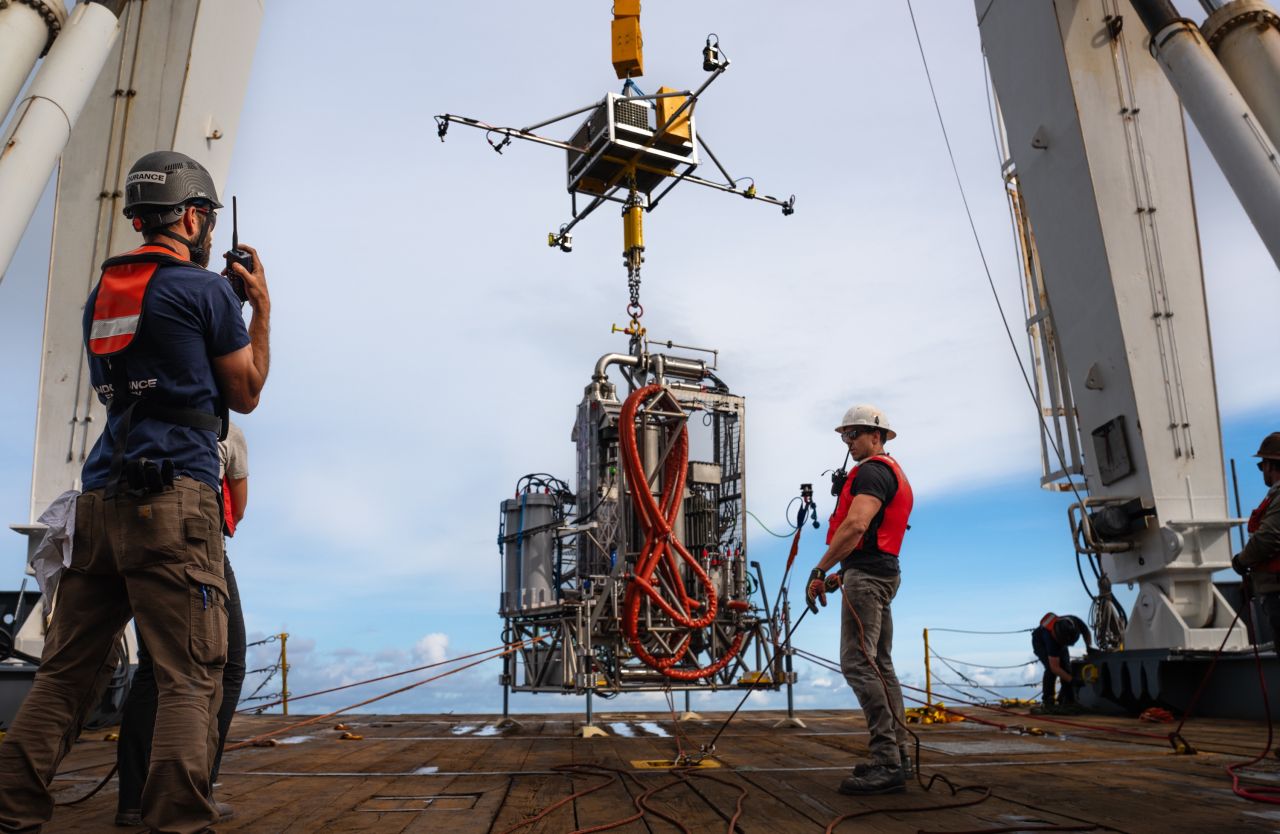
On a gray October morning, in a control room far removed from the wild, crushing darkness of the deep Pacific, a small team of engineers and scientists held their breath. More than 300 miles off the coast of Oregon, somewhere in the vast, lightless expanse of the seafloor, a three-ton piece of machinery had just done something no commercial marine geothermal system had ever done before. It had produced more electricity than it consumed. The victory was real, measurable, historic—and it lasted exactly 8.7 seconds. This fleeting moment, a brief blip of surplus power in a forbidding environment, was enough to make the Seattle-based startup Endurance Energy celebrate like it had won a championship. And in a way, it had. The company had spent years designing, building, and repeatedly sinking its prototype to the bottom of the ocean, navigating every kind of technical and environmental hurdle imaginable, just to get to a single heartbeat of net-positive energy. The location was as dramatic as the achievement: a natural volcanic vent spraying water heated to about 538 degrees Fahrenheit, a pressure cooker almost a mile beneath the waves, connected to its human operators by a thread of fiber-optic cable running along the seabed. From that remote, hostile place, Adélie—the startup’s 100-kilowatt generator, named after a resilient Antarctic penguin—sent its faint electrical pulse back to the surface, proof that the energy at the bottom of the world could be tapped, and that a small company’s improbable dream was not so impossible after all.
To understand why those 8.7 seconds matter, you have to understand the bigger race happening all around the planet. Geothermal energy—heat captured from water or steam under the Earth’s crust—has long been one of the most promising but frustratingly difficult renewable energy sources. It offers a steady, always-on supply of power, unlike solar or wind, which are subject to the whims of weather and time of day. But traditional geothermal development requires drilling into hot rock in specific places, usually deep underground, and it has mostly happened on land. Companies like Fervo and Sage Geosystems have made major strides in terrestrial geothermal, using techniques borrowed from the oil and gas industry to create enhanced systems that can work in a wider range of locations. Endurance Energy, however, is taking an entirely different path. It is looking down, not into the earth beneath our feet, but into the undersea world that covers more than two-thirds of the planet. Along the seafloor there are thousands of hydrothermal vents, underwater hot springs and volcanic fissures that release immense amounts of heat. If you can build a machine strong enough to survive the crushing pressure, the corrosive chemistry, and the mineral-laden water, you might be able to turn that heat into clean electricity where a surprising share of the world’s population lives—along coastlines. That is the bold bet Endurance Energy is making. And in September of 2026, on its fifth deployment to the deep ocean, the company began to prove the concept was real.
The expedition was not a complete triumph, and the company’s leaders are refreshingly honest about that. The team landed Adélie near a natural vent and operated it remotely through the seafloor fiber-optic network, carefully navigating the machinery into position. They watched the instruments as the system spooled up, and for a brief window, it generated a peak net output of 16.5 kilowatts—meaning it was putting more energy back into the system than it was drawing to run its own pumps, electronics, and controls. That was the crucial milestone, the moment everyone had been waiting for. But then things started to go wrong. Technical hiccups emerged, and at some point, a power cable failed, forcing the team to cut the dive short. The net-positive run was over almost as soon as it began. Still, there was an undeniable sense of accomplishment. Andrew Redd, the company’s founder and CEO, framed it beautifully in his statement: “The main question we had is can the system generate more power than it uses. Adélie did. Goddard’s first liquid-fueled rocket flew for two and a half seconds. Our first net-positive run lasted about nine. Our approach is to make it exist, then make it good.” That quote captures the personality behind the project—someone who appreciates that every audacious technological endeavor starts with a tiny, imperfect first step, and that perfection is not the point of an early test. The point is to prove that the physics work, that the machinery can survive, and that the energy is there. Everything else is iteration.
The expedition delivered another major achievement, one that had never been done before: the team drilled what they called the world’s first geothermal well on the ocean floor. At a site roughly 5,000 feet below the surface, their robotic machinery bored two holes into the seabed, tapping into hydrothermal fluid trapped within the rock. One hole was capped, likely to preserve the integrity of the site and observe natural conditions. The other was drilled to a depth of about 52 feet with a diameter of just two inches, creating a well that successfully delivered hot fluid from beneath the seafloor. It was a staggering feat of engineering, remarkable not only for the drilling itself but for the complexity of doing it in an environment that no human can visit without a submersible and even then only with immense effort and danger. But the well proved to be almost too good in one sense: it delivered hot fluid in a way that wasn’t suited for testing the energy-generating system. So the team moved Adélie to the natural vent, which is where the brief net-positive burst occurred. This kind of pivoting, adapting, and troubleshooting is typical of deep-sea exploration, but it also highlights the immense difficulty of what Endurance is attempting. The machines must be incredibly robust because you cannot simply walk out and fix a wrench or replace a circuit board. If something breaks, the entire operation may have to end and be rescheduled, sometimes months later. The cost of a failed dive is enormous, both financially and in terms of momentum. Yet the company continues to push forward, learning something new from each deployment, each failure, each tiny success.
For a company operating in such an extreme environment, it would be easy to treat the ocean as just a source of power, a resource to be extracted wherever convenient. But Endurance Energy has made a visible effort to be a responsible steward of the deep-sea ecosystems it enters. During this expedition, the team conducted voluntary environmental monitoring, a decision that deserves attention. Before choosing where to place their machinery, they mapped the seafloor in detail, selecting a test site that would cause the least disruption to the fragile communities that thrive around hydrothermal vents. These vents are not barren wastelands; they are oases of life, supporting strange and ancient creatures—tube worms, crabs, shrimp, and microbes that have evolved to metabolize chemicals spewed from the Earth’s interior. Endurance sampled the surrounding water before and after their operations to track any changes in chemistry. They surveyed marine life to make sure they weren’t smothering or disturbing sensitive habitats. They monitored underwater noise to assess potential impacts on marine mammals and other animals that rely on sound to navigate, communicate, and hunt. This level of care is not required of every exploratory venture, and it suggests a mature, long-term approach to a field that could one day produce significant amounts of clean energy. If marine geothermal power is truly to become a new pillar of the renewable energy system, it will need to be done in a way that does not damage the very places it draws from. Endurance seems to understand that its license to operate depends not only on convincing investors and utilities that the technology works, but also on showing the broader public that it can be deployed with conscience.
There is no shortage of obstacles standing between this exciting prototype and a future where coastal cities are powered by undersea heat. The deep ocean is a brutal place. Pressure at those depths can exceed 150 times the surface pressure, a force capable of crushing anything not specifically designed to withstand it. The water itself is not just saltwater; near hydrothermal vents it is a cocktail of superheated, acidic, mineral-rich fluid that can corrode metal and coat equipment in thick layers of mineral scale. Maintaining seabed machinery from thousands of miles away is extraordinarily difficult, and repairs can require expensive and risky recovery missions. Even if a machine works flawlessly, the electricity it generates has to travel to shore through subsea cables, which are costly to install and vulnerable to damage from currents, fishing gear, and other hazards. The economics are far from settled. Endurance has raised $63 million from investors and employs only about three dozen people—a lean team taking on an enormous engineering challenge. But the potential payoff is enormous as well. Many of the world’s largest population centers are near coastlines, and a network of underwater geothermal stations could provide clean, reliable, baseload power that complements wind and solar. The company’s next steps are bold: this winter, they plan to deploy Gentoo, a refurbished and upgraded version of Adélie, designed to generate far more power for much longer periods. They are also developing their first commercial project in the kingdom of Tonga, aiming to deliver its first electricity by 2027. In the coming years, that brief 8.7-second burst of net-positive energy could be remembered as the moment when humanity figured out how to tap one of the last great, invisible resources on Earth—a planet-wide engine of heat simmering just below the waves, waiting to be understood, respected, and used for the common good.