

1. A Tuesday Night Commute Turned to Nightmare
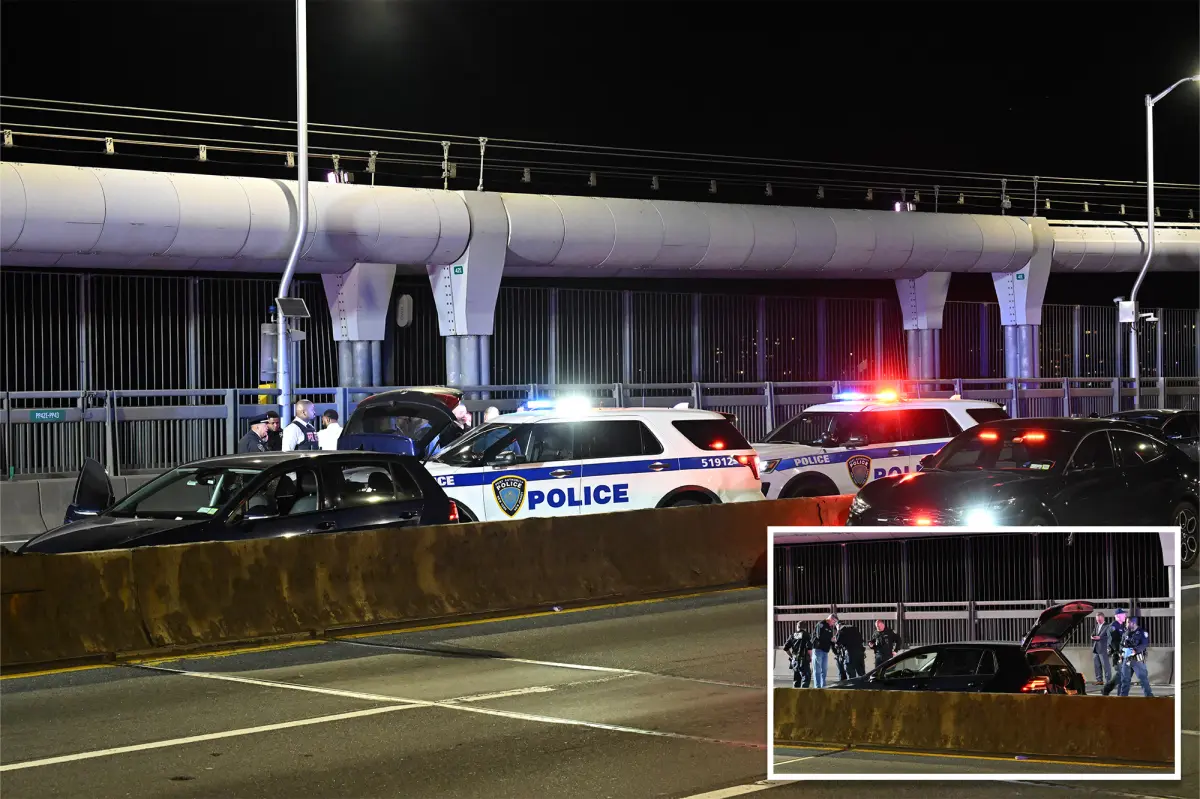
It was just after seven o’clock on a Tuesday evening, the kind of hour when the George Washington Bridge is thick with commuters heading home after long days, with car radios tuned to traffic reports and minds already drifting toward dinner tables and front doors. The upper level, westbound, was moving in that familiar, heavy rhythm of brake lights and headlights, when suddenly the ordinary became unthinkable. According to the Port Authority Police Department and law enforcement sources, a motorist was shot in the head in what authorities are calling a drive-by shooting. The victim’s vehicle then crashed, drawing responding officers to the scene not for a traffic stop, but for a violent crime that had turned a beloved and essential New York landmark into a crime scene. The driver was found unconscious behind the wheel, gravely wounded, with the chaos of the evening rush hour swirling just beyond the emergency lights. For the people stuck in the resulting gridlock, there was no way to know at first that the reason for the sudden closure of the bridge was not a collision or construction, but a bullet. The news spread quickly on social media and radio, the sort of alarming update that makes every driver on the road feel a bit more vulnerable. How could something like this happen on a bridge that millions of people cross every year? It was a question that hung in the air, unanswerable, as night settled over the Hudson River and the police began their grim work.
2. The Rush to Save a Life, and the Devastating Outcome
When first responders arrived on the westbound upper level of the George Washington Bridge, they found the scene chaotic but focused: a crashed vehicle, a driver with a gunshot wound to the head, and traffic backing up for miles as officers worked to secure the area. The Port Authority Police Department, which has jurisdiction over the bridge, immediately shut down the westbound upper level, a decision that caused ripple effects across the region’s evening commute. Emergency medical personnel worked frantically at the scene, doing everything they could to stabilize the wounded motorist before racing him to Englewood Hospital in New Jersey. The hospital, just minutes from the bridge, is a designated trauma center, and the hope was that maybe, just maybe, they could get there in time. But the wound was too severe. Despite the speed of the response, the skill of the medics, and the urgent efforts of the trauma team, the victim was pronounced dead shortly after arrival. The news of the death transformed the incident from a shocking injury to a homicide, and the investigation shifted immediately from rescue to pursuit. For the emergency workers, the night was one of those grim reminders that even the best training and the quickest response cannot always outrun the brutality of a bullet. For the victim’s family, the phone call they received that night was the kind of call no family should ever have to receive, the kind that changes everything in an instant. And for the other drivers who had been on the bridge, the knowledge that a killer had been among them, and had simply vanished into the night, left a deep and unsettling chill.
3. A Killer on the Loose and an Investigation Underway
Late Tuesday night, the suspect remained at large, and investigators were working against the clock to piece together what had happened. The Port Authority Police Department, along with other law enforcement agencies, began combing through security camera footage from the bridge and surrounding roadways, hoping to catch a glimpse of the shooter’s vehicle, a license plate, a face, anything that could lead to an arrest. The bridge is lined with cameras, and the approach roads are dense with traffic monitoring systems, so there was a cautious optimism among investigators that the killer had been captured on video somewhere. But surveillance footage can be grainy, and the chaos of rush hour can obscure crucial details. Detectives were also interviewing witnesses, though many drivers were focused on the road and may not have realized that the gunfire they heard was not a backfire or a blown tire until much later. The question of motive loomed large. Was this a targeted attack, an act of road rage, a case of mistaken identity, or some random act of violence that left an innocent person dead for no reason at all? Authorities had not offered any immediate answers, and the lack of information only deepened the anxiety of the public. In a city that has seen its share of gun violence, the idea of a drive-by shooting on the George Washington Bridge felt particularly brazen, as if no place was safe. The bridge, a vital artery connecting New York and New Jersey, had become the scene of a cold-blooded killing, and the person responsible was out there somewhere, perhaps already across state lines or hidden in the vast urban landscape, waiting.
4. The Human Cost Beyond the Headlines
In the immediate aftermath, the focus was understandably on the logistics of the crime: the closure of the westbound upper level, the traffic diversions, the investigation. But behind every tragic news story like this one, there is a human being with a name, a family, friends, coworkers, dreams, and a life that was violently cut short. The victim was someone who got behind the wheel on Tuesday night expecting to arrive at a destination. Maybe they were going home to a partner, to children, to a parent waiting for dinner. Maybe they were driving to meet friends, to run an errand, to start a night shift. We do not yet know these details, and in the absence of official identification, the victim remains, for now, a number in a police report, a body in a hospital, a heartbreaking absence in the lives of those who loved them. What we do know is that no one else was physically injured in the shooting, but that does not mean the ripple effects were not deeply damaging. The witnesses on the bridge, the motorists who saw emergency vehicles racing past, the hospital staff who tried to save the victim, they will all carry something of this night with them. And the family, who will have to bury someone they loved, will face a lifetime of questions that may never be fully answered. The closure of the bridge was an inconvenience to thousands of commuters, but the reopening of the bridge, when it came, could not undo what had happened. The upper level was reopened after the investigation, but the sense of safety for those who crossed it, at least for a while, would not return so easily.
5. A Broader Reflection on Gun Violence and Fear
Every time a shooting happens in an unexpected place, it resonates far beyond the immediate geography of the crime. A drive-by shooting on the George Washington Bridge is not just a local news item; it is a reminder of how pervasive gun violence has become in American life. The bridge is a symbol of connection, movement, and progress, a structure designed to bring people together and carry them forward. To have it become the site of a murder is a cruel irony and a sign that violence can happen anywhere, at any time, to anyone. Law-abiding citizens crossing the bridge on Tuesday night likely never imagined they were in danger of being shot at from another vehicle. And yet, in an instant, their ordinary commute was transformed into a scene of horror. The incident will undoubtedly lead to renewed calls for action on gun violence, for better policing, for more mental health resources, for stricter laws, for whatever solutions people believe will prevent the next tragedy. But for now, there are only more questions than answers. How did the suspect get a gun? Why did they open fire on a busy bridge? Were they aiming at the victim, or did they shoot indiscriminately into traffic? These are the questions that keep investigators up at night and that haunt the families of victims. There is a particular cruelty to a death that occurs in a public space filled with ordinary people, people who will have to live with the memory of their own near miss and with the knowledge that they could have been the one to die.
6. The Search for Justice and the Long Road Ahead
As the night wore on, the westbound upper level of the George Washington Bridge reopened, and traffic returned to normal, but for those most affected by the shooting, life would never be normal again. The investigation continued into the early morning hours, with law enforcement urging anyone with information to come forward. Security camera footage was still being reviewed, tips were being logged, and detectives were following every lead, no matter how small. The hope is that the suspect will be found quickly, brought to justice, and held accountable for taking a life. But even if an arrest is made, it will not bring the victim back. It will not ease the grief of a family in mourning, or erase the trauma of the witnesses, or restore the feeling of safety that was shattered on that bridge. What it can do is provide some measure of resolution, a sense that the world is not completely without order, that those who commit such terrible acts cannot simply disappear into the night. The Port Authority Police Department, the New York City Police Department, and other agencies were all involved in the search, and their commitment to solving this case was evident. But the broader community, too, has a role to play. Neighbors, friends, and strangers can share information, comfort the grieving, and refuse to accept gun violence as a normal part of life. For now, the memory of Tuesday night will linger, a stark reminder that life is fragile and that a single moment of violence can change everything. The driver who was killed was not just a statistic; they were a human being, and they deserved a chance to grow old, to love, and to be remembered for something other than the way they died. As the investigation continues, that is the truth that must guide the search for justice: not just to catch a suspect, but to honor a life that was stolen too soon.