


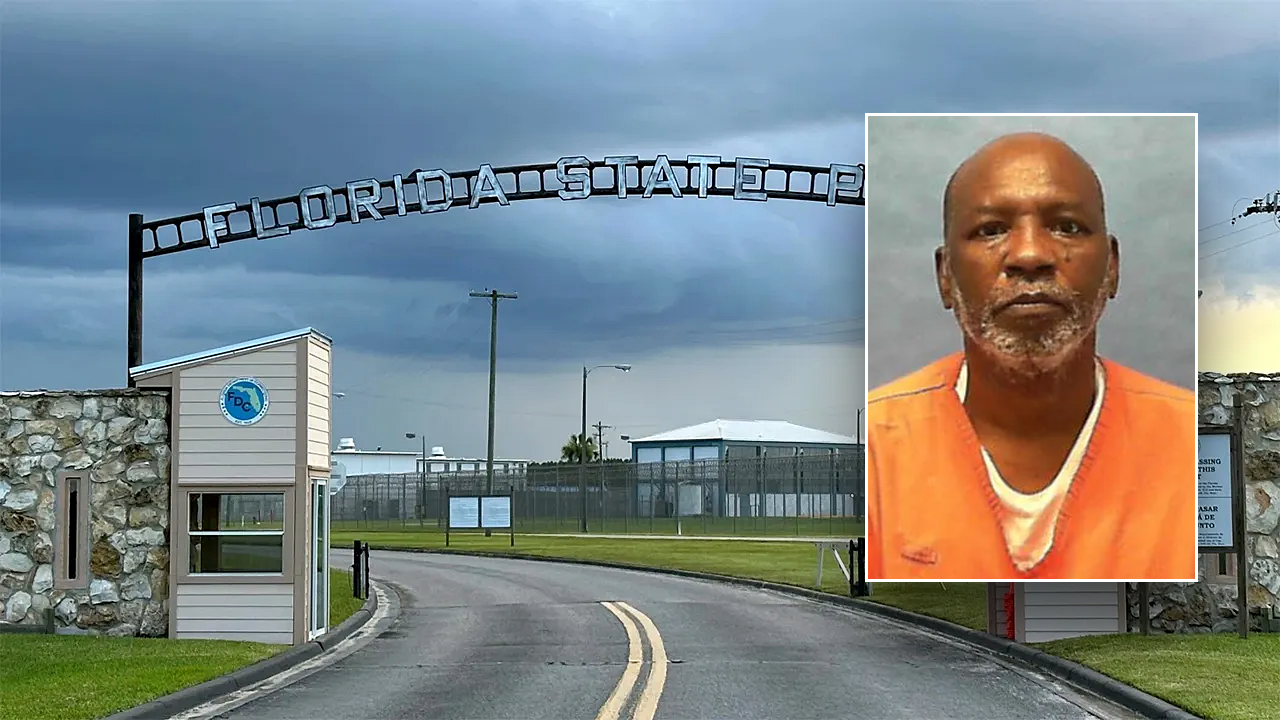
On a quiet Tuesday evening, inside the walls of Florida State Prison near Starke, a 77-year-old man named William Reaves was put to death for a crime committed more than four decades earlier. The execution, carried out with a three-drug lethal injection, marked Florida’s 18th execution of the year and continued the state’s aggressive push under Republican Governor Ron DeSantis to carry out sentences that had lingered for years. Reaves, an Army veteran who served in the Vietnam War, offered no last words. As the drugs began to flow, witnesses observed him take several deep breaths before his body went still. The warden shook him and called his name, but there was no response. A medic checked for a heartbeat, and within a few minutes, at 6:12 p.m., Reaves was declared dead. For the family of Indian River County Sheriff’s Deputy Richard Raczkoski, it was the final chapter of a story that had begun with a single phone call and ended in tragedy. But for Reaves, it was the end of a long, complicated life marked by service, trauma, and violence.
The story of the crime goes back to September 23, 1986, when Deputy Raczkoski responded to a 911 call made by Reaves from a payphone at a Vero Beach convenience store. What began as a conversation between the two men took a sudden, violent turn when a gun slipped from Reaves’ pants and clattered to the ground. Both men lunged for it, and in the struggle that followed, Reaves managed to regain control of the weapon. Raczkoski, realizing the danger, tried to run away. He did not get far. Reaves fired four times, striking the deputy, who died later that day. The killing sent shockwaves through the community and set off a legal process that would span the next 39 years. Reaves was convicted and sentenced to death roughly a year after the shooting, but the Florida Supreme Court later overturned the conviction because of a conflict of interest involving the prosecutor. He was tried a second time, again found guilty, and again sentenced to death. Subsequent appeals were unsuccessful, and as the years passed, Reaves remained on death row while his case slowly worked its way through the courts, a story not uncommon in a system where justice and delay often seem tangled together.
In the final days before the execution, Reaves’ legal team mounted a last-ditch effort to save his life. They challenged Florida’s three-drug lethal injection protocol, which involves a sedative, a paralytic, and a drug designed to stop the heart. Similar challenges had been rejected before, and the courts upheld the method once again. But perhaps the most emotionally powerful argument was about who Reaves was as a human being. He was not only a convicted killer; he was also a decorated Army veteran who served his country in Vietnam. According to court filings, the U.S. Department of Veterans Affairs had rated Reaves as 100 percent disabled due to post-traumatic stress disorder linked directly to his wartime service. His lawyers argued that the jurors who recommended the death penalty never knew about this profound trauma, and that this omission mattered deeply, especially in a case where the line between guilt and human frailty is so difficult to draw. On the Monday before the execution, more than one hundred military veterans sent a letter to Governor DeSantis urging him to halt the execution. They asked for mercy, pointing to the mental scars Reaves carried from war and arguing that his service should have been taken into account. But the pleas did not change the outcome. The U.S. Supreme Court denied Reaves’ request for a stay of execution and declined to review the case without comment. Florida’s Supreme Court also rejected his appeals, and the date remained set.
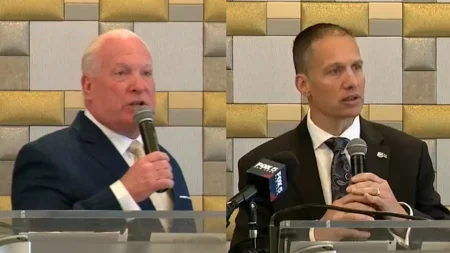
After the execution, those who had spent decades seeking finality gathered to speak. Marc Raczkoski, the victim’s brother, told reporters that his brother had finally received justice. There was a sense of relief in his voice that the long wait was over, that the man who had taken his brother’s life was finally held accountable in the most absolute way. But not everyone saw it that way. Indian River County Sheriff Eric Flowers, who attended the execution, offered a more complicated reflection. He noted that Reaves, at 77 years old, had lived a long life and died peacefully, a reality that felt deeply at odds with the violent and sudden death Raczkoski suffered. “Would we all be so lucky to be 77 years old and to die so peacefully,” Flowers said. “That’s not justice in any way, in my opinion.” His words captured the unease that surrounds executions, especially when the person being executed is elderly, frail, or broken by time and trauma. For some, an execution is the only fitting response to murder. For others, it raises questions about what justice truly means, and whether a man who has already lost so many years to prison can still be punished in a way that feels meaningful.
Florida’s execution of William Reaves did not happen in isolation. It was part of a striking and controversial trend in the state. With this execution, Florida accounted for more than half of all executions carried out in the United States so far this year, a staggering statistic from a state that has become synonymous with the death penalty in the 2020s. Governor DeSantis signed a flurry of death warrants and oversaw a record 19 executions last year, more than any other Florida governor in a single year since the death penalty was reinstated in 1976. That number represented roughly 40 percent of all executions in the country that year. This year, the pace has continued, with Reaves being the eighth prisoner over the age of 70 put to death in Florida so far. In July, the state made national headlines by executing two prisoners in a single day, something no state had done in nearly a decade. And the march continues: unless something unexpected happens, Florida is scheduled to execute Jesse Guardado, a 64-year-old man convicted of robbing and killing a woman to buy drugs in 2004, on November 5. If that execution takes place, Florida will tie its own record from last year. DeSantis has defended the acceleration, saying he wants justice for victims’ families who have sometimes waited decades for the sentence to be carried out. To him, the long delays were a failure of the system, and the rapid pace of executions was a way to honor the victims and close painful chapters.
Beneath the statistics, the legal arguments, and the political statements, there lies a human story that resists easy conclusions. William Reaves was once a young man who served his country in Vietnam, and who returned home carrying wounds that were never fully seen or treated. He was also, on that September day in 1986, a man who shot and killed a law enforcement officer in a moment of chaos and violence. Both things are true. His victims are not just Richard Raczkoski, whose life was cut short, but also Raczkoski’s family, friends, and colleagues who mourned him for decades. At the same time, Reaves spent nearly forty years on death row, growing old behind bars, his life reduced to a waiting game for a punishment that was delayed again and again. The question of whether executing a 77-year-old disabled veteran with severe PTSD serves justice is not a simple one. Some will argue that the passing of time does not change the severity of the original crime, that a deputy’s life was still stolen, and that the sentence must be carried out. Others will look at the trembling hands of an old man, the images of a war-torn mind, and wonder if society loses something of its own humanity when it kills someone who has already been broken by life. In the end, what remains is the quiet echo of a 911 call, a dark roadside struggle, a family’s grief, a community’s memory, and an execution chamber where a man took his final breaths. No single word can capture all of it. But the story of Richard Raczkoski and William Reaves reminds us that justice, whatever it means, is rarely neat, rarely satisfying in every way, and always a reflection of the people we are and the choices we make.