


Here is a humanized summary of the podcast episode, structured into six paragraphs.
The human voice is an invisible thread that ties us to the people we love, carrying not just words but the very essence of who we are. For Jules Rodriguez, that thread was slowly dissolving. Diagnosed with amyotrophic lateral sclerosis, or ALS, a disease that progressively robs the body of movement and speech, Jules described the experience of losing his voice as a kind of personal erasure—like Marty McFly watching his own family fade from a photograph in Back to the Future. In the face of this inevitability, many people turn to traditional methods of preserving their voice. Message banking involves recording common or special phrases, while voice banking requires reading hundreds of specific sentences that a computer later stitches together into synthesized speech. These older technologies, however, produced results that were functional at best and robotic at worst. Jules himself said his banked voice sounded like Daft Punk played at quarter speed: recognizable but deeply unnatural, stripped of the warmth, breath, and idiosyncrasies that make a voice feel human. For someone watching their identity slip away, that hollow approximation of speech was hardly a comfort.
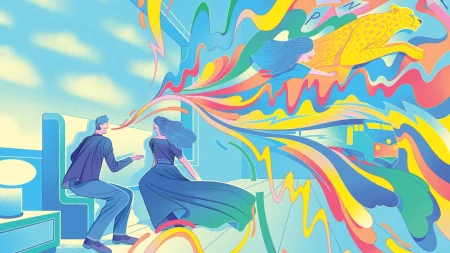
Then artificial intelligence entered the scene, and everything changed. New AI-powered voice cloning software can take short snippets of already recorded audio and build a digital replica of a person’s voice that is astonishingly lifelike. These clones capture not only pitch and tone but also the subtle quirks—the breaths, the umms, the laughter, the stutters—that make a voice unmistakably one’s own. The technology works by extracting the acoustic features of a voice, building a model that can then speak any text typed into a device, even in another language. Laura Sanders, the podcast host, tried it herself, creating a clone so convincing that she could make it laugh, scoff, whisper, or speak French, all with her own cadence and inflection. For people like Jules, this was more than a technical upgrade. In June 2024, Jules used recordings of his old voice to create an AI clone, and when he first heard it, he said it felt like he had reappeared. His wife, MA, broke down in tears the first time she heard it, describing chills running through her body. It was, she said, a vibrant part of him that had been lost, suddenly returned—while everything else about their difficult reality remained unchanged. That complexity, the strange emotional collision of joy and grief, would become a defining feature of the voice-cloning experience.
The voice clone did more than restore sound; it restored possibility. Jules, who had long dreamed of performing stand-up comedy but had given up on the idea, suddenly imagined a new future. With his AI voice, he wrote jokes and began performing again. His wife watched him come alive in a way that had nothing to do with her own hopes and everything to do with seeing his spirit rekindled. But Jules was not alone in this transformation. Karina Nagin, who directs Bridging Voice, a nonprofit that helps people with ALS find communication technology, saw the impact ripple far beyond individual patients. Families who had grown accustomed to silence found themselves weeping with relief at the sound of a father’s or grandfather’s voice. One college-aged boy heard his father’s voice for the first time in two years and broke down. A grandmother used her clone to call her grandchildren, the youngest of whom had never heard her real voice. People changed their health directives, deciding they wanted to live longer if they could continue to communicate as themselves. Wedding vows were spoken in voices thought to be lost forever. Nagin and her team initially thought of the realistic voice as a nice add-on to the communication tools they provided. But they quickly realized that the voice was the core of the matter. It was not about mere utility; it was about identity, dignity, and the deep human need to be recognized as oneself by the people we love.
This profound connection between voice and selfhood reached a critical turning point in Jules and MA’s story. The couple had always been conversationalists, building their relationship on long, deep talks that eventually inspired their own podcast. As ALS progressed, they had made careful plans: Jules would not have a tracheostomy, a life-extending procedure that leaves a tube in the throat and permanently eliminates the ability to speak. When the end came, he was ready to let go. But in September 2024, during a hospitalization that seemed to be the final chapter, Jules had a change of heart. After stabilizing, he looked at MA and said that if a tracheostomy could help him live, he wanted it. The decision was staggering, not least because it meant the permanent and complete loss of his physical voice. Yet MA believes with absolute certainty that the AI voice clone played an enormous role in his choice. Knowing that he could still speak—that he could still sound like himself—made life feel worth living. It gave him goals and experiences to look forward to, a reason to endure the relentless challenges of his disease. Their son Skylar, remarkably unfazed, simply said, “We have the computer.” To him, his father’s voice had never disappeared. It had just moved into a different vessel.
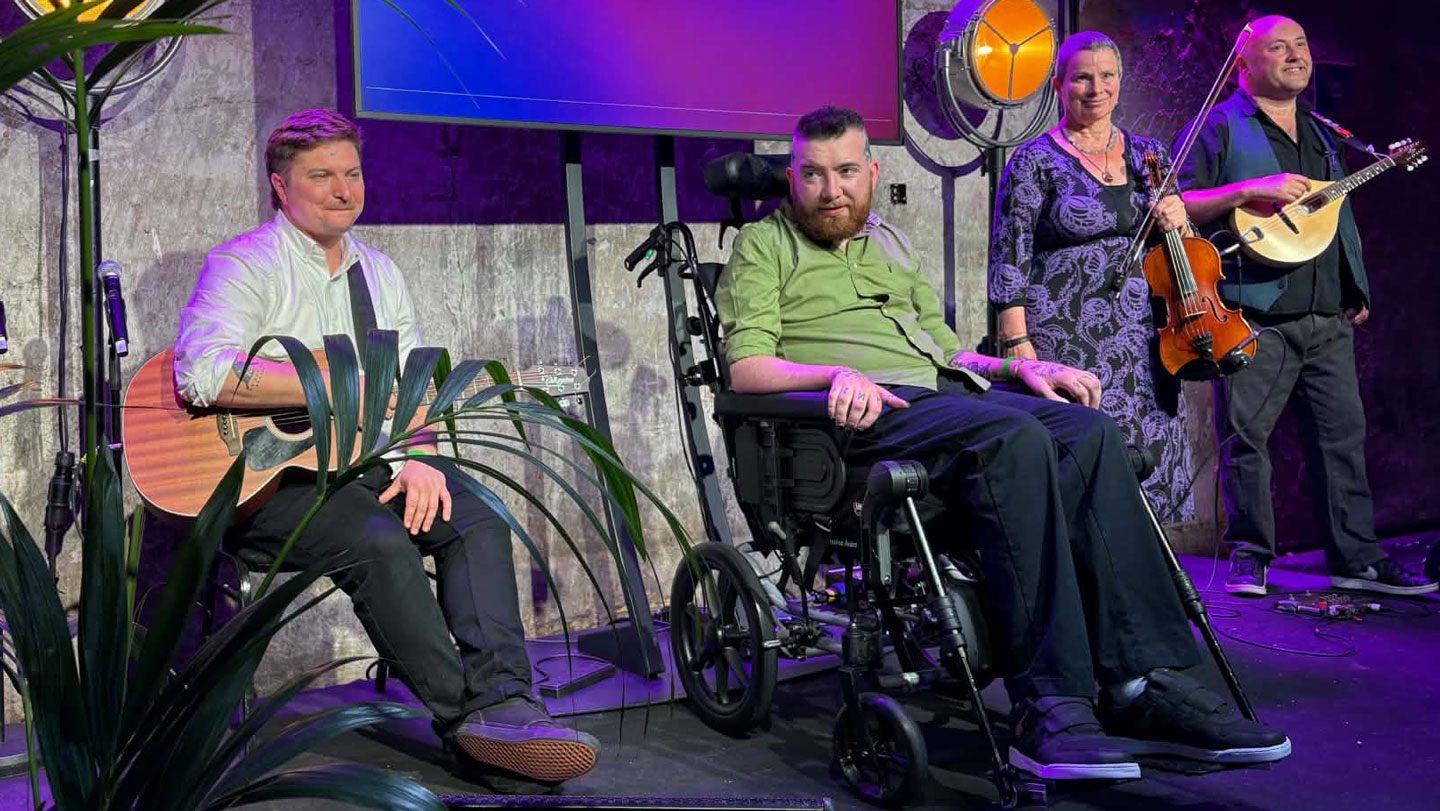
After the surgery, Jules’s physical voice was gone. But his digital voice lived on, and with it, his ability to be himself in the world. He uses eye-tracking technology to painstakingly type out his thoughts, letter by letter, on a screen. Then his voice clone speaks for him, in his own voice, with all its familiar humor, warmth, and even sass. MA sometimes gets annoyed when his AI voice inserts a playful, sarcastic tone into his responses—a quirk that feels so authentically him that it can be maddening. He can laugh, whisper, sing (he jokes that he never could sing, even though they met at a karaoke bar), and even swear when the mood strikes. His dream of comedy is alive again. In mid-November 2024, just weeks after his tracheostomy and two weeks after leaving the hospital, Jules performed an improv set at a local comedy club, introduced by his own cloned voice. The voice allowed him to be a husband, a father, a comedian, a friend—to maintain the social threads that so often fray under the weight of severe illness. Speech therapist Richard Cave, who had spent years building traditional voice-banking programs, was won over by the new technology. He noted that people’s social networks were strengthened again. More people came to talk to them, to reflect on shared memories, and to connect. That, he said, is the gold standard of what voice preservation should truly be: not just a way to communicate, but a way to maintain the relationships that make us who we are.
The stories of Jules, Peggy Merrill, and Patrick Darling paint a vivid picture of what is possible when technology meets the human need for connection. Peggy, who lost her voice to ALS, uses her clone to read to her grandchildren, teach yoga, and lead guided meditations. She told the podcast that hearing her own voice renews her sense of self. Patrick, a composer and musician, has been writing and performing new songs with his voice clone, describing a strange, physical connection to the sound even though he is not actually singing. It makes him feel like a performer again. These voices are more than mere recordings; they are extensions of the people themselves, capable of carrying the trivial and the monumental alike—the little everyday jokes and the heavy, life-altering decisions. What makes this technology so powerful, the podcast suggests, is its ability to forge and reforge connections that were severed, between people and within themselves. The process is not without its challenges: speaking through a clone still takes time, focus, and effort. But for those who have experienced the silence that ALS imposes, the return of a familiar voice is nothing short of transformative. And as researchers continue to push the boundaries, exploring ways to translate thoughts directly from the brain into speech, the future promises even greater fluidity. For now, however, the voice clone stands as a testament to the simple yet profound truth that our voices—in all their breathy, imperfect, idiosyncratic glory—are not just how we talk, but how we love, laugh, and live on in the hearts of others.